


In the Bay Area, a tech hub known for housing major companies like Google, Apple, NVIDIA and Meta, it’s common for many students in the area to major in computer science, involving several years of analyzing algorithms and advanced mathematics. Enrollment in undergraduate CS programs at UCs even peaked at around 14,000 students in the 2022-23 school year, accounting for nearly six percent of the UC undergraduate population, but has since decreased by almost 10% to 12,652 students in the 2025-26 school year, returning to 2021 enrollment levels.
However, future predictions of CS enrollment drop rates far exceed current drop rates. Studies from The Daily Californian predict that Berkeley’s CS enrollment will drop by 59% from the 2025-26 to 2026-27 school year, following a nationwide trend of 8.1%. This decrease in enrollment has often been attributed to AI replacing entry-level CS jobs, as many entry-level tasks are easier to automate and utilizing AI can significantly lower company expenses. As AI becomes more ubiquitous, people are beginning to doubt the viability of pursuing CS, especially as unprecedented layoffs continue in the tech industry.
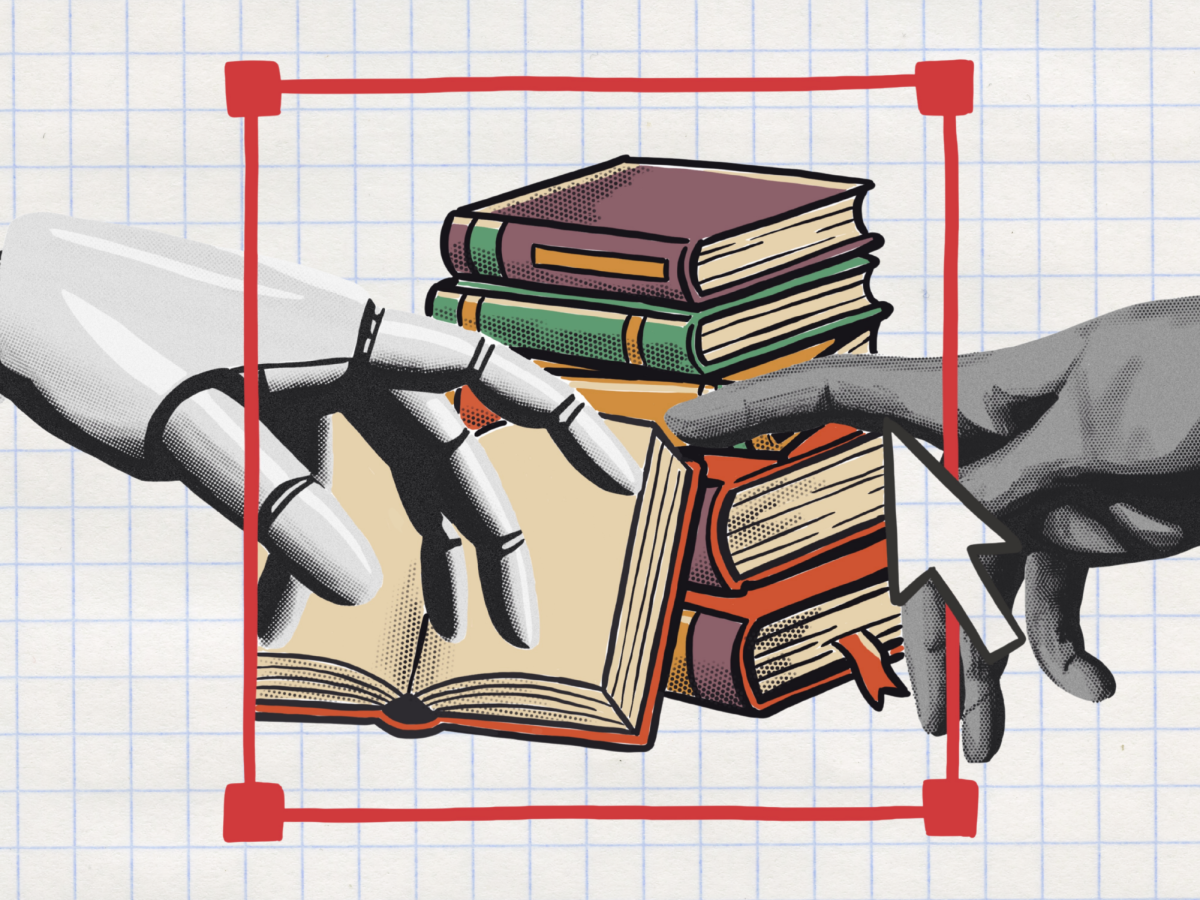
Although AI is increasingly automating coding work in the CS industry, history suggests technological advancements do not erase an industry, but rather change the skills required to succeed within it. When the spreadsheet was introduced, repetitive accounting work was automated, transforming a significant part of the industry. Yet, accountants continued to be important, as their skills and work extended beyond just manual calculations. In the same way, AI is unlikely to erase the need for computer scientists altogether, but rather push engineers to adopt new technologies and increasingly implement AI in their work.
This sentiment is reinforced by the data. According to the World Economic Forum, around 40% of workers’ core skills are expected to change by 2030 due to the growing prevalence of AI, and engineers who can adapt to the changes and utilize AI will be less affected by rapid shifts in the industry. Rather than signalling the end of the CS industry, this rise in AI may be the beginning of a shift in which interpersonal qualities are valued in the workplace.
For example, proficiencies like soft skills have proven to be increasingly important in the computer science field. As technical tasks become more automated, engineers who can collaborate, communicate and adapt effectively amid the growth of AI will have a distinct advantage. Charles Riborg Mann’s “A Study of Engineering Education” asserts that in a poll of over 7,000 practicing engineers, a majority of engineers ranked qualities like integrity, responsibility and resourcefulness above pure technical skills, suggesting that success as a computer engineer is not based solely on coding knowledge.
Similar to how communication and collaboration remain important as AI becomes increasingly prevalent in the workplace, qualities like strategic thinking and problem-solving may also grow in significance. Although AI can automate basic tasks efficiently, it struggles to consider the broader implications of a project and make decisions holistically. Adobe VP of AI Transformation GTM Bob Yang argues that these larger design choices will continue to depend on human engineers.
“Start in a modular fashion and figure out what high-level thing you’re trying to achieve,” Yang said. “The fundamental design, which is actually the hard part, and the part that requires a lot of higher-order thinking and creativity is going to stay with the software engineers well into the future.”
Mirroring the current transition to AI, Yang witnessed the evolution of computers when he was attending MIT in 1998, and estimates that around a third of his class were CS majors. Even though CS has become more mainstream than nerdy, students are again apprehensive about the future of their careers. Still, Yang believes that there will continue to be space in the industry for people who are passionate about computer science and willing to see how AI becomes woven into the fabric of daily life.
“I think it will come back once the AI market is less frothy, and there’s more examples of people now understanding how to use it,” Yang said. “What your folks will come to realize is, ‘OK, now that the path is more clear, I’m going to need a lot more folks who are AI literate and have a technical computer science background.’”
As concerns around AI continue to influence CS enrollment, many students have begun to question the long-term stability of the industry. While changes like the rise of AI will inevitably shift what opportunities are available, MVHS students need to focus on developing adaptability, creativity and strong soft skills. Instead of considering technological developments as a deterrent, we should focus on the strengths that AI is unable to replicate and be prepared to work in tandem with it to progress efficiently in the unpredictable future of CS.
“You shouldn’t pick a major that you’re not interested in just for the sake of a career,” Yang said. “If you’re going to spend four years studying something it’s got to be something that you have real passion and interest in. And no matter what you do, I think there’s a wide variety of different careers that are open to you, regardless of majors. And so you might as well do something that you really like, and you have the rest of your life after graduating from university to figure out what your career is and what you want to do.”