



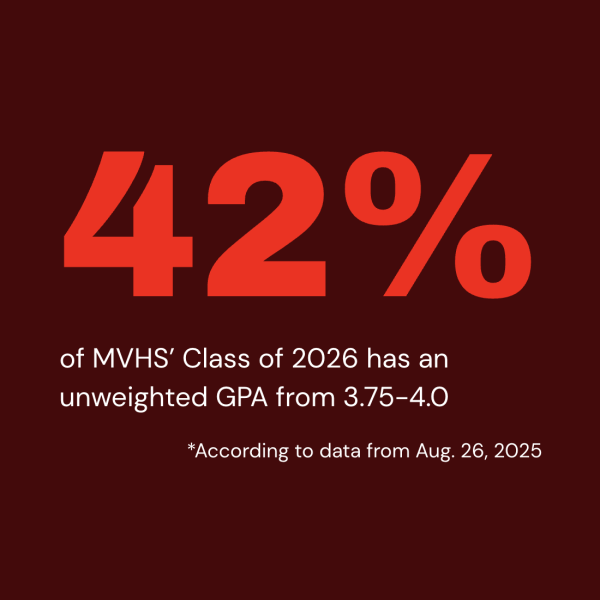
In recent years, elite college admissions have grown increasingly competitive and complicated. To outcompete other applicants, high school seniors work diligently to form an attractive profile — consisting of an impressive grade point average, extracurriculars, standardized test scores, essays, letters of recommendation and, at times, interviews — that will earn them admission into selective colleges. Among these, a strong high school GPA is one of the most crucial components, but its subjectivity has become controversial.
“Grade inflation” refers to when schools adopt overly lenient grading policies so that average grades shift upwards without a corresponding increase in student work quality. Conversely, “grade deflation” refers to when schools have strict grading policies that harshly limit the amount of students that can earn high grades, so that grades fall within a rigid, often predetermined curve. The fair middle ground between these two poles has been the subject of debate — for example, Harvard professors recently began voting on whether or not to limit the number of A’s that professors could give students.
While grades are intended to measure mastery of class material, social sciences teacher Scott Victorine says that at competitive schools, teachers often use them to maintain institutional esteem and rigor by artificially limiting the amount of high grades that students receive. He says certain policies such as capping retake scores or grading based on relative performance can restrict learning and penalize student improvement.
“At MVHS, there tends to be this idea that I’m only allowed to give so many A’s or B’s, that I have to make this hard,” Victorine said. “Students come back and say their college freshman year was easier than MVHS. That doesn’t seem right to me — that seems like the expectations are too high. Why are you doing that to a student? It seems unnecessarily rigid for the situation.”
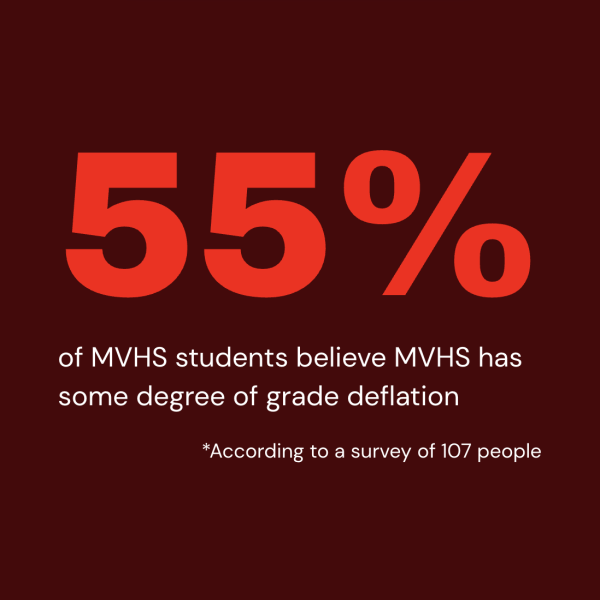
Victorine says this strictness is just an example of how variable grading policies can be across different schools. He believes that colleges frequently evaluate GPAs as though they are standardized measurements, despite these major differences in grading systems between schools. According to Victorine, this disconnect incentivizes students to optimize grades strategically rather than focus on learning material, since, in an era of national grade inflation, a B in a challenging MVHS course can feel catastrophic when competing against students with perfect GPAs from less competitive areas.
“It’s such a flawed system because the common thread is, ‘What was your GPA?’” Victorine said. “Those grades look very different at a school in West Texas than they do in a highly competitive area like Cupertino. To me, it’s a pretty unfair system, and it makes students really grade-obsessed instead of passionate about learning the material. A lot of students try to game the system and do the minimum possible.”
Senior Rajvansh Gupta also argues that the overemphasis on difficult grading at MVHS can undermine other aspects of college preparedness. While he acknowledges that hard coursework can help students adjust to college-level course rigor, he says that colleges often value interpersonal qualities and extracurricular involvement as well, which takes away from time spent on school.
However, sophomore Allison Su offers a different perspective, claiming teachers of difficult courses at MVHS often grade in a manner that mitigates the difficulty of more fast-paced or complicated curricula.
“There are a lot of people who choose their courses with their GPA in mind,” Su said. “I kind of did that this year as well by taking some easier courses. But in my experience, classes with harder content have been balanced out by better policies. In calculus, the content is hard, but then the curves make it so that around half the class has an A regardless. Harder classes tend to have more lenient grading.”
Gupta, however, views curves and relative grading systems as unpredictable because they force students to compete against each other rather than aspire to reach a consistent standard. He believes that the difficulty of a class frequently depends on the teacher, rather than the actual class material.
 “The teacher almost determines your grade in that class, and some students switch courses precisely because of the teachers that they get,” Gupta said. “I would prefer a class with easier tests but no curve because you never know how much others are studying. I believe some teachers overlook students’ stress — students are not robots, and they have a lot of things they’re trying to do. That class, although it does matter, is not the only thing they have on their plates.”
Victorine agrees, stating that a higher number of strong grades should indicate more prepared students, rather than weaker course rigor. He believes that teachers should prioritize making their coursework manageable for their students.
“Sometimes, as educators, we forget we’re not the final step in your journey,” Victorine said. “If you’re going to have to learn it again in college, I don’t know if it’s really necessary to put all that pressure on. I try to remind myself as a teacher that I’m just one of your classes every day. I’m not so naive to think that you’re going to go home and keep thinking about economics, or that it’s going to be the only thing you talk about.”
In order to address the challenging academic environment and the pressure to maintain a high GPA for college admissions, MVHS has several systemic safeguards in place to prevent students from overloading their coursework, such as its lack of class rankings and relatively restricted advanced course offerings for underclassmen. Gupta specifically points to the use of flat letter grades rather than plus-minus grades as a beneficial measure that reduces stress among students.
“People in our school can’t tolerate anything less than perfection, even though that is often an unrealistic burden they place on themselves,” Gupta said. “If we had plusses or minuses, a lot of people would be shooting for straight A-plusses. If they didn’t, they would feel bad about themselves and that would exacerbate our cutthroat culture, so I am happy we only have A’s, B’s and C’s.”
However, because some MVHS classes maintain a more rigid grading standard compared to schools from less competitive areas, certain students can still face an uphill battle that can sometimes force them to sacrifice their personal lives to keep pace. Victorine says that this focus on academics can limit opportunities for students to participate in other parts of student life and the high school experience, as he believes academic expectations should coexist with opportunities for social development.
“I don’t feel like it’s necessarily a healthy balance,” Victorine said. “I’d like my daughter to get an educational experience where the expectation is that she’s going to work hard and do well in school, but I want her to have the part of the experience where she hangs out with friends and goes to dances and sporting events. I don’t want her to feel like, ‘I just spent four years of high school — and I only get to do it once — so focused on academics that I missed the rest.’”