

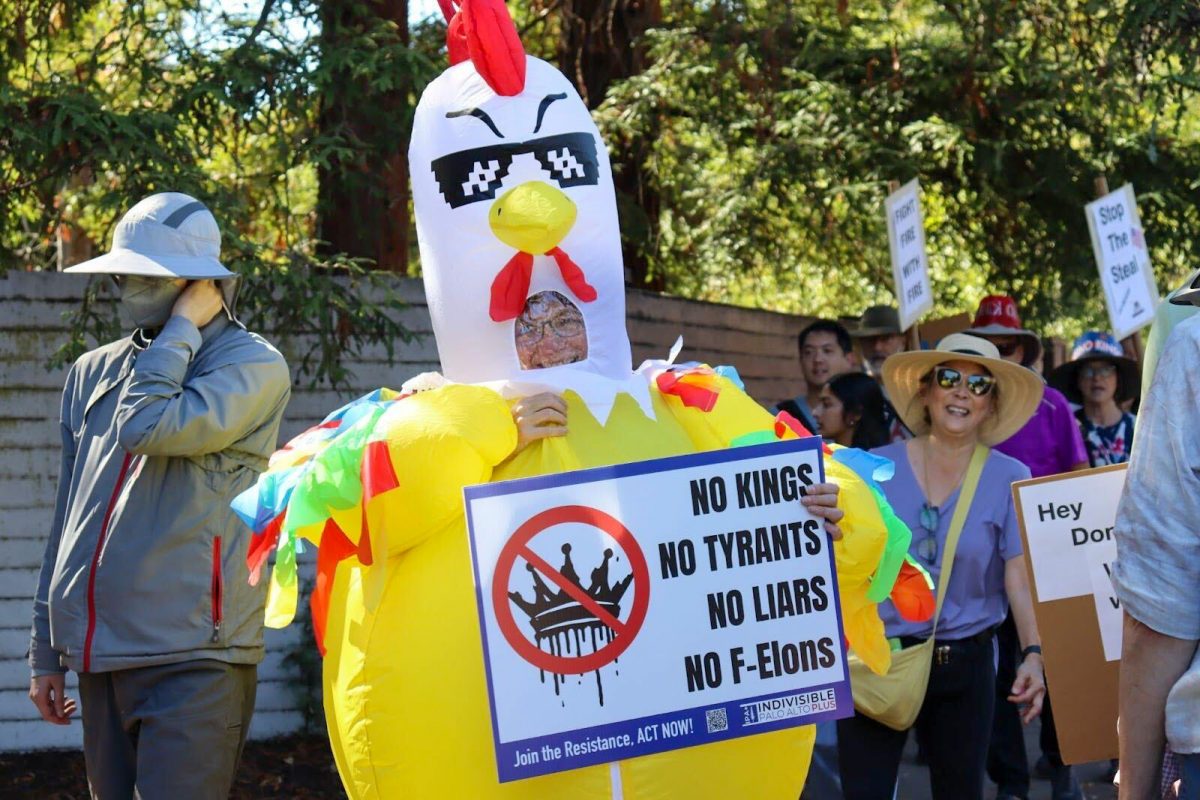
In the wake of mass deportations, ICE abductions and crackdowns on free speech, recent protests have included eye-catching oddities, with demonstrators opposing the Trump Administration wearing inflatable dinosaurs, chickens, frogs and more, carrying signs declaring “Frogs together strong” and “Duck ICE,” to name a few. This peaceful, humorous form of protest is called “tactical frivolity” and has only grown in popularity since its famous use in Portland, Oregon in October, with many viewing it as the defiance America needs. Others, however, worry that the absurd costumes and dancing do not meet the moment.
Tactical frivolity as an approach dates back to the Middle Ages, when common people would criticize the king in a way that made them appear silly to avoid consequences. Political activist Abbie Hoffman and his counterculture group, the “Yippies,” mainstreamed the tactic in 20th-century American protests when they ran a pig for president in 1968 to protest the Vietnam War, influencing later movements such as “Delivering Democracy” in 2020. More recently, protestors in Portland employed the tactic with nude bike riding, dance parties and inflatable animals. Tactical frivolity has since swelled in popularity, with many of the 7 million No Kings protestors donning inflatable costumes across the country, including in the Bay Area.
Tactical frivolity is undeniably unorthodox, prompting many to reject the method as illegitimate. Critics of the inflatable costumes have claimed tactical frivolity undermines the serious nature of protest, potentially delegitimizing movements while prioritizing spectacle over impact. This supposed emphasis on spectacle could, in theory, hurt the longevity of these causes and reduce their overall effectiveness.
However, humor in political criticism has been shown to attract substantial attention, encouraging greater political engagement. For instance, the methods of Late Night Show hosts, who use humor in their political news commentary, prompted severe retaliation from the Trump Administration and stirred debates over free speech. In practice, tactical frivolity has achieved similar levels of effectiveness. For instance, the protests in Oregon attracted significant media coverage, generating an overflow of memes and merchandise that elevated the protesters’ cause.
Tactical frivolity has proven to be a powerful tool for satire. To justify his deployment of the National Guard to Portland, Trump described Oregon as being chaotic and “war-ravaged.” The tactical frivolity of protestors in Portland was a way to poke fun at this accusation, counteracting its absurdity with absurdity of its own.
Additionally, tactical frivolity contributes to an appealing protest environment and community. The demonstrations prompted the creation of a group called Operation Inflation, which supplies protestors with free inflatable costumes. According to performance artist and cofounder of the Clown Army L.M. Bogad in The Marshall Project, dress-up and dancing encourage more people to attend protests, increasing the cause’s publicity in a positive feedback loop, while diffusing tensions between protesters and police.
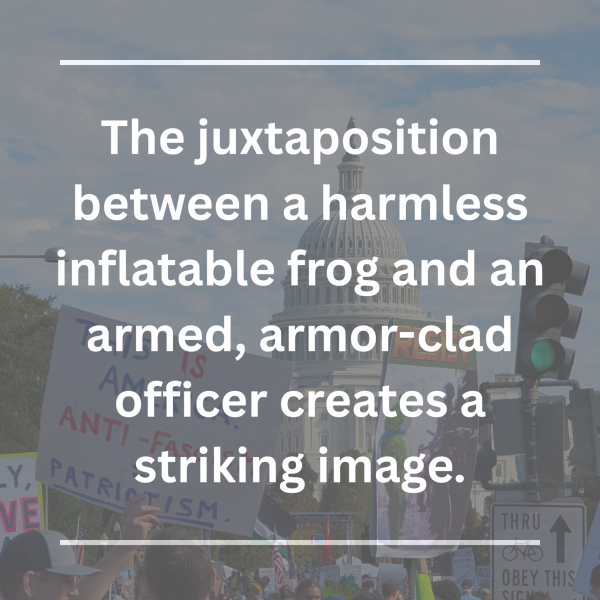
By wearing inflatable costumes, demonstrators defy their image of delinquent, lawless protesters, weakening the president’s stance while subtly criticizing the presence of heavily armed law enforcement. Tactical frivolity creates a clear divide between demonstrators and police, making their force seem unjustified and extreme. The juxtaposition between a harmless inflatable frog and an armed, armor-clad officer creates a striking image. For instance, one video of police spraying chemicals into a protester’s costume’s air intake valve quickly amassed over 2 million views and 1.5 million likes within weeks of its release, sparking outrage over what was perceived as unwarranted cruelty.
Despite being untraditional, tactical frivolity ultimately makes a unique contribution to protest, generating massive publicity and spotlighting key issues. The antics of demonstrators dancing through the streets in inflatable costumes and singing jingles are indeed absurd, but that is the point — the humor and carnival-like nature of these acts add a new dimension to protest.
As protests inevitably continue, it is important to recognize that this creative form of resistance is legitimate and effective. Tactical frivolity is lighthearted but impactful. It brings attention to demonstrations and creates a memorable experience for protestors and those around them, as well as unforgettable moments for the country as a whole.