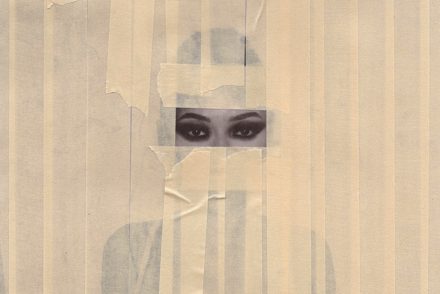




You’d think metaphors about living in hell would be an oversaturated market by now, but it’s alternative artist Melanie Martinez’s topic of choice for her fourth studio album “HADES.” Released on Friday, March 27, it’s the first half of a dystopian and utopian diptych, which, according to Martinez, “isn’t about predicting a dystopian future. It’s about recognizing destructive patterns that already exist.”
“HADES” sees Martinez attempt her most apt and abstract concept to date. While her first three albums revolved around her character Crybaby going through three major phases of life — childhood, adolescence and death — “HADES” is told from the perspective of Circle, a pop star manufactured by the evil corporation Hades Tech.
Martinez has undergone an artistic rebirth to match, swapping out ambient nature sounds for industrial gravitas. “GARBAGE” is a fitting opener to the album — birds chirp before the sound of shattered glass segues seamlessly into Martinez’s falsetto. In a doomsdayish opening crawl, she situates listeners at the end of the world — “The grass combusted, the water is fishless / The earthquakes are hour-long strikes” — her breath punctuated by artillery and explosions.
As in her previous works, Martinez often builds around distinctive sound effects. Thematically, they’re unsubtle — coins clink to the beat in “MONOPOLY MAN,” and “THE PLAGUE” is afflicted by coughing sounds — but still appreciably innovative. Each song transitions to the next with a small snippet, enhancing the cinematic tone Martinez builds through her experimental production. Choices like these lend the album a sense of continuity, even when the tracks themselves are only recreationally interested in telling a coherent story.

Some tracks are compelling, albeit self-contained shreds of criticism. “THE PLAGUE” capitalizes on accessible Black Death imagery to criticize modern society’s pandemic of apathy. In “BATS— INTELLIGENCE,” Martinez’s voice soars over every murky downbeat: “Rent is high, and the taxes due / On a floating rock, burning avenues / Where’s the alien who can save us now?” In particular, “UNCANNY VALLEY” is a snappy, stinging track that layers Martinez’s irreverent drawl over a thick bassline. Its visual component shows her aesthetic direction at its apex — deliberately stilted movements and uncomfortable close-ups emphasize its dysmorphic, voyeuristic themes.
But more often, Martinez’s dedicated theming curdles into excess, weighed down by her countless lyrical blunders. Underneath the activist maximalism, “HADES” is kitschy and thoroughly unsophisticated: though Martinez eagerly undertakes a slew of sociopolitical crises, her articulation lags behind at “Crybaby”’s preschool level. She’s left oscillating between elementary rhymes, artless allegories and unwieldy verses that read like first draft free association.
“THE VATICAN” is especially embarrassing, where Martinez takes crass jabs at the Catholic Church by writing its rituals off as kinky and homoerotic (“Bet the pope looks so enticing, tantalizing […] Bet those robes they wear make you feel kinda freaky”). Denouncing Catholicism is, by now, the lowest-hanging fruit for a pseudo-alternative artist, but her critiques still manage to be unintelligible. The chorus introduces an odd first-person self-insert when Martinez instructs an unfortunate audience to “sip her holy water” and “pray to this p—y,” further corrupting what’s left of her scarce criticality.
Then there’s “WHITE BOY WITH A GUN,” a sort of self-explanatory punchline that collapses every type of objectionable man — racist, fake feminist, bad at pillow talk — into a shapeless caricature. The melody might be passable if it wasn’t peppered with Martinez’s misfires: “You’re racist, not nuanced / Might as well just wear white cloth.”
“HADES” runs circles around issues like wealth inequality, pollution and homelessness with no direction beyond vague condemnation, making it unclear why Martinez (and her $8 million net worth!) needs to be the harbinger of cataclysm she’s so hellbent on being.
As she loops in more and more assorted topics, it becomes clear that service was never the point. Most damning is “CHATROOM,” a six-minute screed rendered unlistenable by Martinez’s condescension. By far the longest track, it addresses her haters with flat taunts like “Is that the way you feel / About your own sad life?,” which come across as immature for someone who’s been in the industry for over a decade. She ends the album on “THE LAST TWO PEOPLE ON EARTH,” where she sings about wanting a “Catastrophic orgasm / that can wipe out the whole nation.” The line is supposed to be unabashed and powerful, but in the context of the rest of the album, it’s a rather macabre twist on the apocalyptic tones Martinez has been playing with.
This disconnect between her direction and reality becomes obvious, especially when Martinez’s ideas of justice are delusive and impractical. In “IS THIS A CULT?”, the cult members overthrow Hades and “put a saddle on him, feed him macaroni / pull his teeth out one by oney,” thereby achieving an idyllic, female-exclusive commune where “everything’s free, and / we have our autonomy.” Even her more grounded ideas are vehicles for aesthetic posturing, and though Martinez can’t overcome her self-importance, she seems intent on establishing herself as a cultural critic. To that end, Martinez bloats the album with streams of meandering buzzwords and empty affectations, sacrificing the narrative progression that made her previous albums so compelling.
Instead, the bulk of the narrative is told through the “HADES” audiobook, sold alongside physical copies of the album. In stagnant, AABB verse, Martinez trudges through the story of Circle, who starts in a commune and ends up getting torn apart by a mob at the Bammys award show. This arc bears superficial similarities to the album’s storyline, only in the sense that Martinez seems to be a broken record on the topics of fame and victimhood. The puerile rhymes do carry some promising themes about the relationship between AI and the entertainment industry — but since when did albums have load-bearing supplemental readings? Instead, the audiobook makes it more apparent that the album is sorely lacking in execution.
There’s never been a better time for the kind of critique Martinez promises — sharp, vivid and alive with her aesthetic signature. Instead, she retreats into an exhausting purgatory of facile choices, burying “HADES”’s sonic strengths beneath posturing and pretentiousness. Maybe her next album can lift her out of this hellhole, but in the meantime, “HADES” stands as Martinez’s most disjointed work yet. For her sake and for ours, let’s hope that the only way left to go is up.
RATING: 2/5