

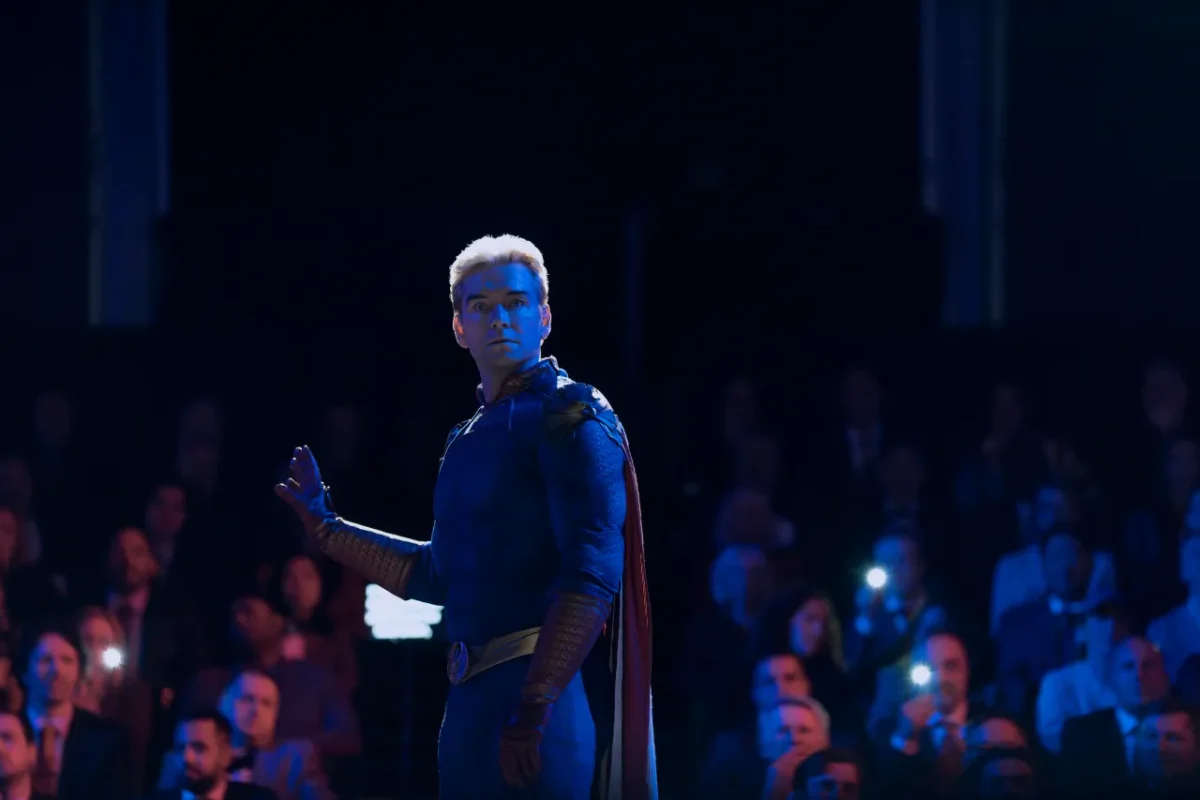
Based on the comic series by Garth Ennis and Darick Robertson, the Prime Video television series “The Boys” follows a group of vigilantes trying to take down corrupt superheroes controlled by Vought International, a corporation that turns murderers and narcissists into marketable products. “The Boys” asks what would happen if superheroes were celebrities with godlike abilities and zero accountability, instead of noble figures. Violence, satire and the idea that power corrupts almost everyone have been the core elements of “The Boys” since its first season. The show officially ended on May 20, after five seasons, with a finale that mostly delivered, even though the journey there was messy. Although Season 5 includes great performances from its stars, it spends a shocking amount of time forgetting it was the final season.
For a conclusion, Season 5 has one job: bring Billy Butcher (Karl Urban), the violent leader of the Boys, and Homelander (Antony Starr), the show’s Superman-esque villain, into one collective ending. Instead, the season spends too long getting distracted in episodes three to six, pausing the main conflict for a completely new storyline where “The Boys” race to find “V1,” a drug that will make Homelander immortal. Ultimately, this plotline feels like an advertisement for the upcoming prequel spinoff, Vought Rising where the origins of this drug will be explained. For a show about corporate propaganda, it’s ironic that Season 5 accidentally becomes an advertisement with a trailer for the prequel being released less than a week after the season ended. This decision is already annoying for dedicated viewers, but also increasingly frustrating, as the plotline barely contributes to the finale.
This problem is most prominent through the characterization of Soldier Boy (Jensen Ackles). A parody of Captain America, Soldier Boy is an old-fashioned superhero and Homelander’s father. Ackles is absolutely entertaining and charismatic in the role, but the character’s writing is ridiculous. But while he may be Homelander’s father, his storyline is the real deadbeat. His motivation for helping Homelander suddenly revolves around his love for a former partner from the 1950s, a relationship that was not touched upon once in the previous four seasons. For a character who is supposed to be tragic, Soldier Boy mostly feels like he needs a retirement plan and less screen time.
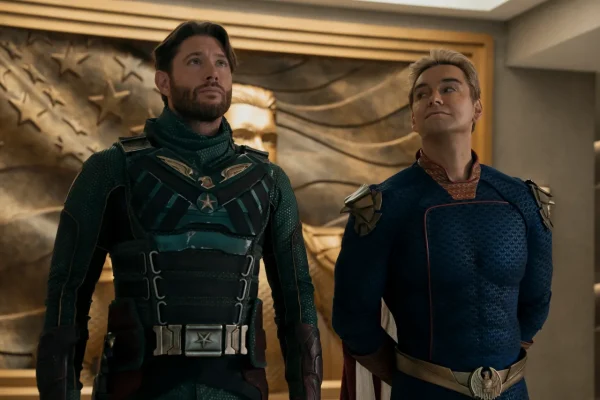
The other character arcs are also inconsistent, which is especially frustrating because they were supposed to be the emotional core of the season. Hughie (Jack Quaid) was the audience’s entry into the series: he is the regular guy dragged into the fight against Homelander and Vought after a superhero killed his girlfriend. His importance to the audience comes from the fact that he represents the human cost of superhero corruption. However, by Season 5, he feels stuck in the same cycle he has been for the past three seasons, repeating the role of the empathetic “normal guy,” resulting in bland, boring dialogues and scenes.
This also weakens Butcher’s arc as he is torn over his hatred of superheroes and his connection to Hughie, who reminds him not to be the same monster he wants to destroy. After Season 4’s finale, where Butcher crosses the line by abandoning the last bit of restraint he had left, Season 5’s back and forth is confusing and hard to follow, instead of dramatic as the last season. Homelander’s son Ryan (Cameron Crovetti) is also mishandled. After four seasons of build-up, Ryan should’ve been one of the emotional centers of the ending, especially due to his inner conflict between Homelander’s influence and his desire to do the right thing. Ultimately, Ryan ends up feeling more like an afterthought — barely appearing in two episodes, making his entire arc feel pointless.
Visually, this season is weaker than previous ones because it loses some of the dirty, uncomfortable aesthetic that previously defined the series. Past seasons used a grimy green-yellow palette and darker lighting to make the world feel corrupt, matching the show’s themes. In Season 5, the show’s cleaner look makes the final season look less distinct. The action scenes are also basic for a superhero show, with simple cinematography and fewer memorable moments. “The Boys” has built its identity on feeling gross and uncomfortable but the cleaner look weakens the tone and makes it look polished for mass appeal rather than committed to the gritty style that originally made it stand out.
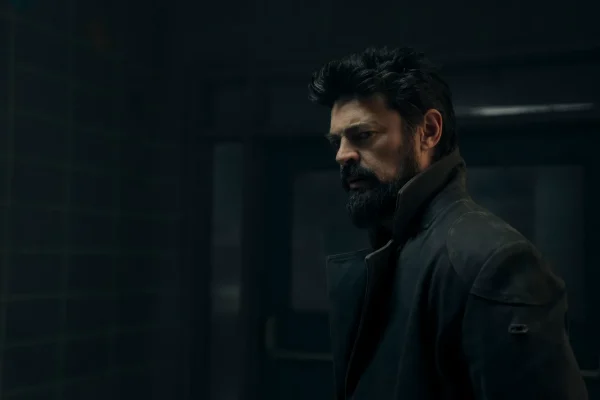
Still, Season 5 is not a complete failure as the performances continue to carry the show despite the frustrating writing. Urban finds a way to play Butcher as a dangerous and funny anti-hero, but also scared as he battles against Homelander. Starr remains one of the best parts of the show, as Homelander can be terrifying and pathetic in the same scene. The finale also helps the season recover, giving the main characters enough payoff to make the ending feel satisfying. While it does not erase the middle episodes, it reminds fans of why the show worked: the tension between Butcher and Homelander.
That is what makes Season 5 so frustrating. When “The Boys” focuses on Butcher, Homelander and the consequences of their actions, it evokes the superhero satire that made the show stand out. The themes of doing the right thing in a corrupt world still matter, and the finale emphasizes that, but the wasted middle stretch, uneven character arcs and obvious spin-off setup prevent it from being truly satisfying. “The Boys” ends with heart but also with the lingering truth that the writers had no clue what they were doing.
RATING: 1.5/5