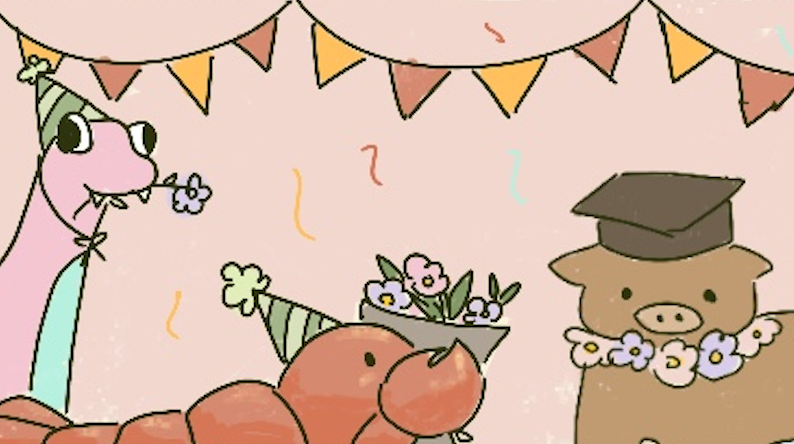



“Whimsy” used to be an archaic term to describe eccentric, capricious ideas. But the term is gaining traction on online spaces, and it’s come to represent the opposite of seriousness — anything that embraces joy and childlike wonder. Inspired by this open-ended definition, I wanted to see what whimsy could look like in a competitive space like MVHS, and how those habits could inspire me to practice integrating joy into my routine. Over the course of a week, I tried the MVHS community’s “whimsy hacks” — ways that people add fun and excitement to their lives.
HANNAH GOULD
Drama teacher Hannah Gould grew up with a Waldorf education, where she was introduced to the concept of nature tables — shrines that display various natural items to foster a connection with nature. Though she didn’t know it at the time, it was her first experience with a pagan altar, and she would later create one herself, refreshing it every couple of weeks with new objects like shells and flowers.
Every other day, Gould performs a tarot reading near the altar — a ritual that involves lighting a candle, pouring a bit of coffee or tea into a ceramic cup as an offering and drawing from the deck. They began reading and interpreting the cards around two years ago, and it’s one of many creative and spiritual practices in their life. Among them is their self-written musical, a one-act piece that originated as individual a cappella songs but, over the course of a year and a half, became a humorous and irreverent way to process their divorce. Gould recalls drawing The Magician card at a point when they were struggling with motivation, which pushed them to reflect on the project as a whole.
“I had been working on this musical for a while, and I was feeling a little bit blocked,” Gould said. “I had been super excited about it, and then I was just like, ‘Why am I doing it?’ And the tarot said, ‘In your quest to manifest your goals, you have to have a clear vision of what you want to create. It’s not enough to be motivated by ego, money, status or fame. You have to have a soul connection to your goals.’ And I think that I was getting carried away by the business side of it, because I started marketing, and I was getting pulled away from the real reason why I was doing it, which is alchemizing my separate parts.”
One principle Gould emphasizes regarding the musical is vulnerable authenticity, sharing her identity and emotions in an artistic way. This philosophy carries over to other whimsical practices in her life, including her love of dancing and incorporating silly warmups into the Drama course. Above all, she emphasizes being open-minded about spirituality and creativity in order to make the most of its benefits.
“Open yourself up to the universe and the flow of little things that you’re sensing and little messages,” Gould said. “If you’re closed to it, if you’re like, ‘Well, this doesn’t work, this isn’t real,’ then it’s not gonna work for you. Maybe it’s just partly in our imaginations — I don’t really care. I think of it as a tool to help you analyze and understand the things that are happening in your life. It’s not like I’m taking this as a prophecy that is like, ‘Oh, I have to do this, because my tarot card said that I’m supposed to do it.’ So I think the more open you are to it, to receiving the messages, then the more it’ll work.”
TRYING TAROT
The last time I had pulled tarot was the Thursday before my college decision. My dread — fueled by general anxiety, a month-long buildup and ample Reddit doomscrolling — had become an entity so ravenous that not even r/chanceme could sate it. Feeling rather desperate, I pulled one card to answer a yes-no question: will I get in?
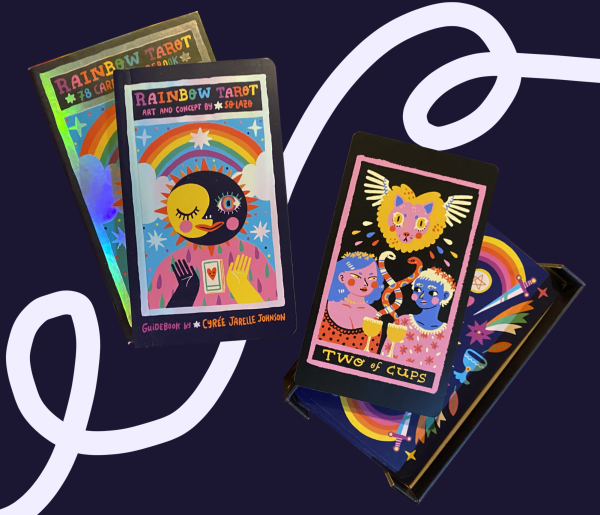
This time, I decided it would be different. I know that I’d previously gone about tarot suboptimally, prioritizing concrete and effortless answers that would either be proven right (by luck) or not (by luck). Inspired by Gould embracing the interpretation aspect of tarot, I was determined to let my most vibes-based self take over.
I lit my gifted Muji Orange Blossom & Yuzu candle (which I’d been saving for some unspecified special event) and cleared my desk in preparation for a reading each night before I went to bed. I don’t believe in “energy” per se, but I began to see the merit in the ritual of tidying every day, physically making space for the practices that would challenge me spiritually. After spending so much time in digital spaces, even a small physical area felt liberating, ungoverned by forces like email notifications and Meta.
I kept the spreads on the table to see if they played out. Sometimes I felt a little silly about it, like I was only arbitrarily exercising my pattern recognition muscle each day by trying to come up with events to fit the projected meanings. But as I kept journaling about the results, I let go of the rules I had approached the ritual with — there’s ambiguity in the card meanings as there is ambiguity to life, and where would I be if I shied away from that?
Pulling every day for the sake of this challenge dulled the ceremonial aspect for me, but the lens is applicable regardless of tarot (or your belief in it). There’s value in making reflection a habit, or pushing yourself into situations that require it — maybe that’s tarot, journaling or just staring at yourself in the mirror with your thoughts about. Anything that can get you to avoid taking yourself for granted.
JERRY LUO
Junior Jerry Luo owns a collection of 11 teacups, each labeled with a specific month (though he hasn’t managed to find one for the month of February). Every morning, he brews a different tea and brings it to school in the cup, sipping on it throughout the day and trying to make it last.
“It’s just a habit at this point,” Luo said. “I don’t need to try to integrate it. It’s just like drinking water. Whenever I’m thirsty, I don’t drink water. I just make some tea. Unless I can’t, then I’ll drink water. I like getting compliments for the cup — I get a lot of those.”
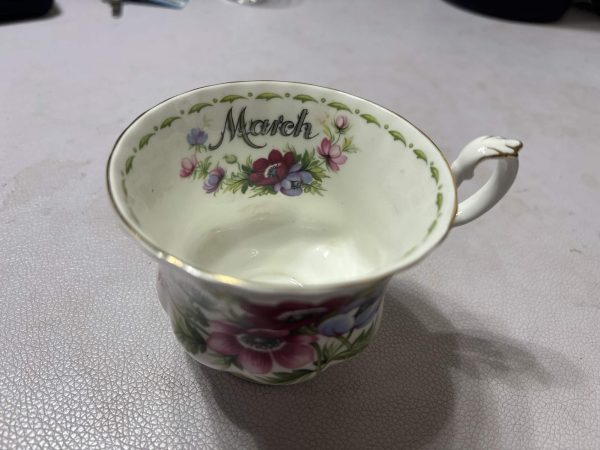
Luo’s favorite type of tea is monk fruit tea, which is commonly used in Chinese herbal medicine. He started making tea every morning when he was sick towards the beginning of his sophomore year. Originally, he drank hot tea only for the soothing effect, but he grew to enjoy the flavor and has kept at it ever since.
“Start by getting a cup, because the tea is hot,” Luo said. “When you put it in the cup, it cools down faster and it’s easier to drink. If you’re just drinking it out of a bottle, especially if it’s a bottle that keeps the heat very well, it’s going to be hot and you won’t like it, unless you’re one of those old Chinese people that just drink it straight from the fire.”
TRYING TEA
Like many Asians, my parents habitually hoard anything that comes in small packets, tea bags included. Each evening, I either drew from the mysterious ziplock of teas or worked through the dragon’s hoard of loose-leaf teas we’d amassed from unnamed sources.
I’d only ever brewed tea at home for the sheer utility of its caffeine. Recently, I’ve begun to fill that role with energy drinks whose flavors have no point of reference in the natural world. By contrast, the teas themselves had humble, refreshing tastes, but what struck me was the sensory process of it — listening to the electric kettle whistle, or the clinking of chopsticks as I stirred in honey. It was meditative in an anticipatory way, grounding me in the process of doing something just for myself.
Though I’ve never been much of a morning person, I woke up relatively early one weekend (I’m gatekeeping the time) to simulate starting off the day with tea, as Luo admirably does. As I stood waiting for the water to boil, I couldn’t shake that association I’d made between productivity and caffeine — that making myself a drink and being up early had to mean some huge and horrible task on my plate. So I stood outside with the mug and tried to clear my mind. It’ll take me longer to clear out that assumption, but it starts with the process.
SHANNON YU
One of senior Shannon Yu’s weekly rituals is Fox Socks Friday, where she celebrates the end of the week by wearing socks with her favorite animal on them. She started the routine after she noticed she had amassed a large collection of fox socks, and found it “wasteful” not to put them to use. Her solution: giving them each an opportunity to be worn out.
“Something that I was noticing was that my morale was constantly low at the end of the week,” Yu said. “I’d just get tired from school, so being able to look forward to wearing my favorite socks with my favorite animal on them really helped me be happier and have something to look forward to at the end of the week.”
In addition to Fox Socks Friday, Yu has also started scrapbooking, which has completely replaced the time she’d previously spent watching YouTube or TV. She enjoys using different materials depending on her mood — if she’s in a bad mood, she’ll use the ugliest papers she can find, whereas she also has many cute sticker sheets she enjoys incorporating. Yu notes that self-expression and creativity are central to both practices.
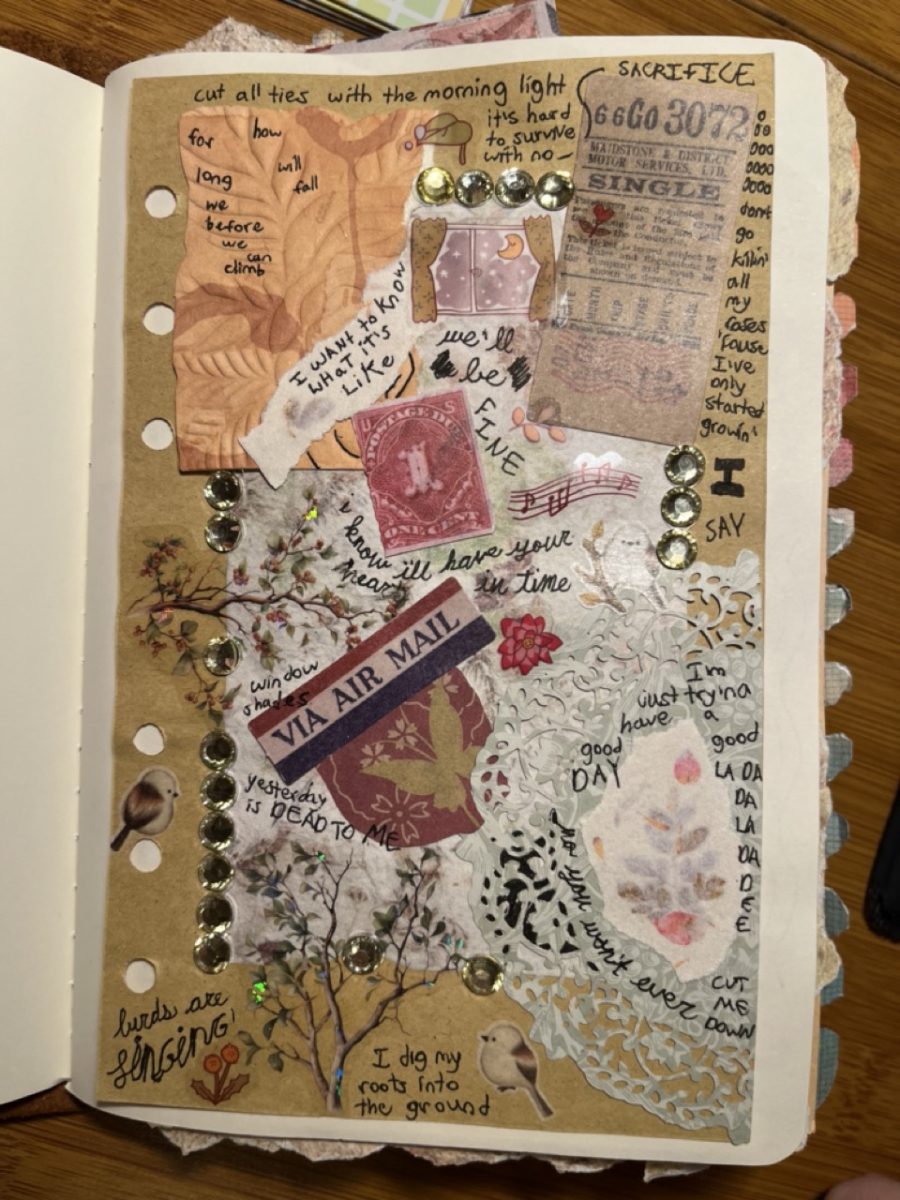
“There’s this one quote that I really liked: ‘Self care is the process, not the reward,’ and I try to live by that a lot,” Yu said. “I’ve always felt like I shouldn’t reward myself with things that I like to do until after the homework is done, but that’s really not how it works. I love to scrapbook whenever I’m just feeling pretty listless or unmotivated, and that helps get my groove back. Fox Socks Friday, I don’t know if it’s a fashion statement, but it’s definitely a way to personalize my whole life without worrying too much about how others perceive me, because I’m the only one who knows what socks I’m wearing.”
TRYING FUN SOCKS FRIDAY
I didn’t have any fox socks, so my closest analog was an indigo pair featuring rainbows and the text “S—TING RAINBOWS KIND OF DAY.” I admit I was doubtful at first — I didn’t consider myself prone to staring at my own feet, and therefore noticing the socks — but I’d catch glimpses while rising from desks or descending stairs. Amused, I’d think about them briefly (what does “S—TING RAINBOWS” even mean?) and then forget I was wearing them again. It was a continuous cycle of rediscovering my whimsy.
I felt strangely self-conscious, as I did LARPing as Luo or Gould — who was I fooling? I could finish a book every day in the time I spend on my phone. I’d rather stare at a wall getting my neurons activated by faint memories of funny videos than try meditating. Would I even think of doing any of these whimsical things, absent my self-imposed challenge?
MVHS students are intensely motivated by image — that’s partially why the context of a published story finally pushed me to attempt consistent self-care. But who cares if that’s the reason? Even self-care habits aren’t solitary, but inspired by and maintained through community. If it takes telling a friend that you’re going to pull tarot or brew tea or try wearing wacky socks for you to follow through, where’s the harm in doing what works? Maybe you’ll enjoy the chance to try something new; at the very least, you’ll have someone to discuss it with.
I admire anyone with the motivation to stand by their habits, to make them as consistent as drinking water. But they’re not born with it — likewise, anyone who can find the determination can begin a lifetime of consistent and fulfilling rituals. That might look like cultivating practices you already enjoyed, or starting anew. If you’re unsure where to start, you can always ask around for recommendations. You won’t be disappointed.