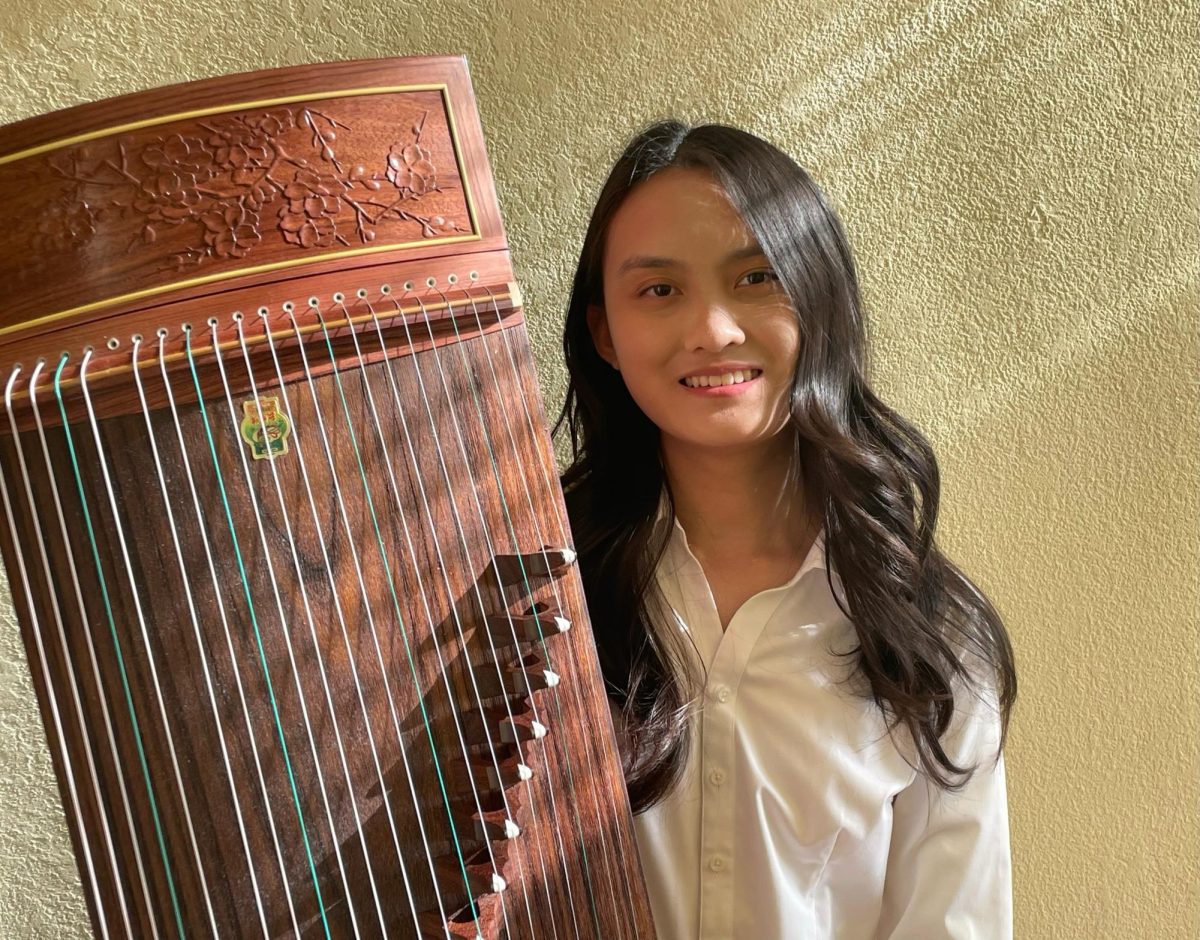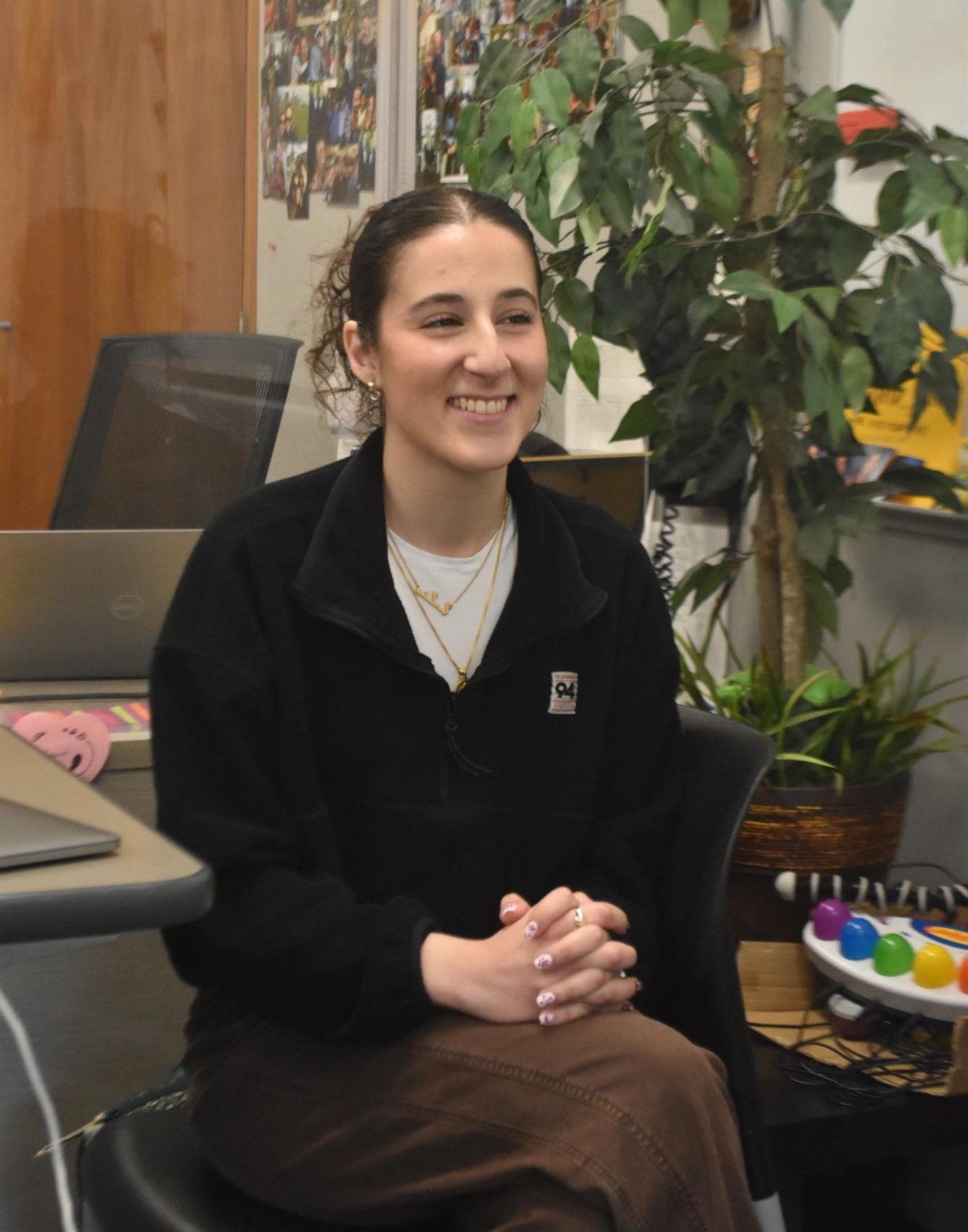
MVHS alum ‘20 and student teacher Leilani Gabriel always knew she wanted to be a teacher. But it wasn’t until she took Scott Victorine’s history class as a sophomore that she knew what subject she wanted to teach: history. Now, seven years later, she’s back in his classroom as his World History student teacher, fulfilling her dream where it began.
“I think what’s so great about being at the high school that I went to is that I feel like I can share the perspective of the students, because I’ve been in this community before,” Gabriel said. “I know what the academic rigor is like, and I know the pressure the students face from other different classes, so I feel like it brings this different kind of connection when it gets used to teaching content, whether it’s the assignments that I structure or the things that I try to create.”
Due to this connection, when Gabriel’s student teaching year for her master’s program at Santa Clara University rolled around, she told the university she preferred to teach at MVHS. Additionally, since Gabriel approached Victorine prior to being assigned to his class, wanting to learn from her former teacher, she was already aware there was an opening for her as a student teacher in MVHS’ history department.
MVHS alum ‘99 and math teacher Katie Collins agrees that her experience as a student at MVHS was one of the factors that led her to get her job. Although Collins says she loved working at her inner-city public school in Los Angeles, she knew she wanted to leave L.A. She began searching for jobs during a period of teacher layoffs and budget cuts, when many public schools were not hiring new staff, but MVHS was one of the few that was.
“I think Monta Vista actually chose me,” Collins said. “I can’t imagine how many applicants there were, but there were probably a billion. But I had already worked for five years, I’d been given some awards for teaching, and I was young and energetic. I applied, and I think that I was able to use what I knew about teaching in an inner-city school to really inform about what I’ve thought about curriculum and teaching and learning, but I was also able to use what I knew about this area and about my general feeling about coming to the school, which is not unlike the feeling that many of you guys have. This is why I think I’m super fortunate to be here, and I think I have a unique perspective.”
For MVHS alum ‘07 and the Guided Studies and Study Buddies coordinator Shawn Voigt, who first returned to MVHS as a baseball coach, working at MVHS reminds him how much being a student there impacted him.
“I have a lot of memories, and I developed my academic skills in classes, but a lot of the extracurricular things that I did impacted me,” Voigt said. “For example, I was in SNL when I was a student here, and then a few weeks ago, I was hosting SNL, so that was really nostalgic. I made my friends here, and being back on the field and coaching as opposed to playing feels well-rounded for me.”
Gabriel agrees with Voigt, saying that extracurriculars were an important part of building out her community in high school. Now, she says she likes seeing that her students are still involved in extracurriculars that she was part of and especially enjoys being able to connect with her students over their shared interests.
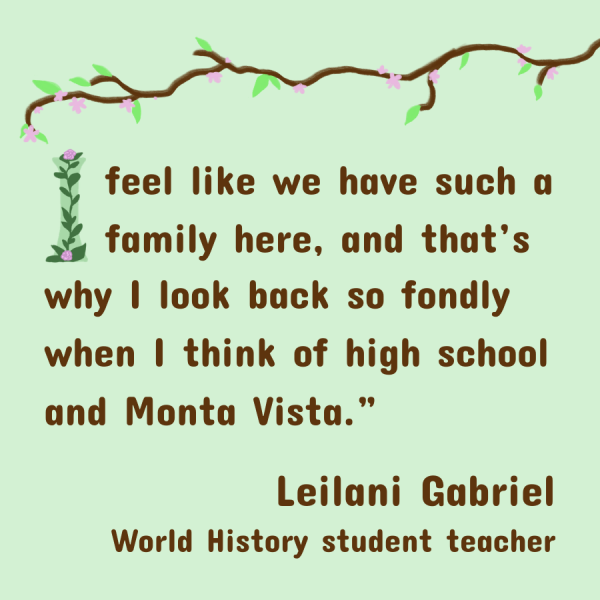
“Although you have friends and friend groups and you make friends in different classes, of course, it’s different when you’re doing an extracurricular, because it’s a passion that you’re feeding,” Gabriel said. “I feel like we have such a family here, and that’s why I look back so fondly when I think of high school and Monta Vista. Just last week, one of my students said that they’re in Singing Valentines, and I was so excited. I’m like, ‘Oh my gosh, I remember that. That was so fun.’”
Collins agrees, sharing that while her experience at MVHS was marked by academic rigor, being able to do things that aligned with her passions was more fulfilling. To her, Middle College, which she attended during her junior and senior years, allowed her to pursue those goals.
“My sense of Monta Vista was that it was too competitive,” Collins said. “I really like learning, and I didn’t like the idea of comparing my grade to someone else’s grade at all. I distinctly remember sitting in chemistry class, and after every quiz, this kid would turn to me and be like, ‘What’d you get?’ It really made me angry, because I was like, ‘I don’t want to tell you. It doesn’t matter to me.’ I think that going to Middle College allowed me to actually pursue this love of learning without having to focus on competition. I also got to do things that I loved, and I didn’t just do it to put on my college applications.”
This academic rigor also impacted Gabriel’s experience as a student. Because of this, she says she focuses on teaching students through interactive, fun methods that make learning feel less stressful and judgmental.
“When I was a student here, academic rigor was very high, and that damaged my own self-confidence in subject areas that I wasn’t as good at,” Gabriel said. “As much as I loved history, I wasn’t good at science and math, and I often felt that if I wasn’t as good as my peers, then that reflected my own intellect. I try to make my students not feel that when they’re in history class. And my students will ask me questions like, ‘Hey Ms. Gabriel, can you help me with this math question?’ Like, absolutely not. But if you are great at those subjects, that is great for you. So I want them to feel confident in what they’re strong in, but also feel confident in what they’re not strong in, and I think that’s OK to have that balance. I wasn’t good at science and math when I was here, but in subjects that I was good at, I had teachers that I could go to and enjoy that process, and I want my students to feel that as well.”
To Gabriel, that teacher was Victorine, whom she credits for showing her what kind of teacher she aspires to be and assisting her through the learning process. Voigt feels the same way about his teachers-turned-colleagues, such as social studies teacher Ben Recktenwald.
“At first, it is strange,” Voigt said. “Like, what do I call them? But they’ve been excellent guides for me. I can only learn so much in an educational program or graduate school, but actually applying learning techniques or teaching techniques comes from the guidance of your peers and other people that have done it. Especially in this environment, in this school culture, it’s really helpful.”
Collins feels similarly about physics teacher Jim Birdsong, her former water polo coach and physics tutor. She shares that while she wasn’t good at physics, she felt a connection to Birdsong that continues to this day.
“Jimmy B is Jimmy B,” Collins said. “He’s the GOAT. He’s so classic. At first, it was a really hard transition to stop calling some of my teachers mister and miss, but Birdsong has always been Birdsong. He had to coach me in girls’ water polo, and he coached girls’ swimming, and coaching high school girls is like corralling cats. So if there was ever anyone that was going to be great at it, it was going to be Jimmy B because he’s quick with it.”
Despite having many of the same teachers, Collins, Voigt and Gabriel say MVHS has also changed in many ways, with Gabriel appreciating the addition of advisories, and Voigt citing the removal of double cheeseburgers and 50-cent cookies from the lunch line. Both Gabriel and Voigt also note that MVHS has worked on becoming more supportive of its staff and students.
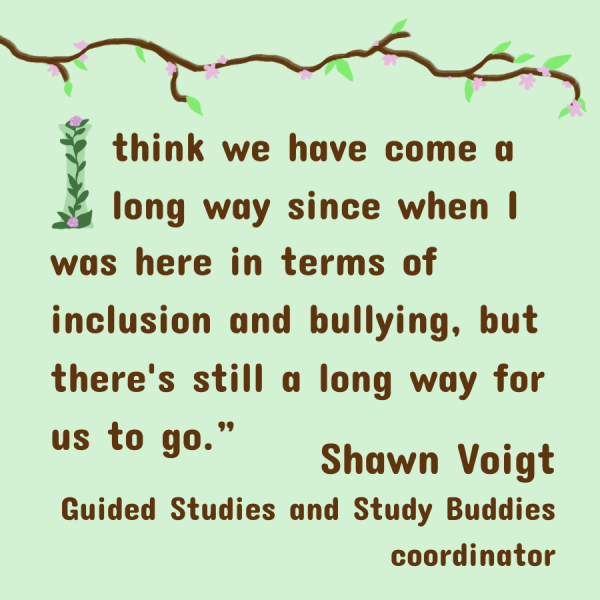
“Monta Vista has changed structurally, physically and also culturally,” Voigt said. “I think we have come a long way since when I was here in terms of inclusion and less bullying, but I think there’s still a long way for us to go. Honestly, I want to see the students use more inclusive language. Even though we’ve come a long way, hearing some hateful language sometimes is disappointing, and that’s our next step that we can better ourselves with.”
To Gabriel, a major benefit of being a student teacher at her alma mater is the unique opportunity to go to school with her younger sister, senior Anelia Gabriel. While she says Anelia wasn’t initially as thrilled as her about the prospect of going to school together, Gabriel says it’s been a highlight of her experience as a student teacher.
“I love it,” Gabriel said. “When I was in elementary school, I would always be like, ‘Man, I wish I could go to school with my sibling.’ Fast forward to over 10 years later, and I found out I had a position here, and I was grinning ear to ear. It has been so much fun. Being the older sibling, you feel this parental responsibility over your siblings, so I’m always checking in on her and finding her on campus. But it’s so much fun to get to go to school with your sibling — even though I’m not a student, it’s just fun to have her here and know that she’s here, and I’m glad that she knows I’m here too if she needs anything. It’s nice to know how she’s feeling when she does talk about school, because I was in the same school and I’m teaching in the same school. But I told her she’s lucky that I wasn’t her teacher.”