

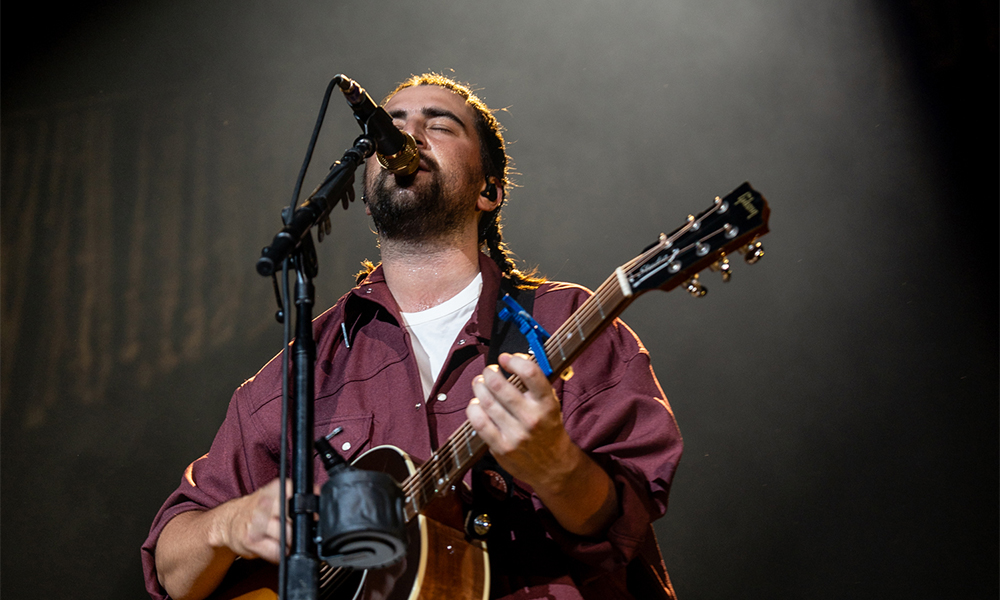
It seems that every TikTok artist’s dream is to be launched into superstardom with multiple sold-out stadiums and two Grammy nominations, much like indie folk-pop singer and songwriter Noah Kahan’s career following the release of his 2022 album, “Stick Season.” However, in “The Great Divide: The Last of The Bugs,” it’s clear that Kahan was cannonballed into his newfound fame and left to drown in a paralyzing identity crisis after his sudden success.
Released on April 25, “The Great Divide: The Last of The Bugs” takes listeners on Kahan’s painful journey home to Strafford, Vermont, where he untangles his complicated relationship with his hometown. For Kahan, his connection to his hometown has been a recurring theme throughout his previous albums. However, in “The Great Divide: The Last of The Bugs,” Kahan further explores this through a new lens, focusing on the emotional fallout and strain on this relationship as a result of his sudden fame. Much of the album sees Kahan diving into the depths of an identity crisis, in which he is left wondering how his fame has redefined his relationship with his hometown through poetic lyrics and an effective metaphor of bugs.
The album begins tenderly, with its opening track, “End of August,” framing a warm scene of Kahan’s return to his small town in summer. Paired with intimate piano instrumentals, the opening track is reminiscent of a warm summer day, capturing its painfully fleeting nature. Through “End of August,” Kahan anticipates the end of summer and the start of a cold winter, setting up the agonizing, self-aware tone of the rest of the album.
Now back in his hometown, Kahan switches between the different perspectives of those he grew up with, including lifelong friends, community members and his mother throughout the album. His most vulnerable song, “Haircut,” is one full of self-loathing and is sung from the perspective of his community. In the song, he laments as one of his community members sings, “You ain’t a goddamn hero now ’cause you cry on live TV / But at least I got a soul still.” By using multiple perspectives, Kahan remains excruciatingly self-aware, criticizing his past of supposedly using his hometown in his previous album, “Stick Season,” which centered on his relation with his childhood home, for his commercial success.
Kahan’s tendency to self-confront, almost too aggressively at times, is what makes his music so endearing — it offers the most humane experience: being hyperaware of the expectations around you and flailing through self-inflicted checkboxes in hope of achieving them all. Kahan furthers this self-disgust through the second pre-single, “Porch Light,” which is a heartbreaking exploration of his mother’s perspective after he left home to pursue his career. Singing “You’re a ghost / Poison spreading to my lungs,” Kahan brings it upon himself to suffocate on behalf of those he believes he has hurt.
Still, within the brutally self-critical setlist, he manages to capture the beauty and comfort of returning home after a two-year-long excursion in the scary world of pop stardom. Through songs like “Paid Time Off” and “We Go Way Back,” Kahan continues to write love letters to his hometown and its memories. In songs like “Willing and Able,” Kahan reveals he is even ready to let go of his fame and fight just for a taste of his old life prior to fame, singing “I’m willing and able … If you’ve got a bone to pick with me,” adding a layer of depth by conveying his ultimate helplessness in dealing with the divide between his musical career and hometown life.
However, following the emotional climax of “Porch Light,” the 13th song on the 21-song tracklist, “The Great Divide: The Last of The Bugs” unfortunately declines thereon. After “Porch Light,” the album drops into an often repetitive rhetoric of topics previously explored. Songs like “All Them Horses” and “Deny Deny Deny,” seem like portions of an unfinished draft from previous songs like “Doors” and “American Cars,” with a repetitive sense of angst and anger towards his hometown.
Still, this latter third of the album does have some redeemable moments, including “We Go Way Back” and the ending song “Dan,” that cut through the monotony with refreshing melodies, lyricism and storytelling. “Dan” provides the same sense of warmth that the album began with, elaborating on a lifelong friendship of Kahan that never seems to fade, sparking hope for the future.
Kahan successfully weaves in complex commentary on the relationships between one’s previous life and present, ultimately realizing that our pasts never truly leave us. As signaled in the title of the album, Kahan uses bugs as a constant motif and a reminder that life is full of cycles of rebirth — and through the self-destructive but loving nature of “The Great Divide: The Last of The Bugs,” it seems that Kahan has made peace with the dark reality that the cyclic nature of life may offer new opportunities but more often than not, leaves people like him stuck in generational cycles of mistakes, trauma and descendence into madness.
RATING: 4/5