

Major spoilers for “Bridgerton Part 2” ahead.
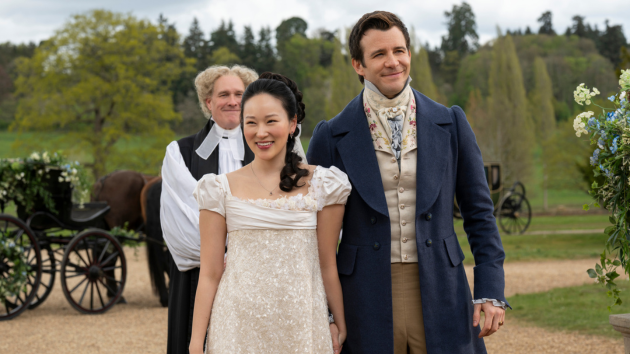
Netflix released Part 2 of the regency-era drama “Bridgerton”’s fourth season on Feb. 26. Adapted from the book series by American author Julia Quinn, “Bridgerton” follows the love stories of the eight Bridgerton siblings in early 19th century English aristocracy. Each season centers around a different sibling’s romance — this time, the narrative focuses on the second oldest Bridgerton brother, Benedict Bridgerton (Luke Thompson), and his romance with Sophie Baek (Yerin Ha), a maid with a mysterious past. As their feelings for one another deepen, the two must confront the rigid social hierarchies that make their relationship nearly impossible.
Part 2 began on uncertain footing. Following Part 1’s awkward cinematography and inconsistent costuming, combined with the lingering disappointment of Season 3, expectations for Part 2 were low. Despite these doubts, Part 2 of Season 4 is exponentially better than Part 1, thanks to stronger performances from the actors, grounded storytelling and striking visuals that finally give the season the depth it needed.
Benedict has previously been portrayed as flippant and unserious for nearly the entire show. He would rather escape into indulgence and detachment than confront his problems. This installment reveals a deeper side to him. Thompson balances charm and vulnerability as Benedict grapples with the depth of his feelings for Sophie. Having spent so long running from his emotions, Benedict struggles to articulate them — especially to Sophie, who forces him to be more mindful of how his actions affect others.
In Episode 5, “Yes or No,” Benedict confesses his love for her in the scene that highlights one of “Bridgerton”’s greatest strengths: the dramatic love confession. Thompson portrays Benedict with desperation — his voice breaking and softening as he speaks to her, showing a crack in his facade of confidence and indifference. Thompson captures Benedict’s emotional arc at its peak during this confession, as he comes to terms with the hurt his actions have caused in previous episodes. In doing so, Benedict begins to show a newfound self-awareness and a genuine desire to become better for Sophie. This part is particularly impactful because it allows Benedict to step beyond the comedic relief he has often provided through the series and instead reveal a more vulnerable and sincere side to his character.
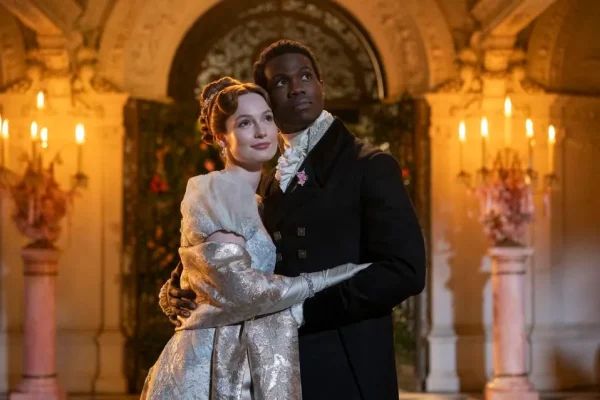
The season also features powerful performances from other members of the cast. Hannah Dodd shines as Benedict’s younger sister, Francesca Bridgerton. Her acting felt seamless and natural in each scene, particularly during moments that demand emotional range. In Episode 6, “Passing Winter,” Francesca attempts to wake her husband John Stirling (Victor Allí), only to realize he has died in his sleep. What begins as a lighthearted moment between the couple quickly shifts into tragedy as Francesca realizes something is wrong. Dodd conveys this shift with remarkable subtlety: her smile slowly begins to fade as she receives no response from John before she begins to frantically shake him, repeating his name and you can tell the exact moment she realizes what has happened because her whole face falls and the devastation is so clearly written before she starts screaming. Within moments, Dodd conveys raw, unfiltered grief, making Francesca’s shock and heartbreak truly believable.
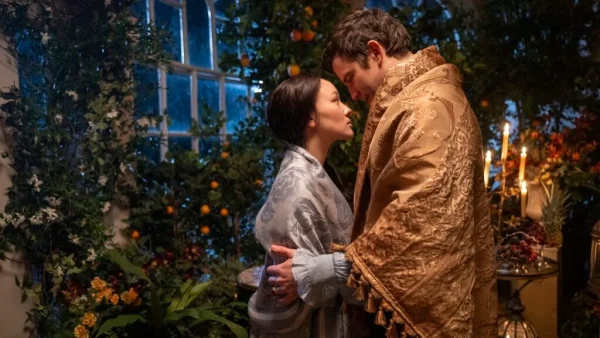
Beyond the actors’ performances, the show also relies heavily on visual storytelling to reinforce the characters’ emotions. Shortly after Benedict’s love confession, he and Sophie sit together in a conservatory surrounded by sunlight, greenery and warmth. The scene radiates optimism, mirroring the couple’s hopeful outlook on their future together. Later, when their relationship becomes strained, the same setting appears duller under the harsh daylight, reflecting the growing tension between Benedict’s romantic idealism and Sophie’s realistic fear of society’s judgement.
Despite these strengths, the central conflict feels repetitive. Sophie repeatedly insists society will never accept their relationship, while Benedict continually argues that their love alone will be enough. Although the emotional stakes are clear, the constant repetition causes the storyline to lose momentum, allowing several secondary plotlines to overshadow the main romance, such as Francesca’s love story and the conflict between Lady Danbury (Adjoa Andoh) and Queen Charlotte (Golda Rosheuvel).
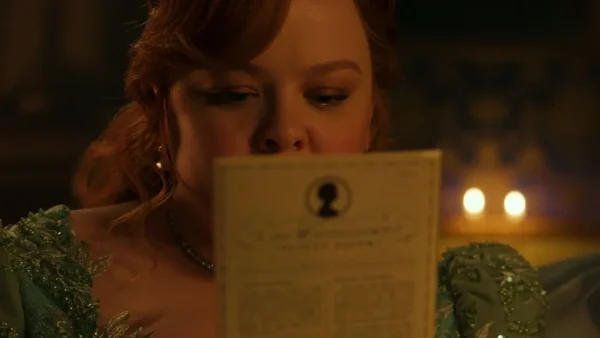
Furthermore, the show falters by introducing unnecessary plot developments, particularly in the handling of Lady Whistledown, a gossip columnist that wreaks havoc in the Ton. In the books, Whistledown is Penelope Bridgerton’s alter ego, and her identity is not revealed until the fourth novel, when she ultimately ends the column. The show, however, reveals her identity far too early in the storyline and abruptly ends the column, only to introduce a new, unknown Whistledown in the final episode of Season 4. By replacing the original Whistledown rather than concluding the storyline, the adaptation appears to stretch the plot to maintain viewers’ interest — a choice that feels more unnecessary than compelling.
Part 1 of Season 4 begins with all the grace of a debutante tripping over her train, struggling with questionable costuming, inconsistent cinematography and an overpopulated plotline. Part 2 anchors the story in emotional depth, stronger performances and visually striking scenes that finally give the season a sense of cohesion. Even the cinematography and lighting begin to complement, rather than distract from, the characters’ emotional journeys. Together, these elements restore the show’s signature dramatic tension and romantic intensity, making Part 2 a notable step up from the season’s first half.
RATING: 4/5