

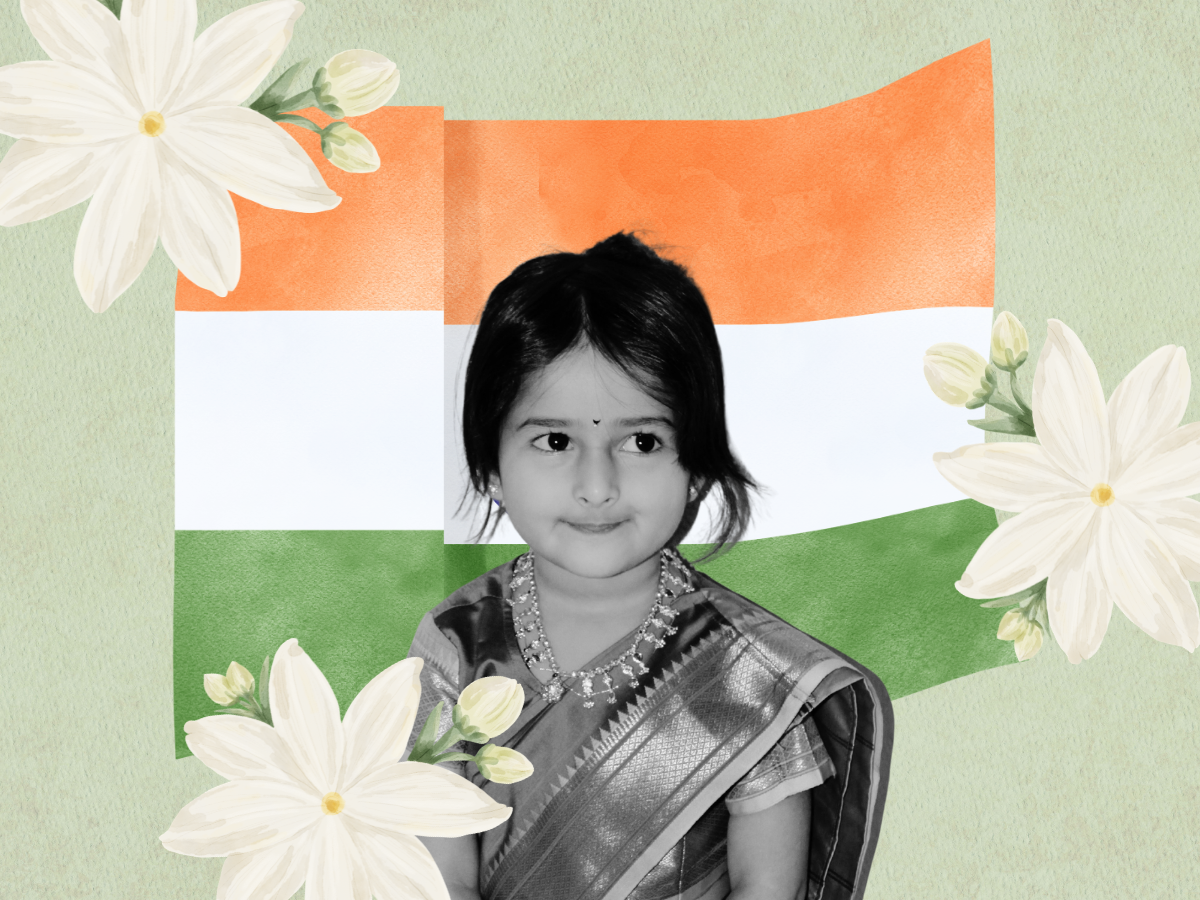
RD: The feeling of being in India after a long period of time away is one that is difficult to describe. The senses of comfort and nostalgia, as well as unfamiliarity, all greet me as soon as I step onto the busy streets of Mumbai. At 8 years old, visiting my family in India was the most exciting thing in the world, and spending time with my cousins was the best part. I remember the sun beating down on our backs, and us being full of laughter as we got ready to go to the local park.
RD: “Guys, let’s hurry, we want to get there quickly!”
RD: The words left my mouth naturally as I continued walking, eager to arrive. It wasn’t until I heard my cousins giggling behind me that I turned around, finding them bent over with their hands covering their mouths.
RD: When I asked them what was so funny, they replied, “Sorry, it’s just — you sound so funny when you speak Marathi!”
RD: It occurred to me then that I’d spoken Marathi, my mother tongue, for the first time in a really long time. My face flushed with embarrassment, and I laughed with them nervously, urging us to continue walking. The moment passed. We were back to walking towards the park and joking with each other again, but my mind couldn’t help but drift back to the words they’d said. Even though they’d mentioned it in a joking and playful manner, the embarrassment incrementally expanded in my mind.
RD: Since then, I began to respond to questions methodically in English without even attempting an answer in Marathi. As a kid, I was largely fluent — able to integrate a few Marathi words and phrases into everyday conversation: “मला पाणी पाहिजे” instead of “I want water” or “मला भूक लागली आहे” instead of “I’m hungry.” When I was younger, the language snuck its way into my everyday life and early childhood videos, filling my home like music. As I grew older, I naturally began using Marathi less and less, but a large part of it came from the embarrassment I felt at speaking it “wrong.”
RD: My whole life, the feeling of being embarrassed prevented me from doing many things. I was someone who would get embarrassed easily, always self-conscious about what I was wearing, how loud I was in public and even spelling out my long last name for people who asked. Embarrassment attacked me like a gut punch, flaming my face and causing my body to break out in a cold sweat. I would do anything I could to avoid that feeling — so I did my best to foolproof my identity, changing how I dressed, staying relatively quiet and forewarning people about the length of my name with a nervous laugh. I was embarrassed about everything, and speaking my mother tongue was no exception, only reinforcing how out of place I seemed.
RD: Whenever I heard my family members in India conversing in Marathi with one another, or even my friends speaking crisp, perfect Marathi to their parents, a small part of me couldn’t help but feel a sense of inadequacy and envy. When I attempted to speak, I stumbled through my sentences, the words feeling awkward and stiff on my tongue. My grammar was never correct, and my accent always fell flat. Marathi — a crucial part of my identity, culture and family — never seemed to cooperate with me. My struggles with the language are anticipated, a result of conversing in English at school and adopting those practices at home. But instead of giving myself grace, I was so humiliated by the way I sounded that I avoided speaking as much as possible.
RD: However, one day, I realized that I wouldn’t be able to avoid such a critical piece of my culture for much longer. I was on FaceTime with my grandmother, who is not completely fluent in English, speaking my standard two sentences of Marathi before being unable to continue the conversation. I was struggling with my words, wanting to tell her about a speech tournament that I had recently been at — the word floating somewhere in the back of my mind — before eventually giving up and saying the word in English, turning to my dad for what felt like the millionth time to ask him how to say it in Marathi.
RD: When I looked at my grandmother’s face on the phone, she had the same bright, glittering smile on her face that she always wore. She said, “It’s OK if you feel more comfortable saying things in English. I can understand English!”
RD: It struck me then, as I saw my grandmother beaming, that all she truly wanted to do was communicate with me. All my relatives in India, from my cousins to my uncles and aunts, simply wanted to communicate with me. They all met me where I was comfortable and where they weren’t, conversing in English with me on a regular basis, so why couldn’t I do the same for them? Suddenly, the embarrassment in my gut seemed so small in comparison to the smile on my relatives’ faces when I did my best to communicate with them in the language they’d grown up with. I realized that I didn’t want to speak English with them; I wanted to be a part of their inside jokes and late-night conversations. I wanted to be more in touch with them and my culture — and nothing was stopping me from doing so other than the embarrassment I’d let control my life for so long.
RD: That doesn’t mean speaking Marathi is not difficult for me. It still is — I still feel the embarrassment creep up on me when I confuse “āmhī gēlō” (we went) with “āpana jāta āhōta” (we are going). I don’t expect to become fluent, but as the embarrassment dwindles down, I feel more connected and comfortable with my culture, my family and myself. It’s not just with language, but I’ve realized that being embarrassed by trivial things is only restricting the way I live my life, things like wearing what I want and laughing loudly in public. My last name is long, but it connects me to a beautiful family tree — worth more to me than its length.
RD: So, dear reader, the fear of embarrassment, especially when it comes to culture, can feel all-consuming. As many of us are children of immigrants, cultural embarrassment has pervaded our lives, whether it be hiding the traditional food our families made us for lunch, trying to change our accents or hiding the traditional festivals we celebrate. But at their cores, the traditions we practice are essential parts of our identity.
RD: Language is a way for people to connect, something we can all do despite how “broken” it may sound. So, never let the fear of embarrassment stop you from connecting with the people around you and strengthening your identity. Take it from me.
RD: Sincerely,