


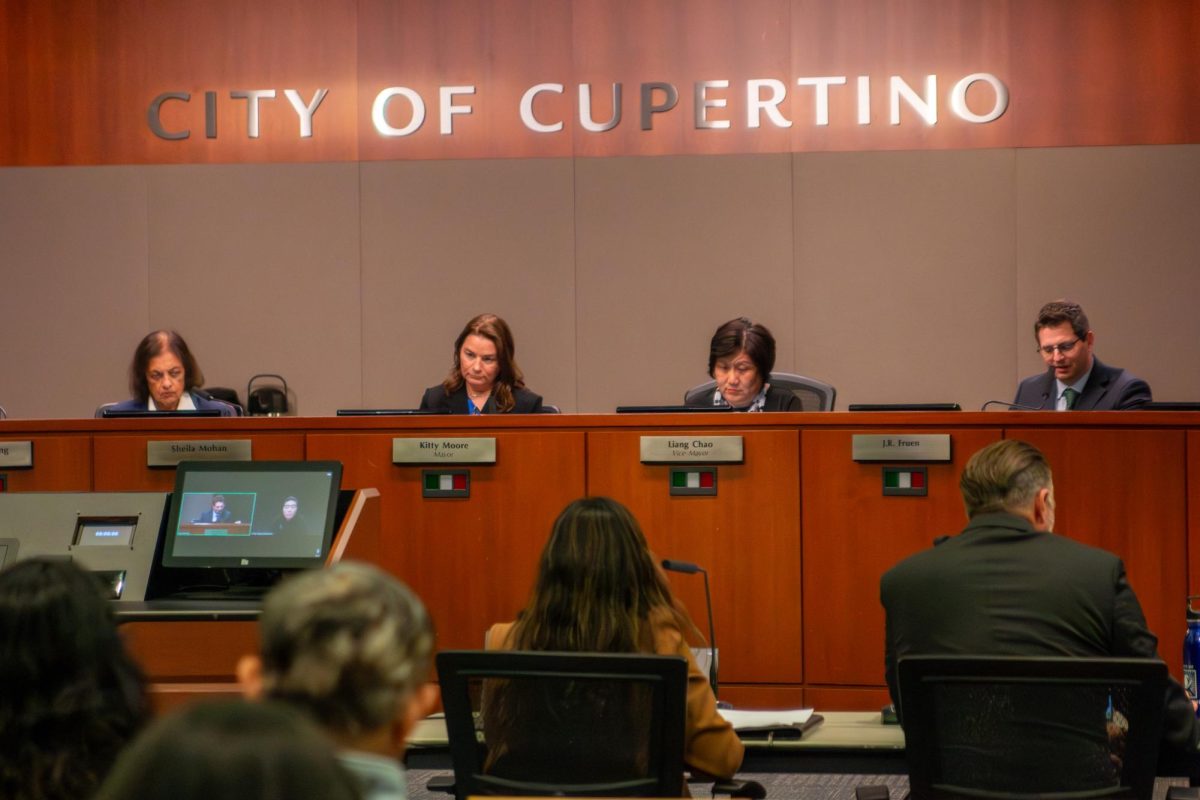
The Cupertino City Council approved Mary Avenue Villa’s Architectural and Site Approval Permit on Feb. 3. The Mary Avenue Villa construction consists of 40 units of housing, 19 units of which are reserved for individuals with intellectual and developmental disabilities. The city council also found the project exempt from CEQA on March 3. By finding the project exempt from CEQA, the city is not required to complete reports on the development’s impact on the environment.
The city council also voted to approve the Disposition and Development Agreement that required the project to keep affordable housing for 99 years, instead of the previously agreed 55 years. The city also designated the land as Exempt Surplus Land. This allows the property to be transferred to a developer without going through the usual bidding process.
However, many residents have concerns, including traffic and environmental implications, about the construction. Lina, the spokesperson for Coalition for Mary Avenue Safety and a resident near the Garden Gate community, says the city is often unresponsive to their questions and suggestions. For example, Lina said that she — as well as other neighbors — suggested creating a crosswalk to accommodate the new influx of people in the community, but she said she hadn’t received a response to her concern.
“They haven’t given us any sense that they are approaching this with an open mind,” Lina said. “They try to shut us down before the hearing is even done. So it really breaks the trust with our neighbors. We’re trying to be helpful. We really know the neighborhood, because we drive here in and out every day. We have families, kids and a lot of retired folks who both take walks and strolls down the street. We’ve been giving them really detailed suggestions about some things to look into, not even telling them that necessarily, to stop this project here. They even ignored our suggestions on how you can make it safer. They don’t respond to our emails, to our letters.”
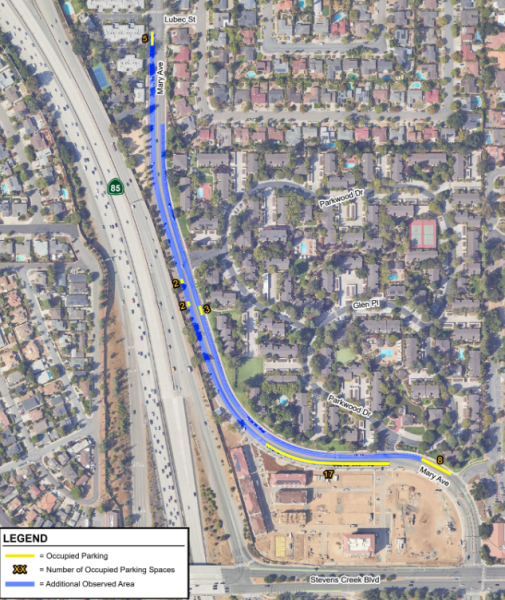
Lina also expressed concerns about the net loss of 89 parking spots that would come as a result of completing the construction. Lina says the street sees overflow parking from Memorial Park and the Westport project multiple times a year during large events and festivals. However, previous two-time mayor and Cupertino Rotary Club member Orrin Mahoney believes that the choice to move the 89 parking spots is clear because the parking spots aren’t used on a daily basis.
“You’re balancing some issues with some good things on any project,” Mahoney said. “But here, Intellectual and Developmentally Disabled housing is very much needed. It’s a critical housing element site. It’s the only site in the housing element for the extremely low-income. Traffic will be better because of the street configuration, and people will drive more slowly. We’re keeping the bike lanes, adding a sidewalk and fixing any environmental issues. The only disadvantage is really moving 89 unused parking spaces.”
The developer of Mary Avenue Villas is Charities Housing, which specializes in housing for low-income individuals. Charities Housing works in partnership with the Cupertino Rotary Club, which has provided early financial support for the project. Mahoney has personally worked with staff and different city councils since 2019 to support the Mary Avenue Villas development.
Housing Choices, another project partner for the Mary Avenue Villas, will manage services for the IDD population. VP of Marketing and Development at Life Services Alternative Hadiyah Fain, spoke in favor of the project at a city council meeting, saying it would expand housing opportunities for IDD individuals.
“We believe everyone has the right to live their lives to the fullest in the community,” Fain said. “Sometimes, you find the most forgotten people unable to advocate or speak up for themselves. Because of the housing scarcity, they are competing against organizations and people who have more ability, means and resources, and this doesn’t leave a lot of space or room for them.”
Cupertino Planning Commission member Santosh Rao, speaking on behalf of himself as a resident, also supports the city’s efforts to build more housing. However, he raises legal concerns regarding the procedures for properly acquiring the land from the city.
“We need housing in the city for all income levels and for all individuals,” Rao said. “However, if we are going to vacate the public right of way, we set a precedent, then the following situations that come after the first precedent may end up even further diluting the process that is followed. State law exists to ensure that the public has input.”
Rao states that when a public right-of-way — land like sidewalks or roads — is converted to commercial use, there are certain legal procedures to be followed under the Surplus Land Act. According to Rao, the city must declare the land as “vacated” first. Afterwards, the city must declare the land as ‘surplus land’ or ‘exempt surplus land.’ Subsequently, the California Department of Housing & Community Development must be notified to conduct a bid with all the interested vendors, and only after that can the city begin negotiations with a specific vendor for the land.
To emphasize the potential financial consequences that may be inflicted on Cupertino if legal sequences are not followed, Rao referenced a SLA violation in Ontario. In this example, the city engaged in negotiations with another party for the disposition of the public right-of-way before it had completed the required steps in the SLA. As a result, the city of Ontario had to pay a large amount of fines to cure the notice of violation. Lina said neighbors have hired an attorney and are considering legal actions.
“A lawyer has been hired by neighbors of the Garden Gate community, and we are certainly pursuing a lawsuit,” Lina said. “They are violating legal procedures. For example, they’re approving the project first, and then they’re asking the planning commission if the plans are legitimate. There wasn’t even an unbiased, open review of the facts before they approved the project.”
However, Mahoney says the city attorney has stated that the process the city used is legal. Above all, Rao believes residents have a right to express themselves and that the council members should represent the interests of all stakeholders. Fain emphasizes the importance of having homes for individuals with IDD.
“When I say the development would be life changing, I think that would be an understatement,” Fain said. “The truth is, some of these individuals have lost a family member. They’ve lost a sense of belonging and identity. And now for the first time ever we are getting adults with IDD a place to call home within the borders of Cupertino, as if they’re real people who deserve to live side by side with other real people. It will give them a new sense of identity, a new sense of dignity and a new sense of self-worth.”