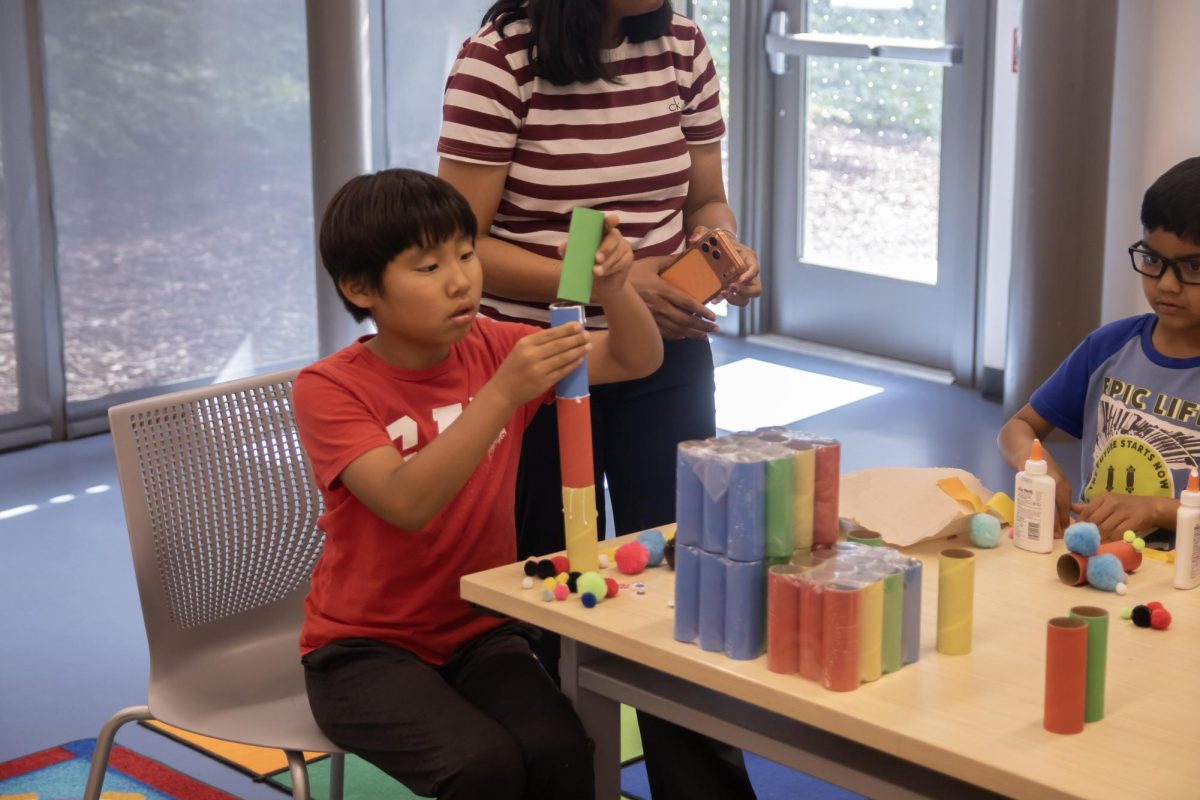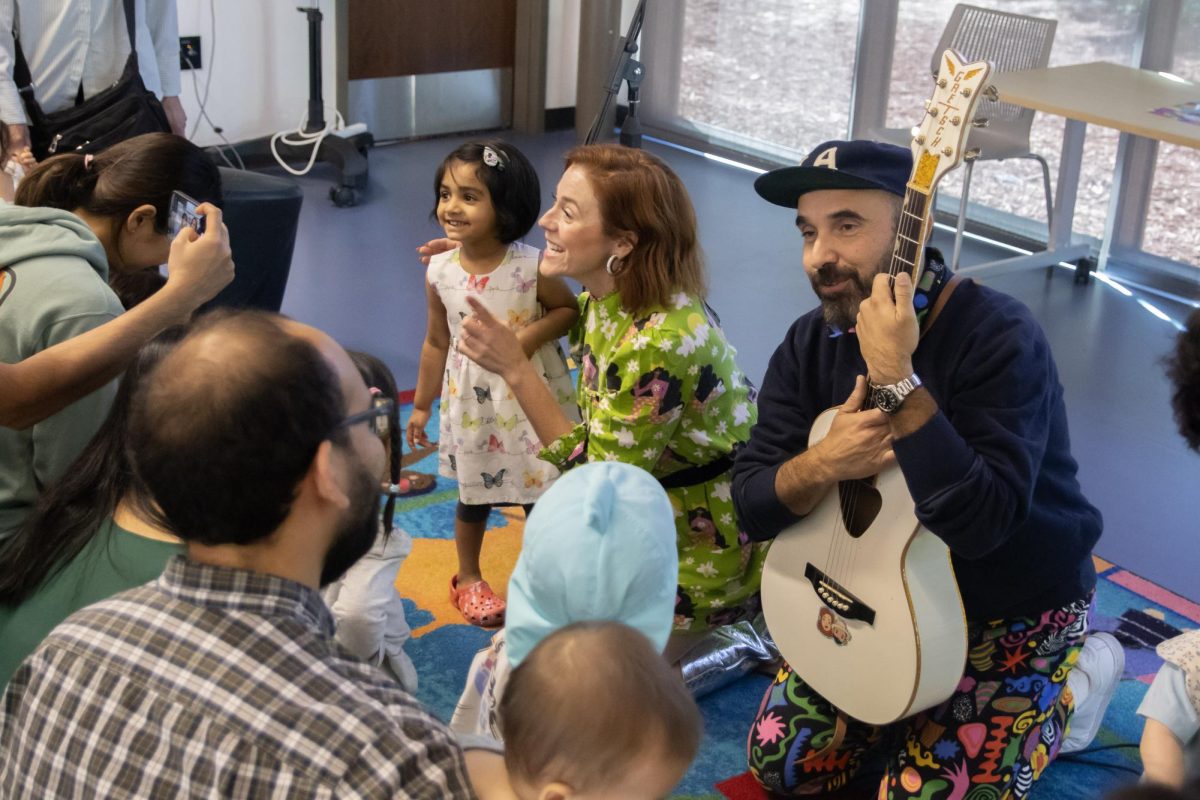



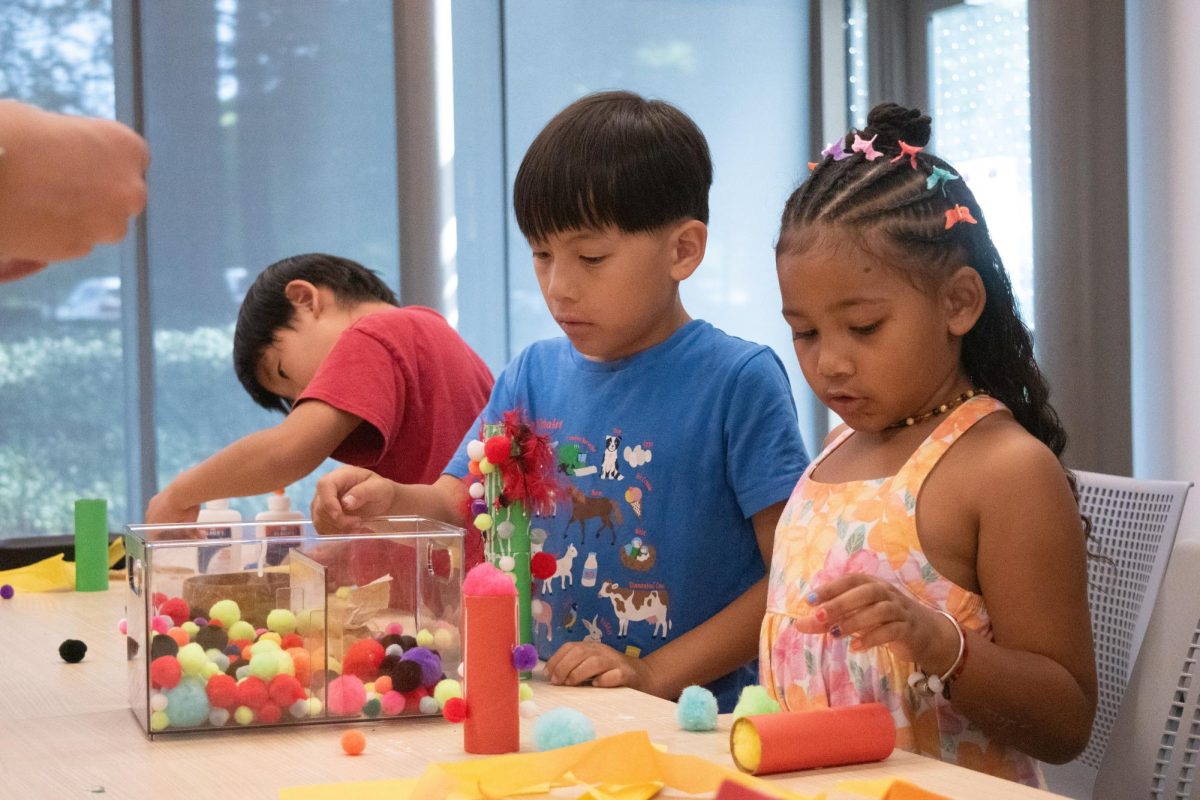
The Cupertino Library hosted its “Voices of Pasifika Story Talk and Craft” from 4 to 5 p.m. on Wednesday, May 20. The event featured Bay Area Pasifika (Pacific Islander) author and illustrator Sophia Tupuola and her children’s book, “Oshun is a Liberated Kid,” which she read aloud to children and their families. The book explores personal liberation, freedom and emotional regulation through the lens of an Afro-Pasifika child in California. During the read-aloud, children learned how to make paper dragons and other art pieces.
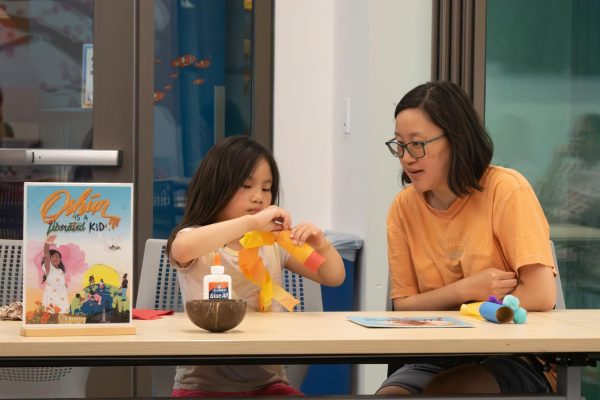
Children’s supervisor at the Cupertino Library Raina Tuakoi says she reached out to Tupuola and other Pasifika artists because she wanted to explore a variety of crafts, storytelling and dance to teach children about Pasifika Culture. Tuakoi, who is Samoan-Hawaiian, adds that because May is AANHPI Heritage Month, she wanted to raise awareness within the community and kept that goal in mind when looking for artists.
“It’s common for us to find a lot of vendors and performers that are from Asian backgrounds, so I wanted to make sure to highlight the Pacific Islander aspect of it as well,” Tuakoi said. “Beyond the dance aspect of the culture, it’s also asking, ‘Are you willing to share your story with us, so that other children in our community can learn more about Pasifika culture too?’”
After receiving the Bay Area Culture Keeper Award in April, which recognizes artists, organizers and storytellers who preserve cultural heritage, Tupuola focused her work on developing her books and building a community, partnering with nonprofit organizations such as the Samoan Community Development Center in San Francisco, Mana Pasifika and Pasifika Urban Roots. Tupuola attributes her involvement in “Voices of Pasifika” to the coconut wire, an expression for word-of-mouth.
“We do readings all the time in the community spaces,” Tupuola said. “It means a lot to be in a library space that is connected to a larger system, a bigger stage to stand on. It was so nice to look at the kids and allow them to sit on a fala, where our people sit to gather, share and nurture the sacred space between each other.”
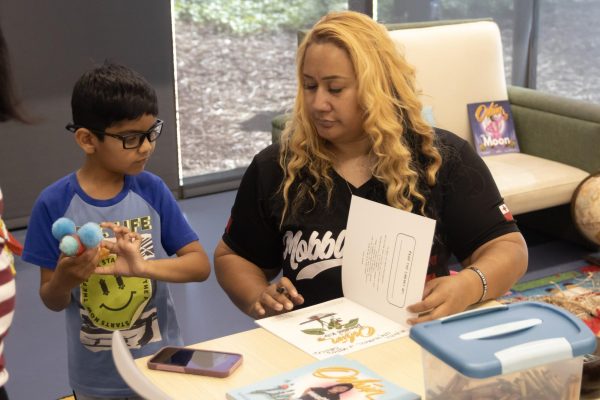
Tupuola, a first-generation Samoan American, says her work focuses on liberation storytelling and on uplifting Black and brown communities through art and literature. She explains that writing children’s books became especially important after having her daughter, who is Black and Samoan, because she wanted her to grow up in an environment where she felt represented and valued.
“My daughter talks to me about all the things she sees in the book, like that there’s a plant that grows from the concrete,” Tupuola said. “She knows that growing from the concrete means growing despite the circumstances. Seeing many other kids mimic the meditation or model how they can use their voice, and hearing them have awareness of their voice, shows their autonomy and sovereignty.”