

It was the summer of 2018 when I first read through the graphic novel series “Diary of a Wimpy Kid,” and one page in particular caught my attention. It was a picture of the main character’s best friend, a clumsy child named Rowley, having a great time fishing with his father. His father didn’t judge Rowley’s faults, and Rowley didn’t fear that his father would disrespect or judge him. They interacted like best friends, but when I looked around my house, I was met with silence. My parents sat there quietly, minding their own business. I envied Rowley’s family, but the significant age gaps in my family made it difficult to achieve a similar family dynamic — while Rowley felt free around his family, mine felt suffocating. Every time I wanted to start a conversation, I was scared that I would be criticized because I felt like I wasn’t mature enough to understand them.
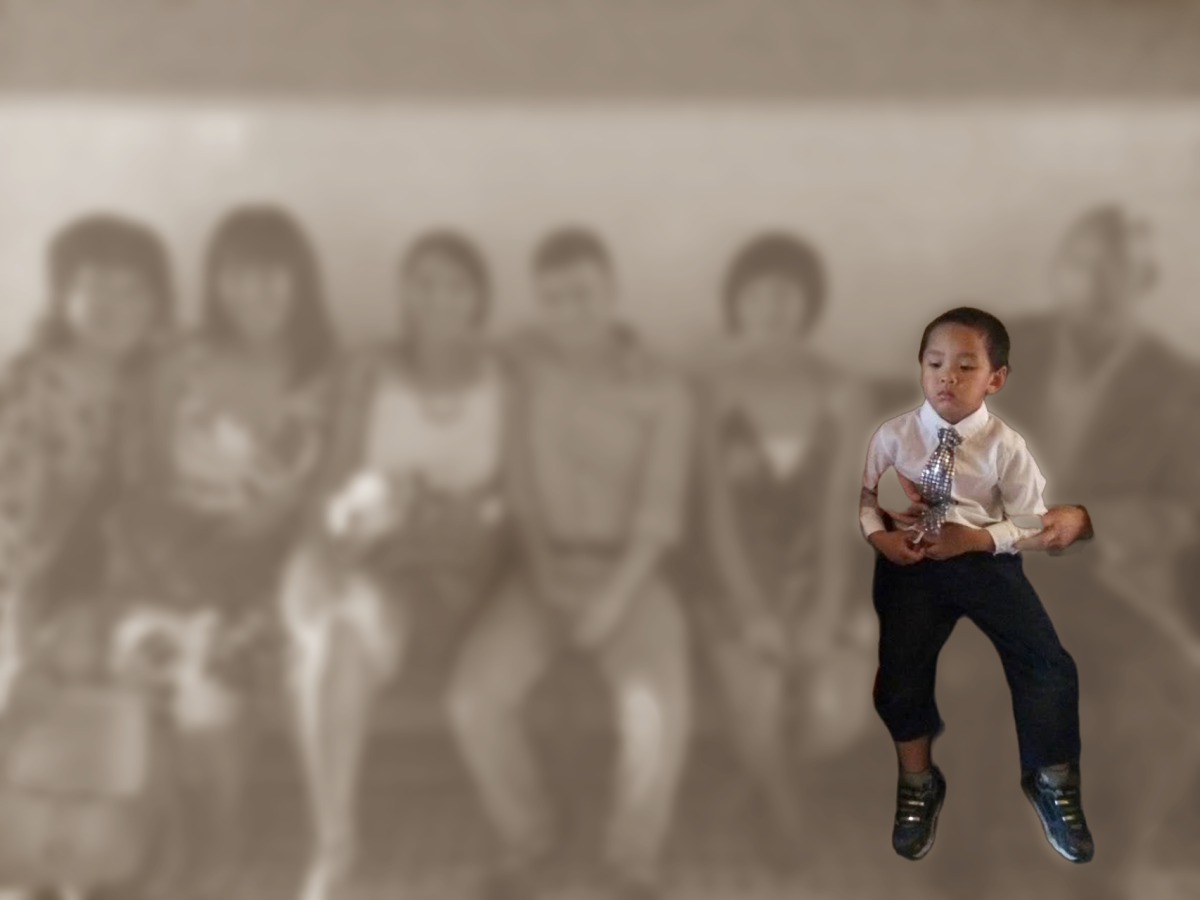
Whenever people hear about the age gaps between me and my sisters, it always shocks them. I have three sisters, who are older than me by 9, 16 and 18 years respectively. This meant that by the time I had hit the age of 2, the house was half empty, and by 9 years old, the house had become a shell of its vibrant past. The work table in the hall was unoccupied, the game consoles had fallen out of use and even the youngest of my sisters had left for college.
It was a moody sight. I envied my sister’s childhood experiences, the perpetual chatter and music within the house. But in the present, as I walked out of my room, I saw just my father working and constantly thought about how my life would have been different if I had grown up with my siblings.
The day my parents retired, I realized just how young I was. My sisters had reached adulthood before my parents retired, yet I was still stuck in middle school. It made me think about the future — I had 18 years fewer to spend with my family than my eldest sister. The facts haunted me, I wanted more time with my family to get close to them, to feel supported and beloved.
My first goal was to get closer to my family. I wanted my family to support me at my worst. When my sisters returned home, I would bust into their room uninvited and get a little too stalker-like. I was annoyed that we didn’t quite feel comfortable around each other and they saw me as the awkward, annoying little brother — the little brother they never got to know. I would ask them to bring me places, and when we went on family outings, I started to be the first out the door, waiting for everyone else.
Then as I thought about their age, I realized that my parents would only be by my side till I was in my 40s to 50s, which meant I only had so many years to prove my ability to succeed. It placed me on a time limit. Then reflecting upon my life, I also realized that compared to other children I was doing very little academically. Yet I wanted my parents to see me and a successful future? I knew I needed to change something.
And this led to my second goal: to prove myself to my parents quickly. They were already in their late 50’s, encouraging me to do more in the time I still had with them. I would think about how empty my schedule had been and decided I wanted to achieve more academically, hoping I could become someone my parents could show off before old age degraded their bodies. Suddenly I, a child who had hated all things academic, had begun walking up to my parents and encouraging them to sign me up for more classes to prove I was a capable child. Most of all, though, I just wanted to impress them and grow closer to them.
The reality was that I was late to the party. I was an only child. I had sisters, but I lived life as if I didn’t. My sisters weren’t cold either — they would take me out and treat me to boba; yet the silence in the car was loud. In the past I had taken their presence for granted, I never wanted to leave my calls to join them during family outings or talk to them. Yet now I want to know them better. I wanted good memories I could look back on in the future. I wanted Rowley’s family life. I would still try to strike up conversations with my parents every once in a while, but those mainly consisted of me listening to stories about their past, rather than laughs and deeper connection.
These thoughts would stay with me even up to eighth grade, and my goals made me sleepless. Not only did the thought of their deaths horrify me, but I felt I had missed a huge amount of family history. My sisters had grown up with people in the house they could depend on, while I was treated like a nephew by my siblings and an employee by my parents. I wanted more from my life and my family. In my panic, I realized that I was chasing a life that had long gone. My sisters had already grown up and left for good, and the life I had searched so hard for was never coming back.
Although I had missed the peak of our household and was living a fundamentally different life, that didn’t mean it had to be worse. While I missed out on my sisters’ childhoods, I realized I could forge my own through new experiences and memories.
From this point on, I would have to get over the past and try again. I started more casual conversations with my parents and sisters and talked to them about my life more. I stopped hiding my personal life and hobbies from them — after all, they were family. I would sit in the living room, chattering away with my sisters about my life and recent events, while I learned more about them than ever before. For once I felt equal and respected, they spoke to me like an adult, like one of them. Most of all, I felt a dynamic, genuine connection between us.
I saw progress from this effort. By last summer, my sisters and I had a more casual sibling relationship, and I no longer felt like I was being interviewed for a job when I talked to them. I even had the guts to troll my mom. By not limiting the way I talk to my family, I earned chances to really get to know them. Then by taking steps to curate my own experiences, it allowed me to get more out of the time I spent with family. Every time my sister returned for a week, I would find time to spend with her, and every time I was free, I was outside my room, usually participating in a movie night with my parents.
I had stopped dreaming for someone else’s idealistic, but unrealistic life. Instead, I made a life that is personal to me by learning to value my time with not only my family, but also the people around me. By taking initiative in my relationships I achieved more closely-knit relationships. So max out your photo albums with pictures of great memories so one day in the future, you won’t regret that you didn’t spend more time with them, because you achieved the most possible value from the time you had.