



“Hey, um, I just wanna tell you that, um, I’m not really looking… for anything… serious. Is that okay?”
This is what main character Summer Finn says to Tom Hansen in the 2009 film “500 Days of Summer.” The central conflict of the movie revolves around the ambiguous romantic relationship between two characters, as Finn meets Hansen, a hopeless romantic. The two grow closer, and the dynamic evolves to be more relationship-like, with holding hands and going on dates. Ultimately, Finn and Hansen find themselves in an unexpected relationship that includes everything but the label of “boyfriend and girlfriend.”
This dynamic between Hansen and Finn depicts what is now commonly referred to as a “situationship,” a romantic connection that lacks clear boundaries or labels, often existing in a gray area between friendship and a committed relationship. According to Tinder’s 2022 Year in Swipe Report, there was a 49% increase in users including the term “situationship” in their bios, and according to a poll of 86 MVHS students, 41% report having been in a situationship, showing how normalized this type of relationship has become among young adults. The rise of dating apps, social media and hookup culture has contributed to the popularity of situationships, as they allow people to explore romantic connections with less pressure and expectations. Situationships often include avoiding labels, or when partners avoid defining the relationship as “dating” or “exclusive” in order to keep the relationship more casual. However, this lack of definition often leads to mixed signals and partners not being on the same page, making situationships common yet emotionally complicated.
Junior Elva Tang emphasizes this emotional complexity and explains that although situationships offer independence, flexibility and fewer expectations, they are often built on ambiguity and a lack of clear communication, which can quickly turn those perceived benefits into emotional risks.
“You’re never on the same page as the other person,” Tang said. “You might be wanting something more, or the other person might want something else, but then you really don’t know, because you don’t talk and you don’t have that obligation to be talking.”
Social media and instant messaging apps have only increased the prevalence of situationships in modern dating. According to a 2024 poll, 50% of Americans aged 18-34 have been in a situationship, with social media acting as a catalyst in 17% of situationships. When situationships begin and largely unfold on online platforms, it allows for ghosting — when someone vanishes with no explanation — to occur at any time and creates an environment where “breadcrumbing,” or dropping random messages after a period of not talking to keep your partner hooked, is normal.
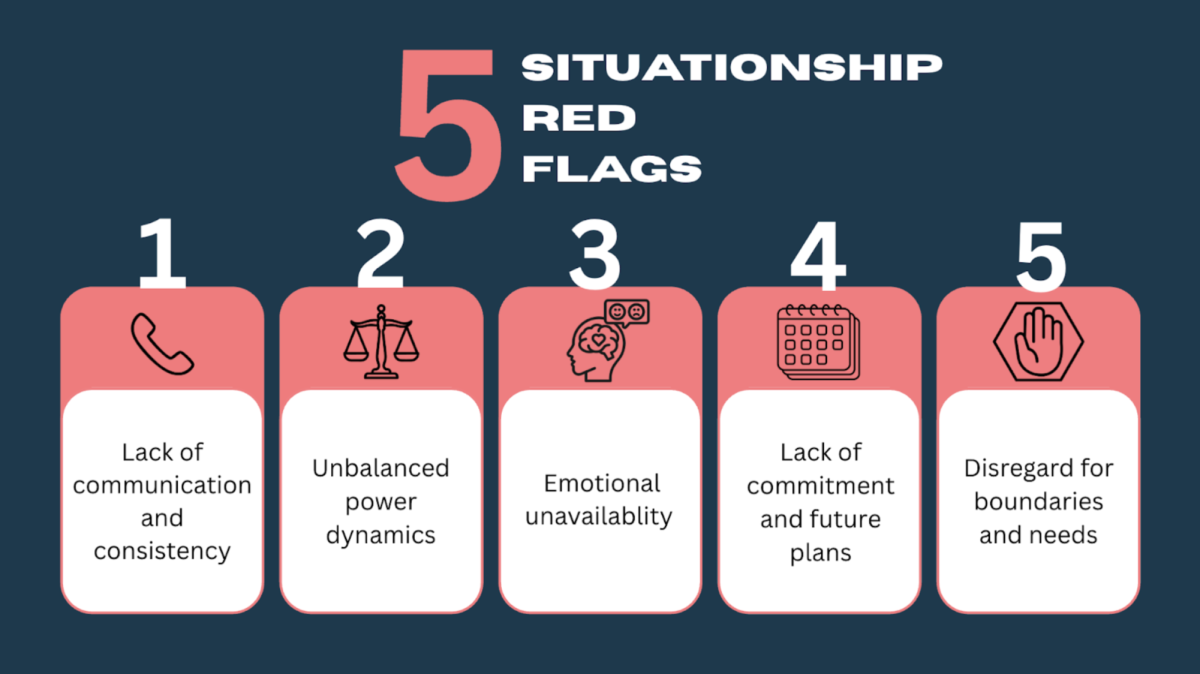
Patterns like breadcrumbing are incredibly common in situationships and are often a result of an unequal investment in the situationship, where one person may want something more while the other wants to continue to not put a label on the relationship. Since situationships — sidestepping open communication — typically rely on this factor, one party may find themselves emotionally drained, anxious and lonely.
Despite this, people usually stay in situationships due to the hope that they will turn into something real, or because they fear losing what little they have. Research also points out that situationships may indicate a “false sense of movement” due to the pull factors or manipulation tactics one partner may use. As a result, situationships can still take a toll on mental health. As someone who was in a situationship herself, Tang explains that even without a formal relationship, people can become emotionally invested, and when the situationship ends, the person with lower self-esteem may be left blaming themselves and trying to “get them back,” while the other partner has already emotionally detached. She recalls experiencing a variety of emotions during her own healing process, something she recognizes as normal for those experiencing the loss of a situationship.
“I shouldn’t have ever let a man dictate that much of my emotions,” Tang said. “I think the healing process took a lot longer than I expected. I was just sad, but I was also mad sometimes.”
These impacts aren’t uncommon — according to one survey, 75% of single people have had their heart broken from a situationship and 53% said that the heartbreak felt as bad or worse than in a committed relationship.
Situationships could potentially allow for partners who want to enjoy their independence and experience the benefits of being in a relationship simultaneously. Being in the gray area may benefit those who want to learn more about relationships and have a desire to explore. The issue arises when there is no open communication between both parties to ensure that this is what they both want, leading to a push-and-pull relationship rather than what was initially intended. If both people are not honest with each other about what they want, the situationship may fall apart.
Though situationships may prove to be more appealing options for some, honest communication is a necessity for any type of relationship. Before stepping into anything, make sure you are clear about what you’re looking for from a relationship from the beginning and make sure to consistently communicate about what the two of you want. If you find yourself in a situationship and want more than the other person is offering, walk away. Tang highlights the importance of leaving, despite how difficult it may be.
“Do you really want to tell your kids that your first love was this guy that you never had a committed relationship with?” Tang said. “And that he kind of manipulated you? Don’t do it. I feel like it’s kind of a waste of time, and it’s not worth the emotional aftermath.”