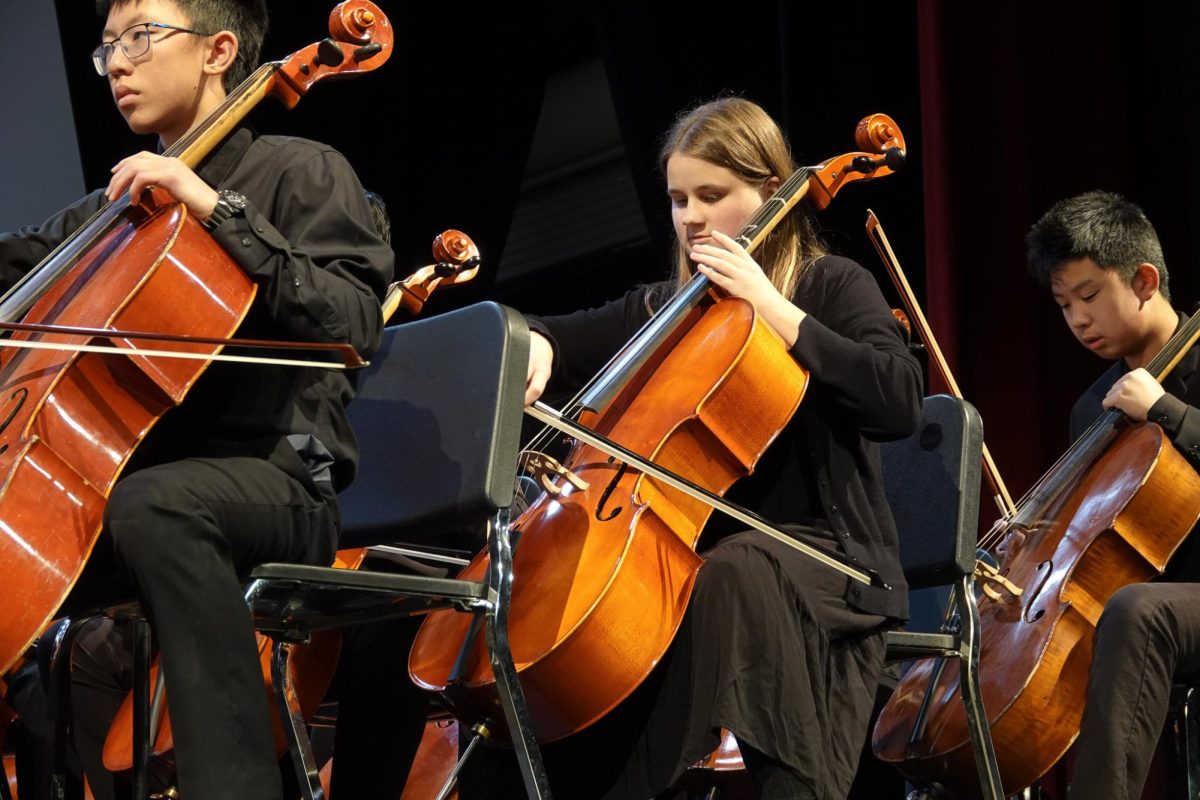


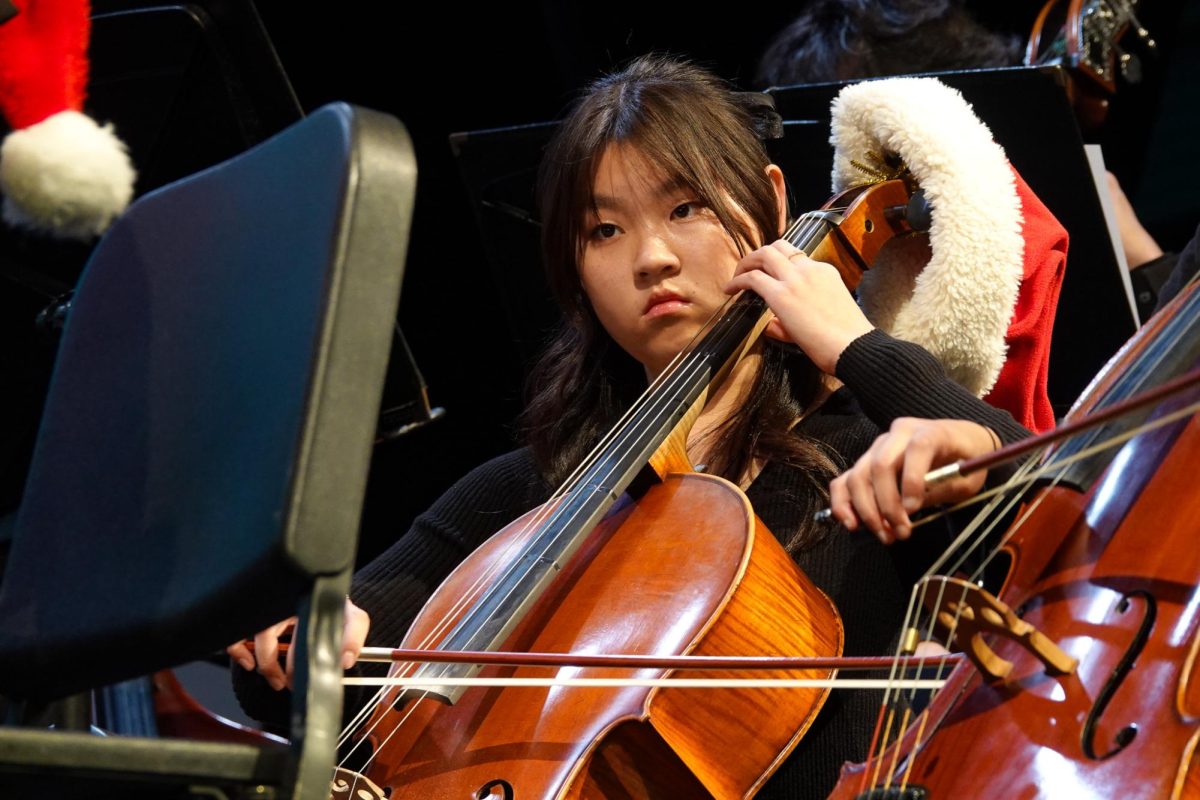
EE: MVHS Orchestra held its annual Sounds of the Season winter concert on Friday, Dec. 4, featuring performances from Chamber Orchestra, Philharmonic Orchestra and String Orchestra. The concert included a repertoire that ranged from traditional holiday selections such as “Sleigh Ride” to classical works and modern arrangements from “The Nutcracker” suite. The director of instrumental music, John Gilchrist, was on paternity leave during the majority of the preparation for this year’s concert, which left students to adjust to rotating substitutes and a lack of structured rehearsals. However, according to Gilchrist, substitute teacher Mr. Hong stepped in to lead the ensembles with a bachelor’s in musicology and plenty of conducting experience.
EE: According to Gilchrist, the weeks leading up to the concert required significant behind-the-scenes coordination, especially since the orchestra relied heavily on consistent direction and technical guidance. Gilchrist had prepared several substitutes, but with many falling through unexpectedly and most lacking music knowledge, there were gaps in instruction early in the preparation cycle.
JG: For music, I’d say more than any other subject, you really need somebody who knows how to do music and understands music. It’s not like other subjects, where they can just kind of walk you through a lesson plan you need. You’re actively assessing while you are giving instruction. So if you don’t know the content area very well, it’s just not going to make any sense to you. So it was really great that we were able to get Mr. Hong in.”
EE: According to junior and viola player Jenine Jain, as the concert date approached, the orchestra gradually began adapting to the new rehearsal environment with Mr. Hong leading the class. Jain recalls that, on the night of the concert, the ensembles performed with minimal full-run rehearsals. However, Jain is proud of how the concert went. Junior and violin player Tara Brumand notes that although the group wasn’t perfect, the performance reflected the hard work the orchestra put in and agrees with Jain on the outcome of the concert.
TB: For me, I think the concert was probably as good as it could have been, given the amount of time that we had. Which isn’t to say I thought we performed the best that we ever have, but I think it wasn’t bad, given the constraints that we were under and given the limited resources that we had. I think we could have definitely played better on our piece featuring the flutes, because we only had one rehearsal with them. We had some timing issues with being together with the flutes because we’d only rehearsed once with them. I feel like we definitely could have been more confident with our playing. But again, that’s something that takes time, and it’s not really a problem of ‘oh, it’s just something we’re not good at.’ It’s just because we didn’t have as much time this time to prepare for the concert.
EE: To Gilchrist, watching Mr. Hong conduct “Sleigh Ride” and seeing different sections enjoy performing the festive song was a rewarding end to the concert. Brumand and Jain note the highlight of the concert was “Sleigh Ride,” conducted by Mr. Hong. With this being their second time performing “Sleigh Ride,” students began forming traditions, such as wearing Santa hats while performing.
JJ: Every year what I do is I take my phone and my stand partner and I play Sleigh Ride. We just record ourselves playing it, like those YouTube POVs, like two instruments playing Sleigh Ride. So that was my favorite moment.
EE: Looking back, Gilchrist believes that the unconventional preparation period ultimately strengthened the ensemble, encouraging students to develop independence and collaborative skills. After returning from paternity leave, Gilchrist noticed the clear improvement the orchestra had undergone during Mr. Hong’s time instructing them, leaving Gilchrist proud and thankful for Mr. Hong. Gilchrist says watching his students’ passions and characters develop through orchestra is a highlight of teaching music.
JG: I believe that music isn’t just about becoming a better musician; it’s about becoming a better person. So I try to make the ensemble experience growing as a person through music.
EE: As for the orchestra students, the concert was a reminder of the student community sustaining the program. Both Jain and Brumand note the orchestra’s developing chemistry, with members growing closer over time. Although the preparation for the concert was rushed and demanding, both agree that the performance was successful and created lasting memories.
TB: My favorite part of being in an orchestra is seeing the immense growth that comes after you’re given a piece that you absolutely don’t expect to be able to handle as an orchestra. Initially, you think this is way out of our talent level and capacity. Then taking the rehearsal time and actually seeing like, ‘Wow, we’re coming together, we’re getting this done’. Now I feel like that’s super rewarding and super satisfying, because it not only attests to your abilities as a musician, but also makes you feel closer to the people that you’re playing with. You form a bond through pushing through those hard moments, performing a piece and breaking your own expectations of what you’re able to do.