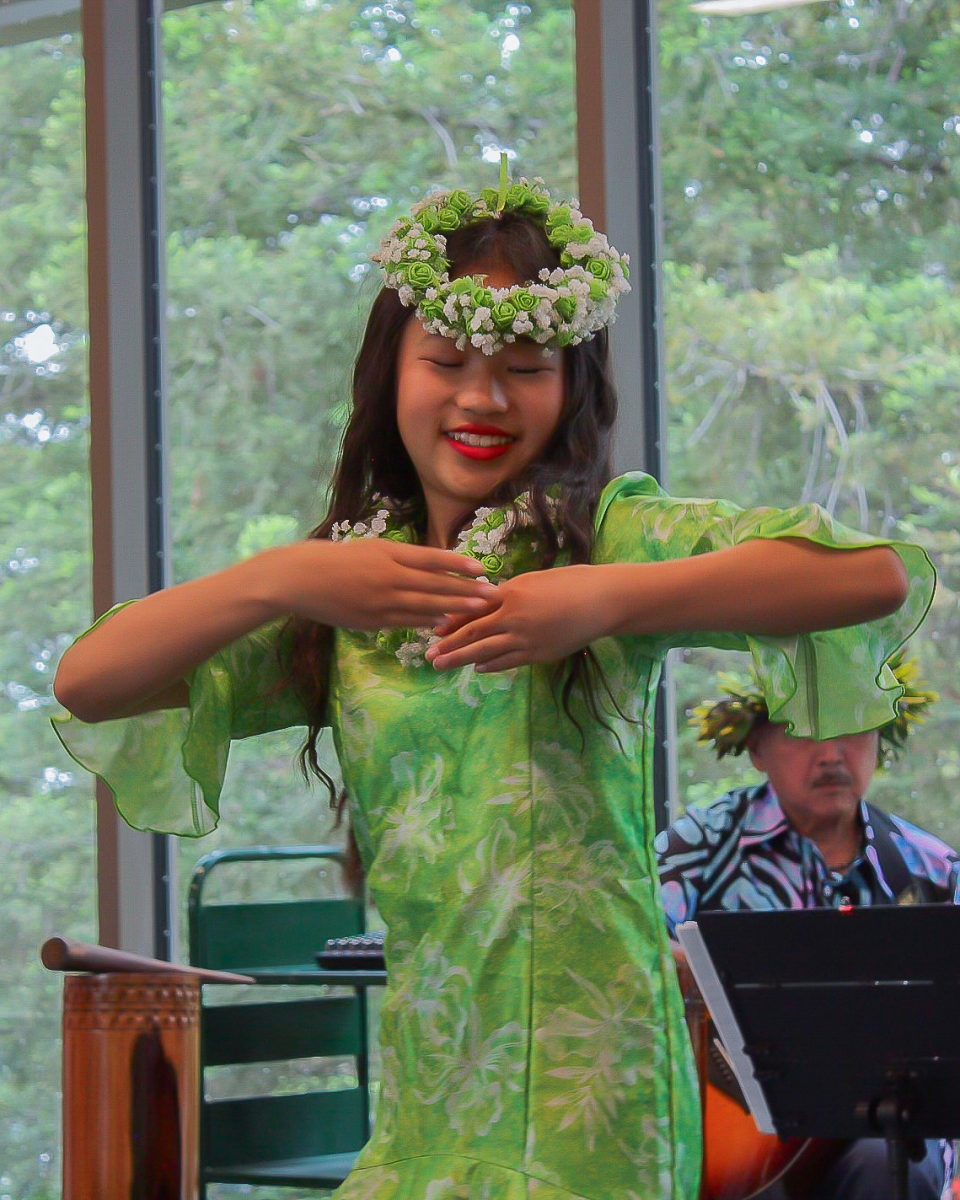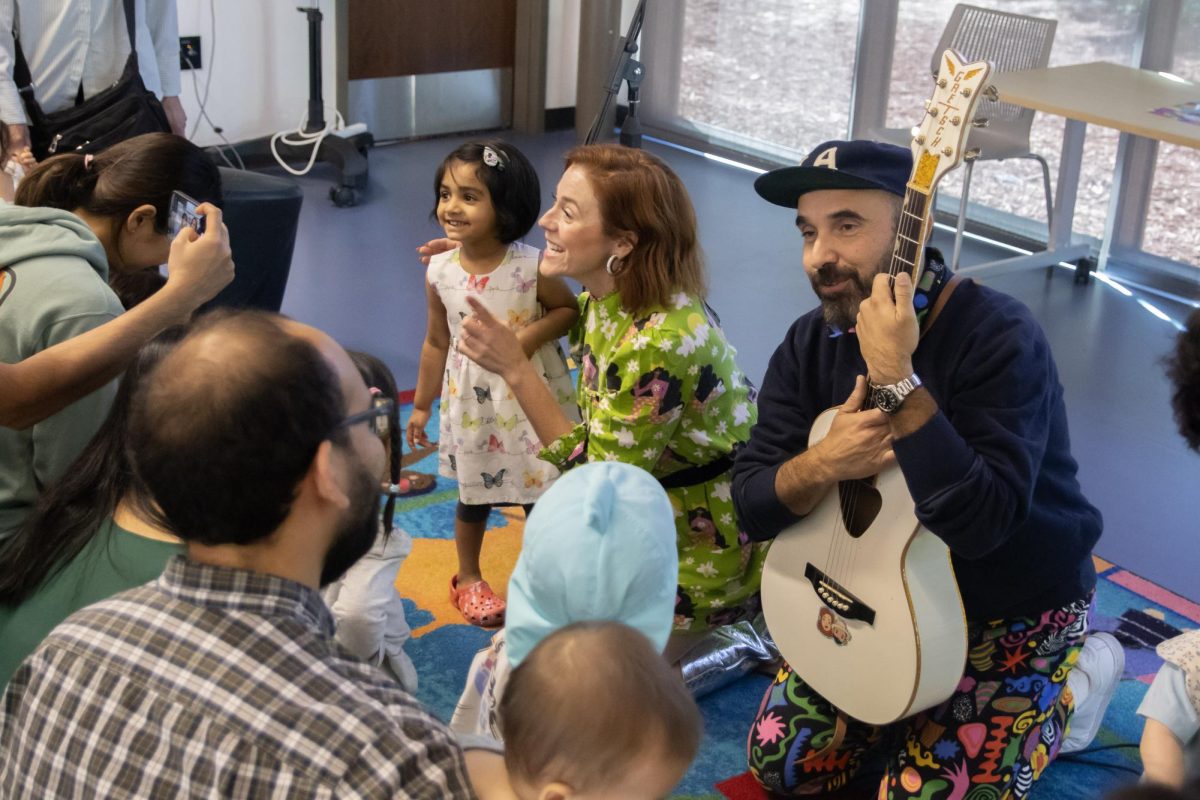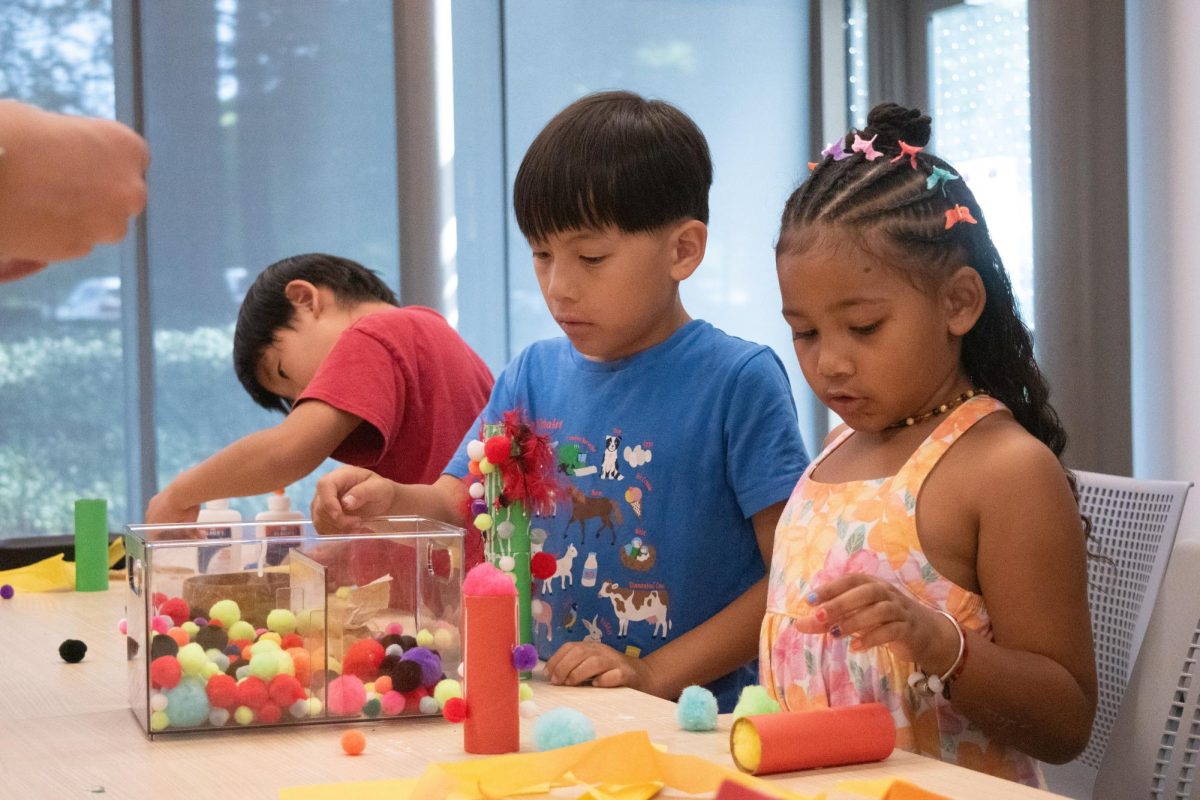

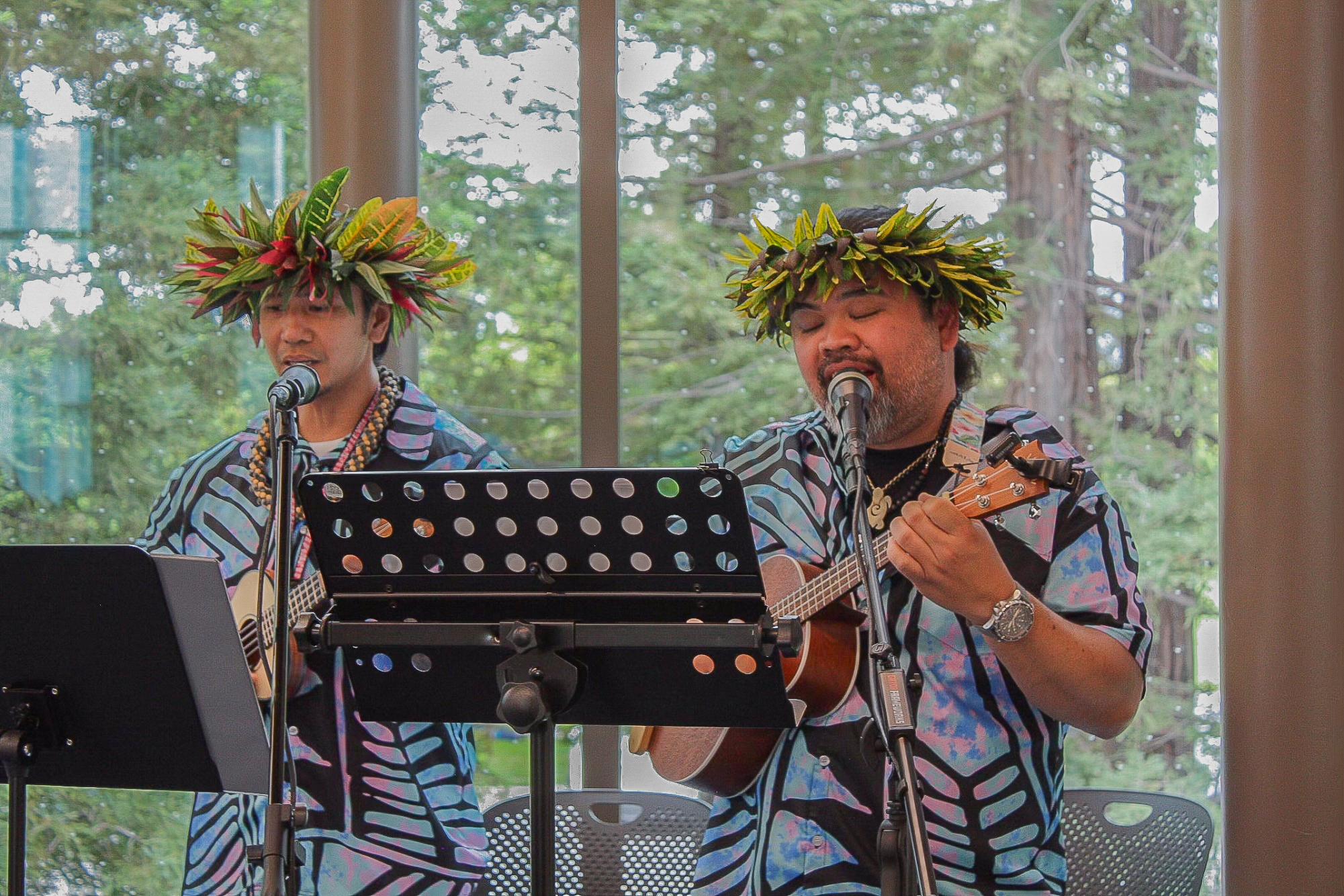


The melodic tune of traditional Polynesian songs fill the Cupertino Library on Saturday, May 2, from 11 to 11:45 a.m., alongside booming drums and lively ukulele music to celebrate Asian American Pacific Islander Month. Rahiti – Hālau Hula O Keli’ikoanuiokeao, a Polynesian dance company based in South San Francisco and Ewa Beach, Hawaii, showcased dancers of all ages who performed 11 traditional Polynesian dances from Tahiti, Samoa, Hawaii and other Pacific islands.
Despite performing songs from across the Pacific islands, dancer, singer and owner of Rahiti, Remie Aranda, says all the performers research the meaning behind every lyric and dance movement performed before rehearsals. She adds that one of the core values of Rahiti is the authentic representation Polynesian cultures through dance, song and fashion.
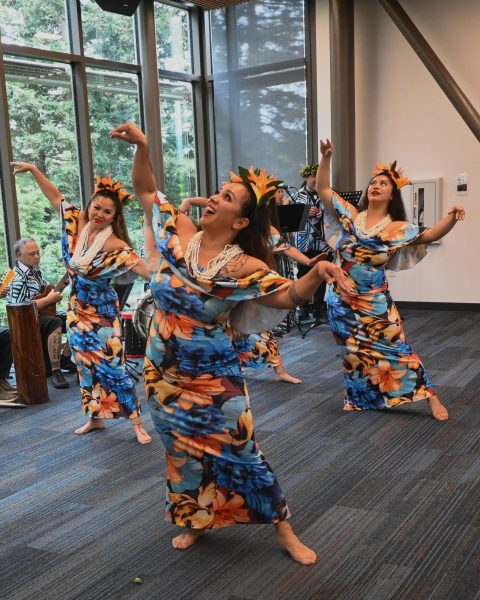
“We’ve hand-sewed our costumes and every lei,” Aranda said. “Every pattern has meaning and every song has meaning. That’s the difference between us and groups that dance just to dance, per se. If you’re going to dance someone else’s culture, research it. I get the words, research them, translate them, so I know the meaning behind every line. It’s not just something I saw on the internet.”
Rahiti performs both locally and internationally, with several shows every weekend during busy seasons like AAPI month. Aranda, who grew up in the Bay Area and has Hawaiian ancestry, says that dance informs communities about what authentic Polynesian culture looks like, rather than the commercialized depictions of it.
“It’s a fight we’ve all been fighting across America,” Aranda said. “When we bring Polynesian culture here, the goal is to respect and instill the same traditions as if we were in Hawaii, or Tahiti, or New Zealand, or Tonga or Samoa, but it gets lost in translation. There is a struggle with a lot of American groups that dance these traditional dances because they put American in it, and these islanders don’t want America in it. If you’re going to represent this culture, represent it the way it’s supposed to be.”
Aranda has been a dancer since she was 5 years old and inherited this company from her parents. However, she says that regardless of the age people start dancing, what matters most is bringing passion into the performance.
“Give aloha, share aloha and breathe aloha,” Aranda said. “It means live life with love, live life with passion. You give aloha and receive it. You give love, you receive love. When we dance, we give our awe, our passion, our love, so when you receive it, you give forth. Whatever we’ve done here, we try to project, and hopefully a piece of that knowledge goes out to everyone that has seen our performances.”