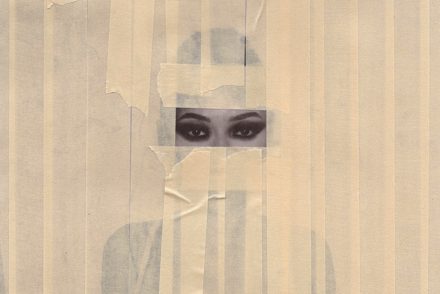



Renowned popstar and actress Sabrina Carpenter released her seventh full length album, “Man’s Best Friend,” on Friday, Aug. 29. Carpenter initially rose to fame as Maya Hart on Disney Channel’s “Girl Meets World,” and has achieved global stardom as a singer-songwriter after the track “Espresso” from her album “Short n’ Sweet,” went viral in 2024. “Man’s Best Friend” marks Carpenter’s next step into her musical journey as an internationally recognized artist.
Carpenter’s latest album does its best to properly showcase her affinity for catchy, danceable hits. Similar to the production in “Short n’ Sweet,” Carpenter continuously uses loud bass, guitar instrumentals and a broad range of vocals, which position each of the album’s songs to be palatable for a general audience. Carpenter also expands her musical range to slower, sultrier and retro production, such as in “When Did You Get Hot?” and “Sugar Talking,” which positively showcases her growing depth as a musical artist, moving away from her previous more generic, store-pop beats.
Carpenter also displays her surprising ability to stay on the theme of romance and performative men through each one of her tracks. In the opener track “Manchild,” Carpenter introduces her conflict with a romantic interest: “Won’t you let an innocent woman be? […] Manchild / Why you always come a running / Taking all my loving from me?” Carpenter sings about the men she is romantically involved with in a patronizing tone, saying that they “always come a running” to her, much like a child seeking the comfort of their mother. Similarly, she continues the song by expressing how they also suck the life and love out of her.
Despite “Man’s Best Friend”’s distinctiveness, the album lacks the emotionally impactful depth her previous albums “Short n’ Sweet” and “Emails I Can’t Send” had, falling into a cycle of lackluster lyricism and similarly underwhelming production. In “Tears,” Carpenter falls back on the chorus five times, repetition that speaks to an inability to present new themes in the album. A majority of her songs on “Man’s Best Friend” are surface-level — While the songs’ pop sensibilities are fun, Carpenter places more emphasis on crafting a snappy, “TikTokified” beat, or a sure formula to rocketeer her back to the top of the billboards rather than profound lyricism.
Furthermore, Carpenter caters to the male gaze excessively in an album supposedly about rejecting and getting over a male love interest. The track “Manchild” tests the boundaries between what can be considered as satire and what is simply pandering to the male gaze. Lyrics like “You used to love my ass, now baby you can’t see it anymore” in “Goodbye” push the limits of playful lyrics and female objectification by implying that a woman’s body is the only thing she has to hold over a man. It eventually becomes tiring to hear Carpenter get a little too close to controversy in an attempt to cling to the persona of a feminist that takes charge of her sexuality through flimsy lyrics.
The production of “Man’s Best Friend” struggles with coherence, leaving it unfocused. While Carpenter attempts to mix different kinds of music together in a single track, like in “Goodbye” and “Go Go Juice,” the melodies of each song become drowned out by the intensity of background piano and guitar instrumentals. It isn’t that Carpenter isn’t a capable artist — “Go Go Juice” can be likened to a catchy production, fusing lively instrumentals and a remarkable fiddle solo to create a theatrical effect that makes it feel like one is in a midwestern bar — but the flakiness in the album’s production speaks louder than Carpenter’s cacophony of backup instruments.
While the iconic album “Short n’ Sweet” was Carpenter’s first taste of worldwide celebrity status, “Man’s Best Friend” is a halfhearted attempt at continuing that momentum. It doesn’t seem to be entirely there, since what truly brought Carpenter to that level of fame was a creative shift in her songwriting that wasn’t seen before. Yet, while Carpenter failed to recreate the success of her previous albums, her ability to experiment with genres and lyrics so liberally leaves some hope for her future endeavors. With shaky production and shallow lyricism, Carpenter seems to grasp at her success with equally unsteady hands.