


James Gunn’s “Superman” begins with a montage of chilly Antarctic ice, as blue and orange morning lights and powdery fog rush over mountain peaks and a snow-white landscape dotted with black rocks. The breadth and high definition of these shots depict a calm and strangely peaceful mood that is emphasized by the ethereal track “Home” by composers John Murphy and David Fleming — the antithesis of a classic superhero movie.
This all changes as Superman is hurled comedically towards the ice in a bloody, high-speed crash, his embarrassment exacerbated by on-screen text calling out his first-ever defeat.
“Superman,” released by Warner Bros. Studio in the U.S. on Friday, July 11, is an adaptation based on DC Comics’ 1938 superhero, directed by American filmmaker James Gunn. The 2-hour and 9-minute film became an overnight success, appealing to both critics and fans worldwide with an 83% Rotten Tomatoes score and a whopping $407 million in box office earnings a little over a week after release. Through its attention-catching cinematography, impeccable CGI and impactful motifs that resonate with the audience, “Superman” proves itself as a worthy rebirth of superhero films and is well-deserving of a second or third rewatch.
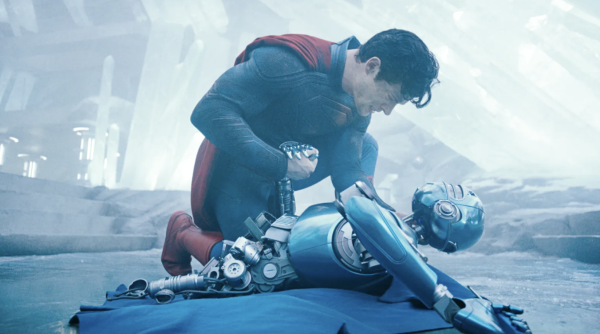
Superman, played by David Corenswet, has an emotional backstory that remains largely unchanged — a metahuman sent to Earth from a dying planet known as Krypton who is raised by human parents under the name of Clark Kent. However, his arch-nemesis Lex Luthor — played by Nicholas Hoult — becomes increasingly agitated by Superman’s success and besmirches Superman by leaking the entirety of a video sent by Superman’s biological parents, leading to widespread distrust and animosity towards Superman’s true intentions. Lured to a dangerous pocket universe — a miniature universe accessible to Luthor’s team — Superman must use his physical abilities and sly technique to ensure his survival.
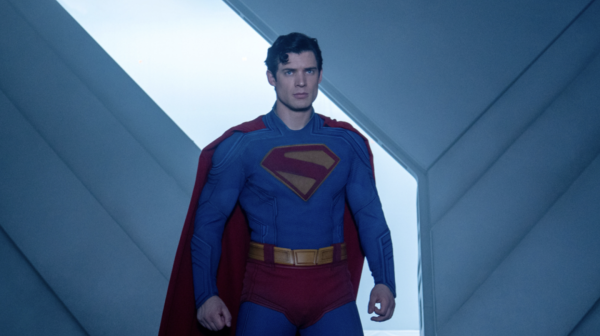
Gunn stuns with his ability to balance fast-paced action scenes and a refreshing amount of mellow and reflective moments that humanize Superman. Such scenes include romantic moments with love interest Lois Lane — played by Rachel Brosnahan — and wholesome moments with Superman’s adoptive family. Instead of relying on a cliche plotline that revolves around a cheerful, optimistic and unbeatable hero, Gunn imbues the piece with purposeful nuance, revealing Superman’s struggles and imperfections as he grows from a character stuck in a mindset of self-righteousness to a complex, understanding individual. After Superman escapes torture in the pocket universe, he heals at his family farm in Kansas, pausing from his superhero duties — a sweet yet intimate moment that allows viewers to understand that Superman is human, too.
“Superman”’s fight scenes are choreographed and shot well, with the right amount of humor sprinkled in. With attention to detail and stunning scenes that center on Superman and his opponents, viewers are left intrigued, yet not confused, by each battle scene. At the beginning of the film, when Luthor and his team plant a giant animal in Metropolis, the film highlights memorable moments as Superman reassures scared civilians while inciting laughs with an adorable clip of him saving a squirrel from impending doom. Constant action and back-and-forth jokes from Superman and fellow DC heroes Mister Terrific (Edi Gathegi), Green Lantern (Nathan Fillion) and Hawkgirl (Isabela Merced) humanize Superman’s abilities and draw away from a perfectionist view of the hero, keeping viewers humored and engaged.
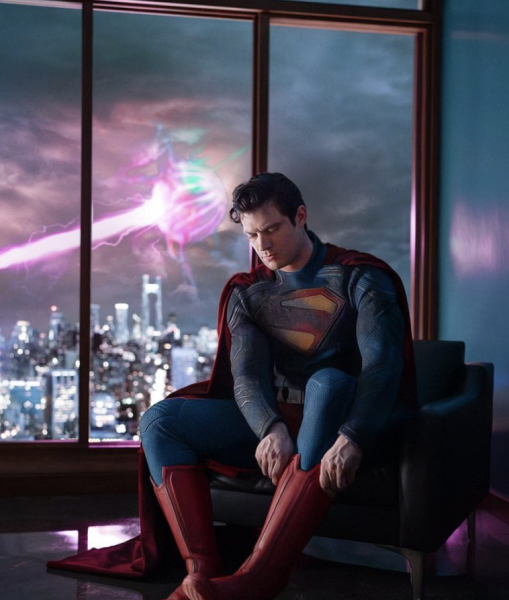
In addition to a complex plot, “Superman” also stuns visually. The film features predominantly bright colors that incite viewer attention, fulfilling desires that brought much controversy with other films, such as 2024’s “Wicked,” which received criticism for its “dull” tans and pinks. In locations like the pocket universe and a romantic scene between Lois Lane and Superman, Gunn chooses to rely on bright purples, blues and and oranges — color grading that successfully represents Superman’s boldness and desire to right his wrongs.
The only place of contention within the film is with “Superman”’s depiction of Luthor’s girlfriend, Eve Teschmacher — played by Sara Sampaio — who is made to look like an overdramatized, clingy house pet infatuated with herself rather than her own person.
In scenes at LexCorp headquarters and with romantic interest and journalist Jimmy Olsen, Teschmacher is depicted as an overly self-absorbed selfie addict who is more interested in her looks and Olsen than being a helpful accomplice to Lex. While the film intended to imply how women are often overlooked and underestimated in the corporate world, the directors leaned too far into the trope of an immobile woman who begs for male attention, contradicting their original message. Other scenes are similarly cheesy, such as with Luthor’s questionable treatment of his overly loyal underlings who continuously rush to clean up pens that Luthor purposefully pushes off his desk.
“Superman” sets the scene for a new generation of superhero movies and is a palatable mix of witty humor, humanity and action that will keep viewers on the edge of their seats. With a star-studded cast that truly draws viewers into Superman’s world, it’s no surprise that the film has once again seen major success in its second weekend after release. As the DC Comics franchise continues with its upcoming 2026 film “Supergirl,” featuring Superman’s cousin as the film’s namesake, the directors have proven to us that their cinematic expertise has no kryptonite — and is sure to produce a killer movie next.
RATING: 4/5