

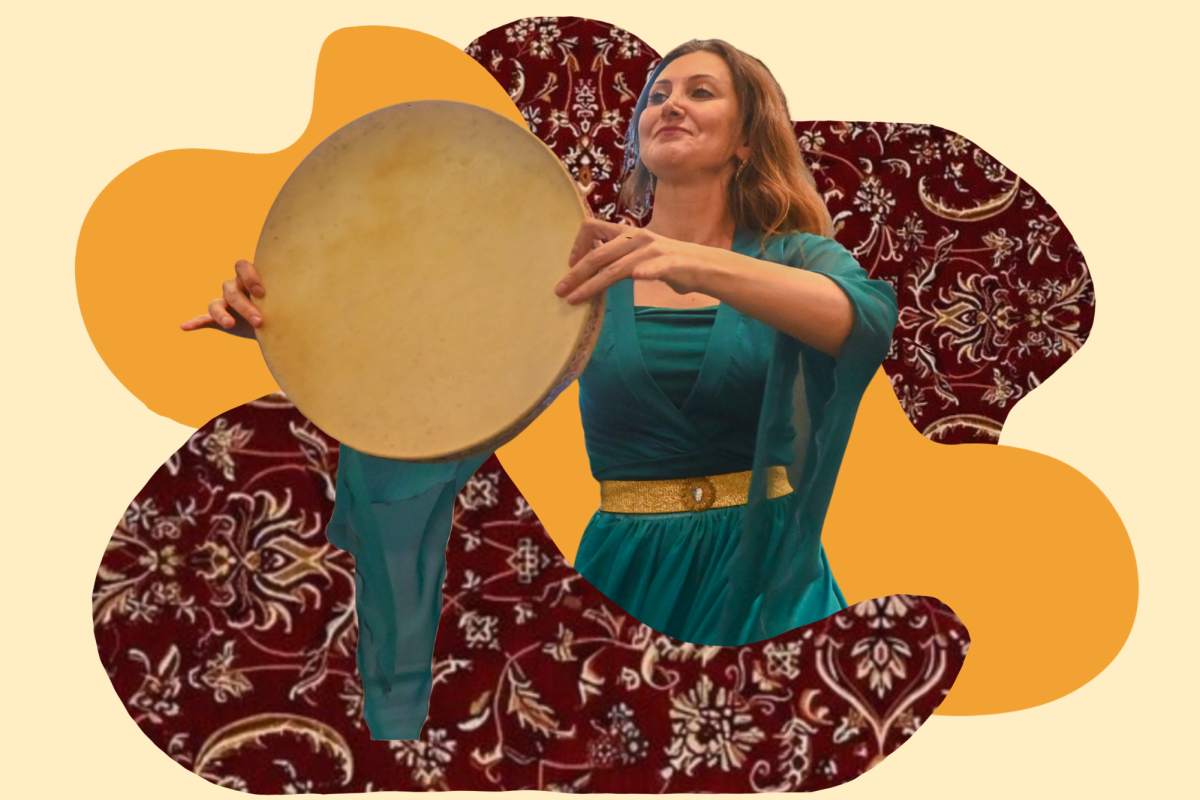
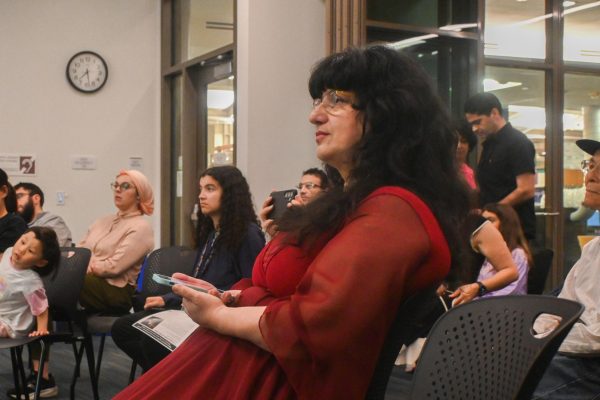
Colorful scarves swirled around as people of all ages danced in two large circles to celebrate Nowruz, known as Persian New Year. The Cupertino Library hosted a Nowruz celebration on Monday, March 16 from 7-8 p.m. Traditional Iranian music mixed with laughter filled the room, as people of all ethnicities invited each other into the dance. Nowruz, meaning “new day” in Persian, is a Persian festival to honor Spring Equinox — a time of renewal and rebirth. This year, it fell on March 20, and celebrations lasted for 13 days.
Monday’s event was led by Dr. Farima Berenji, who holds a doctorate in Iranian ethnochoreology and mysticism. Berenji taught the audience about traditional Nowruz customs, such as the haft-sin — a display of seven symbolic ingredients that start with the “s” sound in Persian — and showcased three types of traditional Iranian dances.
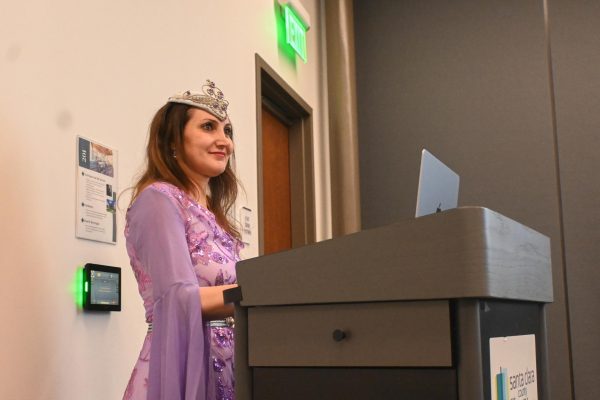
Berenji explains that she grew up in a family of artists and mystics, as her mother, grandmother and great-grandmother were all dancers. She says that they inspired her to study art, dance ethnology and mysticism in college. Through her experiences, Berenji realized that no singular book contained all the information about her culture since Persian culture dates back almost 3,000 years. As a result, she wrote a book about the history and mystery of Iranian dance, music and ritual called “Companions of the Sun.”
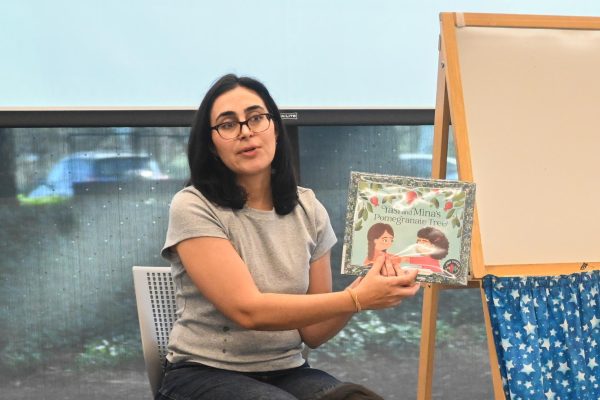
Similarly, Iranian-American author Nikoo Yahyazadeh published a children’s book, “Yasi and Mina’s Pomegranate Tree,” on April 1, 2025, to help bring light to the experiences of those living through the Iran-Iraq war. Yahyazadeh was born during the war and fled to America when she was 2 years old. On Wednesday, March 18, Yahyazadeh read her book to children at the Cupertino Library and taught them about Nowruz customs, including the haft-sin.
Yahyazadeh explains that her book covers serious topics like war, air raids and sirens, and can be scary for the young readers she worked with at the Cupertino Library. She recommends the book be discussed with an educator or librarian to help kids with the heavy topics.
“Reading to the kids was beautiful,” Yahyazadeh said. “It was really nice to be able to do a reading during Nowruz and also to share a bit about the symbolism of all the items on the haft-sin table and do a craft with them. I think it was really sweet, and it was a nice way to tie the book together with an important Iranian holiday.”
Berenji holds a similar sentiment, noting how one of her favorite parts of the celebration was seeing children ask questions about Nowruz and Persian culture during the Q&A portion of the event. She adds that, as a teacher, it’s rewarding to see audiences across ages and cultures take a genuine interest in her culture.
“I love to teach and share the beauty of my culture with others, especially non-Persians who don’t know as much,” Berenji said. “It always makes me feel proud to see people from different ethnicities join in, and also when I see children coming in, because I was their age when I fell in love with the arts. I feel like if I can teach them, they might like it and might be influenced to also become artists and teachers.”
Kismet Moon — one of Berenji’s students who showcased Persian dances at the event — says she loved the opportunity to perform alongside Berenji. Her ancestors, part of a nomadic tribe based in southwest Iran called the Qashquai, did the same dances and listened to the same music, so carrying on this tradition helps Moon feel a special connection to them. Moon states that the customs taught during the event can be shared by people of all backgrounds.
“It’s a culture that everyone can join in,” Moon said. “There’s no exclusivity, there’s no gatekeeping. We have dancers of all different backgrounds. And when Persians gather for Nowruz, they want their neighbors to join in. They want everyone to partake of the joy and the flavors and the experience of it.”
Yahyazadeh explains that the 13-day celebration includes spring cleaning, cooking and enjoying popular dishes like ash reshteh and sabzi polo ba mahi, buying new clothes and holding a large outdoor picnic on the last day called Sizdeh Bedar: a day dedicated to nature and getting rid of bad luck. Despite the festivities, Yahyazadeh notes that the current political climate regarding Iran’s relationship with the U.S. makes it difficult for her to find joy in celebrating Nowruz this year. However, for Berenji and Moon, the prevalence of Iran in the news is why they find teaching non-Persians about their culture so important.
“There’s always going to be darkness — it’s a part of human existence,” Moon said. “But it’s our role to keep the hope and light alive within ourselves and extend it out. A lot of people don’t know what Iran or the origins of this tradition is, or these dances are. They just see what’s on the news. So anyone that we can give them one glimmer of understanding is fulfilling.”
Berenji agrees with Moon that the news often skews people’s perceptions of their culture, sharing how she feels the media portrays only the negatives of most cultures.
“When you see the dance, the music, you realize there is so much more beauty than the anger and sadness depicted in the news,” Berenji said. “To know a culture, to know someone, to know a country, to know their religion, you must visit them, see them and be a part of their events. Then, you see the actual people. You see the actual beauty in there.”