

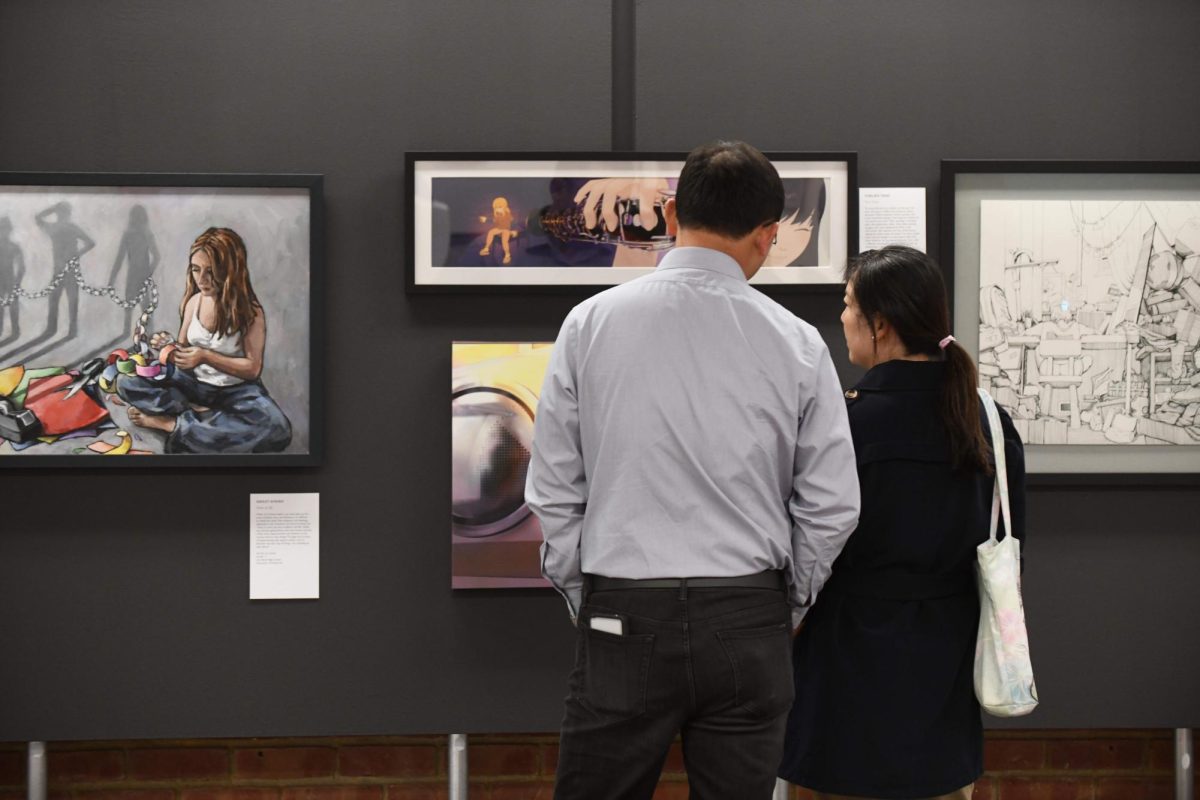
The ArtNow 2026 exhibition, which opened on March 27 and runs through July 19, 2026, is viewable at the New Museum Los Gatos. This year’s exhibition features 97 student artists from 36 high schools across Santa Clara County — the largest group ever selected in the program’s 15-year history.
ArtNow is a juried, countywide exhibition designed to give students the experience of presenting their work in a professional museum setting. Open to all high school students in the county — including public, private, charter and homeschool programs — ArtNow received roughly 600 submissions from 53 schools. With only one piece allowed per artist and limited gallery space, fewer than 20% of submissions were selected for exhibition. According to NUMU Director of Exhibitions and Collections Cristiano Colantoni, the process closely mirrors that of professional artists.
“There’s really no difference between the process in ArtNow and what we would ask of professional artists,” Colantoni said. “It’s a real-world opportunity and experience for high school artists. A few members of the NUMU Teen Council spoke and really relayed what it meant to them: how it boosted their confidence, inspired their choice of school and influenced what they plan to pursue as their major.”
Students must submit both a completed artwork and an artist statement explaining their intent and connection to the annual theme. Submissions are evaluated by a jury composed of museum staff and community arts professionals based on criteria such as technical skill, conceptual strength, use of artistic materials and imaginative expression of ideas.
This year’s theme, “Before / Between / Beyond,” was developed in collaboration with NUMU’s Teen Council and invites students to explore how the past, present and future impact aspects such as identity and action. According to NUMU Education Curator Constance Button, the theme was intentionally broad, encouraging artists to interpret it through personal, culture or societal lenses.
“We don’t set out with a goal of having students talk about one specific issue,” Button said. “We try to create a universal theme where students feel like they can talk about anything — whether that’s growing up, immigration, family, heritage, the environment, the future or their own personal experiences — while still allowing them to get specific in their own way.”
That range is reflected across the exhibition, where works explore topics such as identity and politics. According to Colantoni, these recurring themes encourage evocation of emotional depth and self-awareness in student artists.
“Sometimes it’s heartbreaking,” Colantoni said. “You look at a painting and read the artist statement, and you can tell the person is struggling. But they’re expressing themselves through art — I think that is really beautiful and therapeutic.”
According to Button, the exhibition also involved student voices through NUMU’s Teen Council. The council, composed of high schoolers throughout the county, played a central role in developing the theme, designing visual elements and even helping curate the layout of the gallery.
“Teens are really the architects of this program,” Colantoni said. “It’s not just adults deciding how to engage teenagers — we’re actually working with them to make those decisions.”
This year, the gallery is arranged into sections representing “before,” “between” and “beyond,” with smaller thematic groupings emerging within each category. According to Button, this structure creates both a conceptual and visual narrative for visitors.
“There are these bigger themes, and then smaller themes within them,” Button said. “So you might see a group of pieces about nature or another about anticipation, all within that larger framework of before, between, and beyond.”
According to Button, the decision to feature a record number of artists this year was to better represent the diversity of students across the county while working with the limited gallery space. However, despite expanded capacity, space constraints remain a significant factor in the selection process. With hundreds of submissions and limited room for display, many qualified works are not accepted — an outcome that Button and Colantoni say is part of the learning experience.
“We reject a large portion of submissions simply because we don’t have space,” Colantoni said. “But students come back, see the level of work, and think, ‘I need to step it up.’ And often, they do.”
Beyond exhibition, ArtNow offers opportunities for recognition and funding, both of which will support students’ artistic journeys. The show runs through July 19, with an awards ceremony scheduled for May 2, where selected artists will compete for scholarships and cash prizes, including a $5,000 Best in Show award.
Still, the purpose of ArtNow extends beyond awards or accolades, according to Colantoni. By going through the professional submission process and showcasing their work to a public audience, students have a chance to gain both confidence and a clearer sense of their place within the professional art world. Even for students who do not plan to enter the professional art world, this process provides an opportunity to gain essential soft skills.
“It’s a great learning experience, not only creating the work, but writing an artist statement, documenting it and going through the submission process,” Colantoni said. “Even if you don’t consider yourself an artist, it’s not dissimilar to other processes that you’ll encounter when you go to college or enter the job market.”