


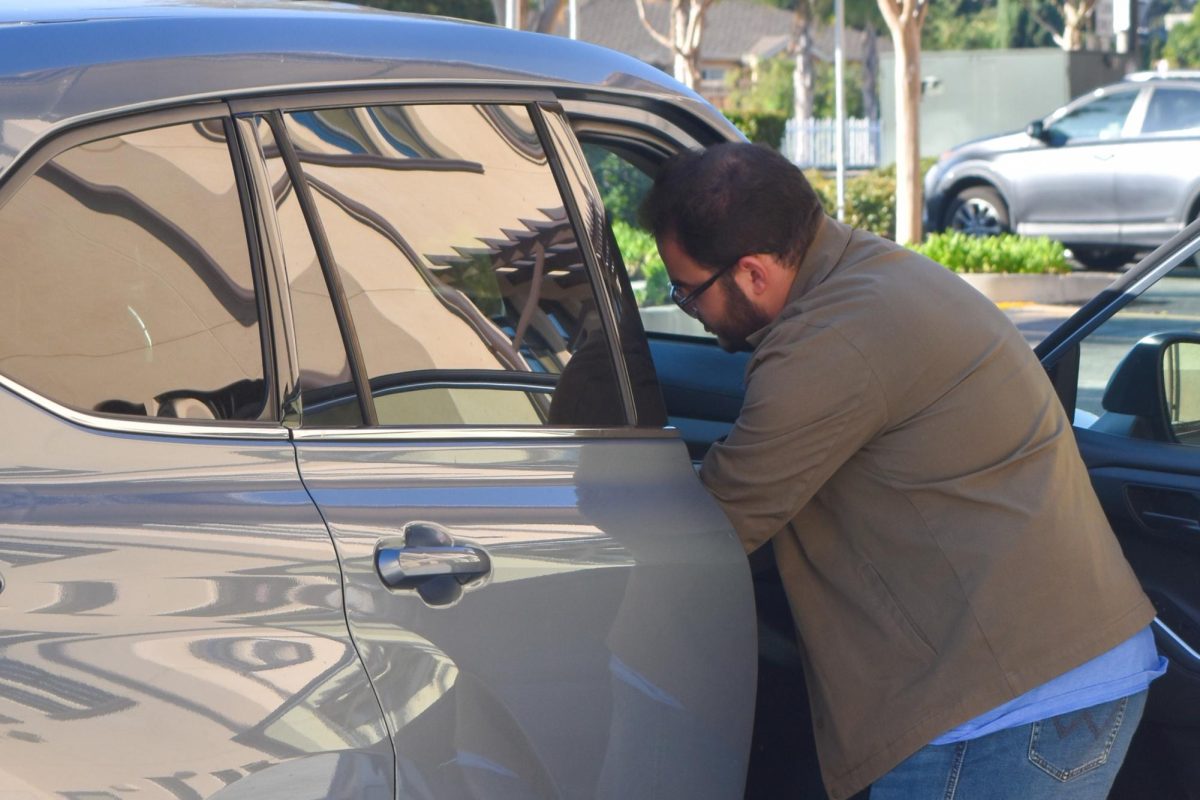
EE: FUHSD hosted a Thanksgiving food distribution drive-through at Fremont High School on Wednesday, Nov. 26, from 7:30 a.m. to 11:30 a.m. FHS cafeteria staff, along with volunteers from across the district, handed out over 150 of the 300 boxes they had packed with cereal and fresh produce.
EE: FUHSD Board Trustee Pat Carpio-Aguilar encouraged the Board to host the event, taking inspiration from a similar event in the Sunnyvale School District. She cites concerns raised by families about lapses in and cuts to SNAP benefits, a federally funded program to help low-income households afford groceries. According to Carpio-Aguilar, for many families, SNAP made up as much as 70 to 80 percent of what they ate, and its removal left them struggling to meet basic nutritional needs. She explains that families worried about how they would continue providing adequate nutrition for their children, especially high school students, and she sees addressing this issue as part of the Board’s job.
PC: It’s something that is on the adults to take that responsibility and see how we are feeding the students. I care about that deeply. It’s part of my heritage. My grandma always taught me that you allow people to keep their dignity while you are offering them what they need. I wanted to keep going in the legacy of taking care of others because if you are not well nourished, you are not learning well, and your education is suffering.
EE: In preparation for the distribution, FUHSD Nutrition Services Manager Divya Puri negotiated with vendors to get produce and cereal in bulk — a tough task given the short time frame and competition with food banks due to uncertainties around SNAP. FHS cafeteria staff and volunteers then began packing the 300 boxes on the previous Thursday. FHS Nutrition Service Manager Paula Lopez explains that the short notice and overlap with regular cafeteria services made preparation difficult, and the team ended up recruiting substitutes from other school sites to help.
PL: We faced challenges because we still have to serve the students here. We still have to do our work on the inside. It was hard for us to get it in a timely manner, because it was last minute — we still have to serve our students.
EE: Volunteers then distributed one box to each family that came by on the following Wednesday. In an effort to reduce barriers to access, no identification was required — anyone who came by could receive a box. Around 150 families received food, and organizers made plans to donate the remaining boxes to ensure there was no waste. For the families who couldn’t make it to the distribution, the email announcement for the event also included a link to Second Harvest Food Bank, which provides access to nutritious food for families who have difficulty affording it.
EE: FHS Dean of Students Cody Sharif, who volunteered at the distribution, emphasizes the importance of supporting families during the holiday break. She says she hopes that the district can host similar events to help families in the future.
CS: The day before Thanksgiving or a holiday is a good time to reach those families, and the timing of the event is also good because everyone has different work schedules or things that they need. So we’re just hoping for a good time frame. It was a great experience to help our community and make sure that there’s enough food for the coming weeks since school cafeterias won’t be open.
EE: Moving forward, Carpio-Aguilar says the district is working to increase accessibility by bringing distributions closer to FUHSD families instead of making them travel to hosting locations. For her, outreach events organized by the district, such as the Thanksgiving distribution, are important in reducing taboos around food insecurity. She hopes that the district can expand its outreach efforts from email notifications and reminders to include Instagram, Facebook and ReachMyTeach to reach even more households. Still, she remains proud of the effort the FUHSD Board members, staff and volunteers put into organizing the distribution.
PC: I’m very proud of the fact that we listen to the needs of the community. It’s important to keep your ear to the ground to understand what is needed, and it’s important to interpret that and to be able to respond to that. We should be proud of the fact that we didn’t say, “Well, the SNAP issue is not something that we need to be worried about.” Yes, it’s our issue, too. It’s our problem as well. I don’t call it a challenge — a challenge is a hard pass, or you can say, “No, I’m not taking on that.” But a problem is something you have to solve. We are solving the problem in the way that we can, which is offering people hope and something tangible that they can take home.
Music by Dvir Silverstone from Pixabay