



“Unalive.” “Grape.” “Seggs.”
At first glance, these words seem meaningless. But for millions of users on social media, these phrases are the only way to discuss sensitive topics online, with terms like “grape” or “r@pe” to mean “rape,” or “unalive” to mean “kill.” This linguistic phenomenon, in which users self-censor with alternative terms and phrases to circumvent algorithm flags, is what linguist and content creator Adam Aleksic has dubbed “algospeak.”
With nearly three quarters of Gen Z Americans stating that they have recognized or been exposed to algospeak, this shift has significantly influenced language and expression online, introducing new slang as unique substitutions. Senior Ishaan Deshpande, who encounters algospeak frequently when scrolling, says this stems from creators worrying that social media platforms will target content that so much as mentions controversial topics, either through removing it or reducing how much the algorithm promotes it, referred to as “shadow banning.”
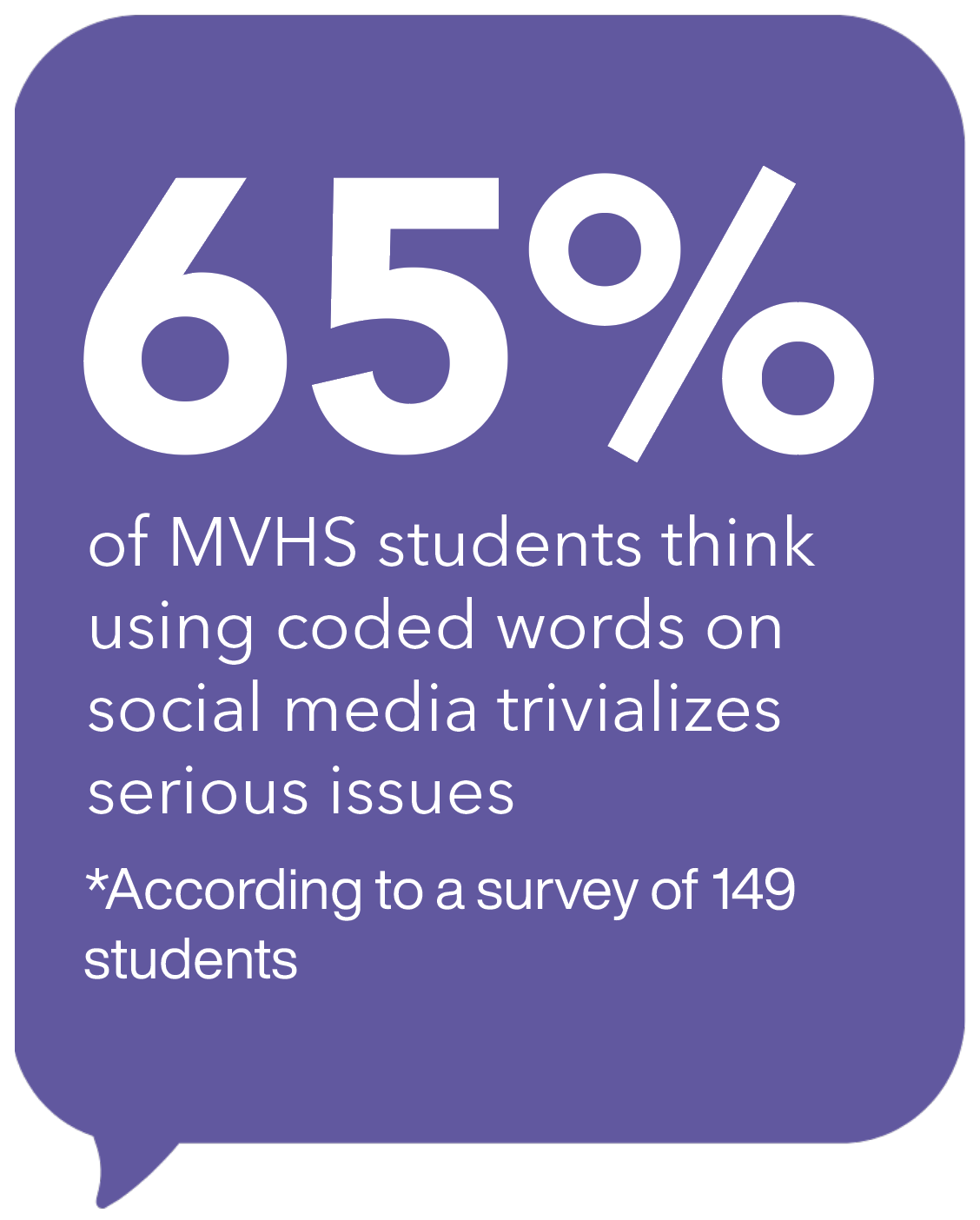
These words are also often used in a humorous context — students frequently throw around phrases like “I’m going to unalive myself” both online and at school. For sophomore Steven Chi, the topic raises concerns about whether using algospeak trivializes serious and sensitive issues.
“From what I’ve seen, the majority of words like ‘grape’ or ‘unalive’ have been used as comedic relief instead of something serious,” Chi said. “I don’t think topics which can seriously harm somebody’s psychological health should be used as jokes.”
On the other hand, Deshpande believes using algospeak as humor — for instance, using “devil’s tango” to talk about sex — can be an effective way for creators to share funny stories and convey their messages without triggering audiences or being shadow banned. He says that because of this, humor can be used tastefully to engage viewers.
“If it sounds funny, then it sounds funny,” Deshpande said. “If it calls out a blatant flaw in how we’re misrepresenting words or language in social media, then you can also find humor in that. So I don’t think it’s necessarily a bad thing if we’re using humor through these mispronunciations or misspellings.”
However, Deshpande emphasizes that there needs to be a balance between humor and serious discussion, especially for creators who want to encourage community action on issues such as sexual assault and mental health. He sees creators modifying words to avoid shadow banning as having mixed effects, such as reaching a wider audience but having less impact.
“When you’re looking at an issue through the lens of the word ‘kill’ or ‘genocide,’ these sorts of words are super strong and you feel like a sense of urgency,” Deshpande said. “When you see words like, ‘unalive,’ you’re still probably going to engage with that same sort of content, but you might look at it less seriously. At least to me, the content feels a little bit diluted.”
MVHS alum ‘25 Alan Tai adds that some content is also over-censored, making algospeak an important way of maintaining free speech. He says he has seen algospeak most often used to express opinions on political issues, such as the use of “g3n0cide” in discussions of the Israel-Palestine conflict.
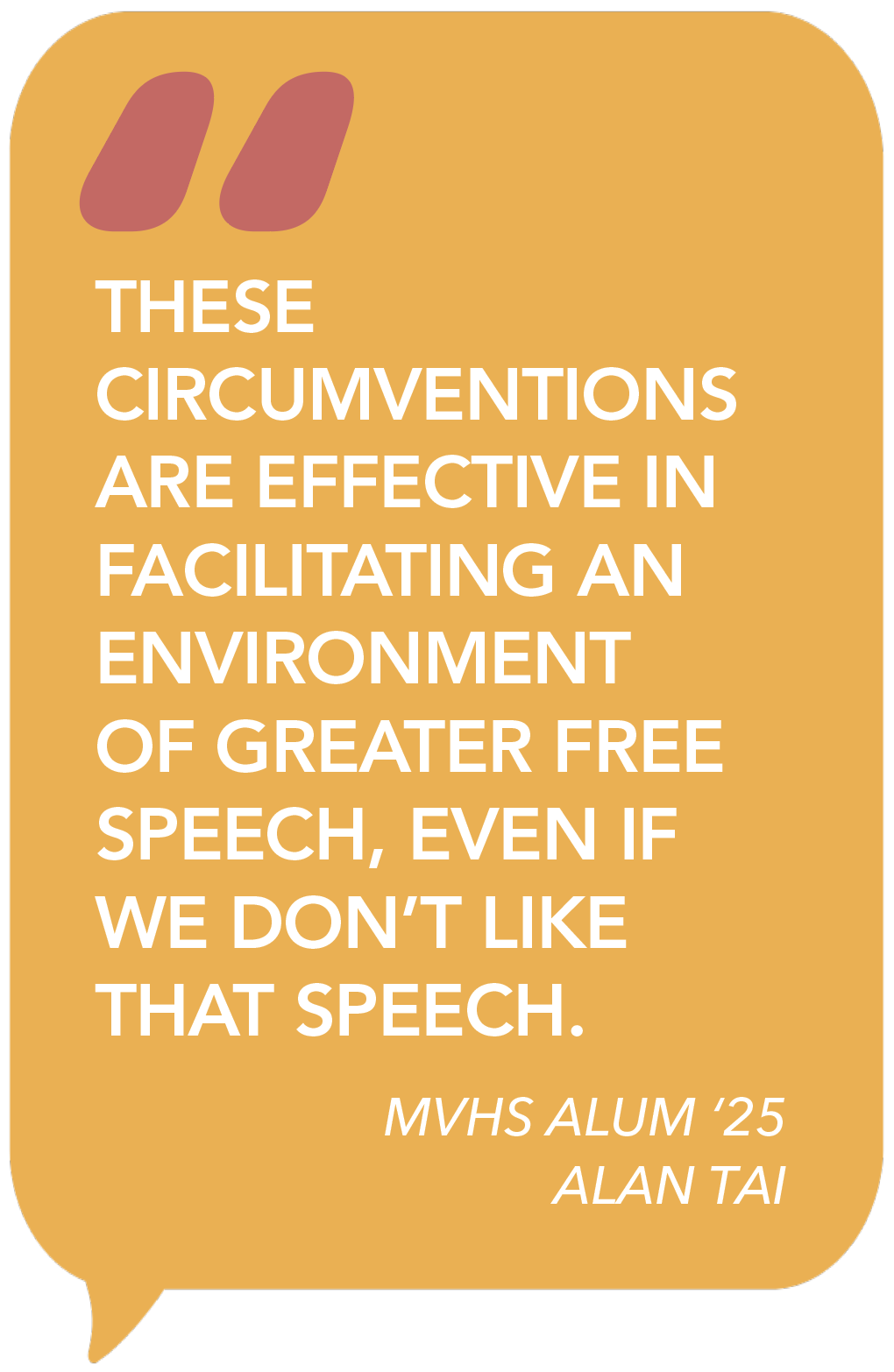
“If we’re talking about a participatory democracy where everyone can speak freely, these circumventions are effective in facilitating an environment of greater free speech, even if we don’t like that speech,” Tai said. “It’s pretty effective in ensuring that speech is representative of the people and that external forces don’t try to restrict speech.”
While companies like TikTok state that they also age-restrict content to protect minors on their platforms from violent and sexual content, Chi and Deshpande agree that these restrictions are often ineffective as both content creators and minors constantly circumvent them. Deshpande explains that even though algospeak means minors may not be exposed to as much provocative language, the images and videos it is used within still discuss the same mature topics, defeating the goal of such restrictions.
In light of this, Tai advocates that minors and their parents exercise more caution with social media and recognize the types of content to which minors may be exposed. Ultimately, he and Deshpande agree that algospeak and, more generally, circumventing censorship are natural progressions of language.
“It’s human nature to find ways in which we can take a sensitive topic and make it less sensitive, make it more digestible, make it more approachable, sometimes even more humorous,” Tai said. “The type of word replacement that we see online is partly an extension of that.”