


YOGA
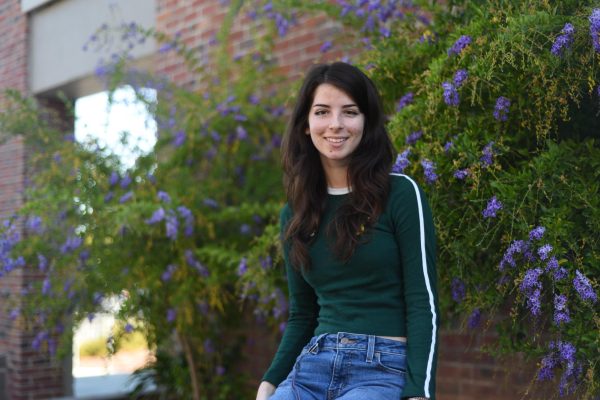
Yoga, a physical, mental and spiritual practice originating in ancient India, has been part of UC Berkeley freshman and MVHS alum ‘25 Alyssa Yang’s life since middle school, when she discovered a yoga app she loved. As a former Dance Team captain and lifelong dancer, she is interested in yoga as it forms the building blocks for dance movements. Although she stopped taking classes during high school, she continued to integrate yoga into dance and her everyday life, and eventually rediscovered it through a hot yoga class she took her senior year. She said the hot yoga class, which she took at Yoga6 while on vacation, exceeded her expectations in terms of the activity itself and the supportive community she saw among participants. She felt she did well despite not having specifically focused on yoga for several years.
“I was a little scared going into the hot yoga class, thinking ‘Oh my God, is it gonna be like a furnace of a room with a lot of chanting and stuff?’” Yang said. “But I actually really liked it, because it’s not uncomfortably hot and it’s not gross, and you just feel like your muscles are more engaged due to the warmth. It was really nice to be in a room surrounded by other people all trying to do the same thing.”
Yang says even in college, where her time is more limited, she uses yoga as a reset button to wake up her body and her mind. She describes yoga movements, such as sun salutations, as being meditative and calming in a way that simple meditation isn’t.
“You always hear people say to meditate to help your mind reset, but that doesn’t work for me,” Yang said. “But if I move around and stretch a little, I can draw inspiration from the yoga classes I have taken. So I feel like, in a way, yoga helps me connect with my body — which actually, in turn, helps me connect with my mind.”

Overall, yoga is part of the exercise Yang does daily for fun and to keep herself centered. Going forward, she’s excited to work on yoga arm balances, since she thinks they look impressive. She recommends yoga to even absolute beginners, citing the importance of trying new things and prioritizing physical activity.
“Yoga is not necessarily for everyone, but I think that as long as someone enjoys being connected to their body, there are definitely aspects of it someone can enjoy,” Yang said. “Even if someone is not used to that kind of thing, yoga could be a good introduction. At the end of the day, you’re stretching, you’re working on alignment and you’re working on building strength.”
ROCK CLIMBING
Los Altos School for Independent Learners senior Aster Mandhro started doing top rope rock climbing and bouldering with his dad when he was 7 years old. Since then, it’s become a weekly activity and a chance for him to push himself and grow both inside and outside of the gym.
Mandhro prefers climbing because it is a one-person activity, which eliminates the fear of bringing down a team he’s experienced when playing team sports like volleyball. To him, there are no shortcuts to climbing, and its demands are both physical and mental.
“I like how rock climbing kind of feels like a puzzle, having to go through different routes,” Mandhro said. “It lets me be able to feel strong, and while I’ve always found traditional gyms to be very intimidating, climbing is something that helps me build muscle without having to sit there and lift weights.”
Climbing has shown Mandhro that he has the ability to take on hardships, taking away the fear of failure that he once experienced. He recalls climbing a 5.11 (on a scale of 5.0 to 5.15) route at the age of 11, which was his first foray into challenging climbs and showed him that he had the strength to achieve more than he imagined.
“I feel more capable,” Mandhro said. “It’s helped my self-efficacy, because I’ve been able to clearly see progress on certain grades that I couldn’t climb before. It’s helped my mindset of knowing that I am capable and has given me the motivation to push myself into things even if they’re very uncomfortable, physically or mentally.”

Furthermore, Mandhro says the climbing community is incredibly supportive, with people being respectful to seasoned climbers and newcomers alike. However, Mandhro says he often compares himself to others, describing this as the biggest setback in his climbing career.
“There’s always someone who is going to be so much better than you, to a point where you will never get on their level,” Mandhro said. “I’m working on accepting that I don’t have to be perfect and I don’t have to be better than other people. I’m still allowed to take up space and use the facilities and be in the gym even if I’m not doing something that’s super advanced.”
Although he’s tried to encourage his friends to join, he says they’ve been too scared to try the sport or stick with it. While rock climbing has a reputation for being scary due to the sheer height a climber will go to, Mandhro assures prospective climbers that the sport is incredibly safe, and recommends going with a friend to lessen fears.
“I wish that people had a better idea of the safety precautions in place, because a lot of people want to try it but are too scared,” Mandhro said. “I wish more people had someone to push them through that initial fear and try. If they hate it, they never have to do it again. But if they love it, they can keep going.”
CALISTHENICS
Just before freshman year, sophomore Jeffery Liu watched a video of someone doing calisthenics skills on YouTube, and became inspired to work out to achieve those skills and more. Calisthenics is a broad-ranging term that refers to bodyweight exercises, including anything from air squats to pull-ups, handstands or planches, a challenging core exercise where the athlete keeps their body parallel to the ground with straight arms.
Liu mainly uses calisthenics to improve his core strength, saying it helps him as a tennis player. Furthermore, he emphasizes that no equipment or machines are needed, although he has bought parallettes — small parallel bars — for an easier grip when doing exercises. He says this versatility is part of the appeal of the sport to him.
P.E. Department Chair and Weight Training teacher Jeff Thomas agrees with Liu, and shares that when he was growing up, his P.E. classes were mainly made of calisthenics exercises like crunches and push-ups. He believes calisthenics is a good starting point for exercising.
“It’s a good way to work out, because you don’t need a whole lot of space and or any weights,” Thomas said. “You can modify all the different angles to make it easier as you build up. The only thing you can’t do, obviously, is add more load to a workout, unless you just do more. It does have some limitations, but it’s a great way to start. If you’ve never been to a gym, you could start in your room tonight. No one’s looking, no one’s watching and you can start right away.”

Liu appreciates the way calisthenics makes him feel, especially with the emotions of unlocking a skill he had previously never thought he could achieve. For example, Liu’s current favorite skill, the elbow lever, is an exercise where the athlete balances their body horizontally on their elbows. He encourages beginners to start, saying that it’s helped him both mentally and physically.
“When I unlock a new skill after a workout, I feel proud of how far I’ve come,” Liu said. “Calisthenics gives me more stamina, and just makes me more active and energized throughout the day. I remember when I started I was struggling to do push ups, but now I can do them a lot more easily. I didn’t expect I could do a lot of cool moves, which I can do now.”