


To maintain their anonymity in compliance with HIPAA protection policies, we will refer to a patient and their parent as Source A and Source B, respectively.
While most students can freely indulge in snacks, Source A, a sophomore attending Los Altos High School, must first carefully read every ingredient label. Whereas many teenagers travel abroad to see family and explore, even Source A’s local trips require meticulous planning. And, though afternoons for most students are spent playing sports and socializing with friends, Source A must remain stationary at home for two hours after deliberately ingesting a small dose of an allergen in an attempt to overcome his numerous dietary restrictions.
Severe allergies to sesame, legumes and most nuts have long left Source A feeling isolated and confined, particularly at school, which motivated him to pursue various treatment options throughout his life. Previously, he managed his allergies with periodic, clinically supervised oral food challenges, during which patients consume gradually increasing amounts of an allergen over the course of three to four hours. However, he was unable to continue after reacting to hazelnuts with extreme stomach pain, nausea and dizziness. Seeking alternatives, Source B, Source A’s parent, discovered oral immunotherapy, a growing treatment for food allergies with promising potential but inherent risks.

“The option then was to remain allergic forever, or try this treatment and at least avoid the risk of severe reactions by building up your system,” Source B said. “So it was an easy call because it wasn’t going to happen through food challenges, and we didn’t want to wait for years and years.”
Oral immunotherapy works by gradually building tolerance to certain allergens in patients through small, daily doses, thereby calming immune cells and reducing both the frequency and severity of reactions. Every two weeks, patients must report to an immunotherapy clinic for an updose appointment, during which the daily dose is increased. Following several of these visits, a patient eventually reaches a maintenance dose, a sufficiently large portion of the allergen that they can consume without experiencing a reaction. The overall process of achieving the maintenance dose can take anywhere from six to 12 months, since allergic reactions and other setbacks, including travel and illness, can delay updose appointments. Patients must continue taking their maintenance dose regularly — daily for the first few years, then several times per week — after it is reached to maintain the effectiveness of the desensitization. For teenagers and adults, this can be indefinite.
Physician Rani Maskatia, the medical director of Latitude Food Allergy Care, was inspired to study allergies after suffering an anaphylactic reaction to an insect sting. Upon graduating from medical school, she gained experience working on early immunotherapy clinical trials at Texas Children’s Hospital before moving to California and establishing her clinical practice. Maskatia recalls that when oral immunotherapy first emerged, it was unpopular and unsuccessful, given its high rate of failure and often extreme side effects. However, the program has been refined over the past decade and now has a 98% success rate with younger children.

“Allergy care is one of the fields where we are incredibly lucky to have effective treatment options, where we can truly teach the body tolerance to the things that it’s allergic to,” Maskatia said. “That’s been done over many years for environmental allergies and stinging insects, and now we’re doing that same type of process in food allergies with oral immunotherapy, building up the body’s tolerance through desensitization.”
While oral immunotherapy has seen exceptional success with young patients, teenagers and adults tend to face more risk. Older patients often experience more side effects, ranging from gastrointestinal symptoms such as vomiting and abdominal pain to respiratory issues like wheezing and difficulty breathing. Additionally, oral immunotherapy requires a significant time commitment and diligence, which can be challenging for individuals with busier lifestyles to manage. High schoolers, like Source A, may struggle to balance academics, extracurriculars and social life in addition to the treatment.
“After I came home every day from school, I would go straight to OIT, so I never really had any time to do anything in between,” Source A said. “It was either school or OIT. Home became synonymous with OIT.”
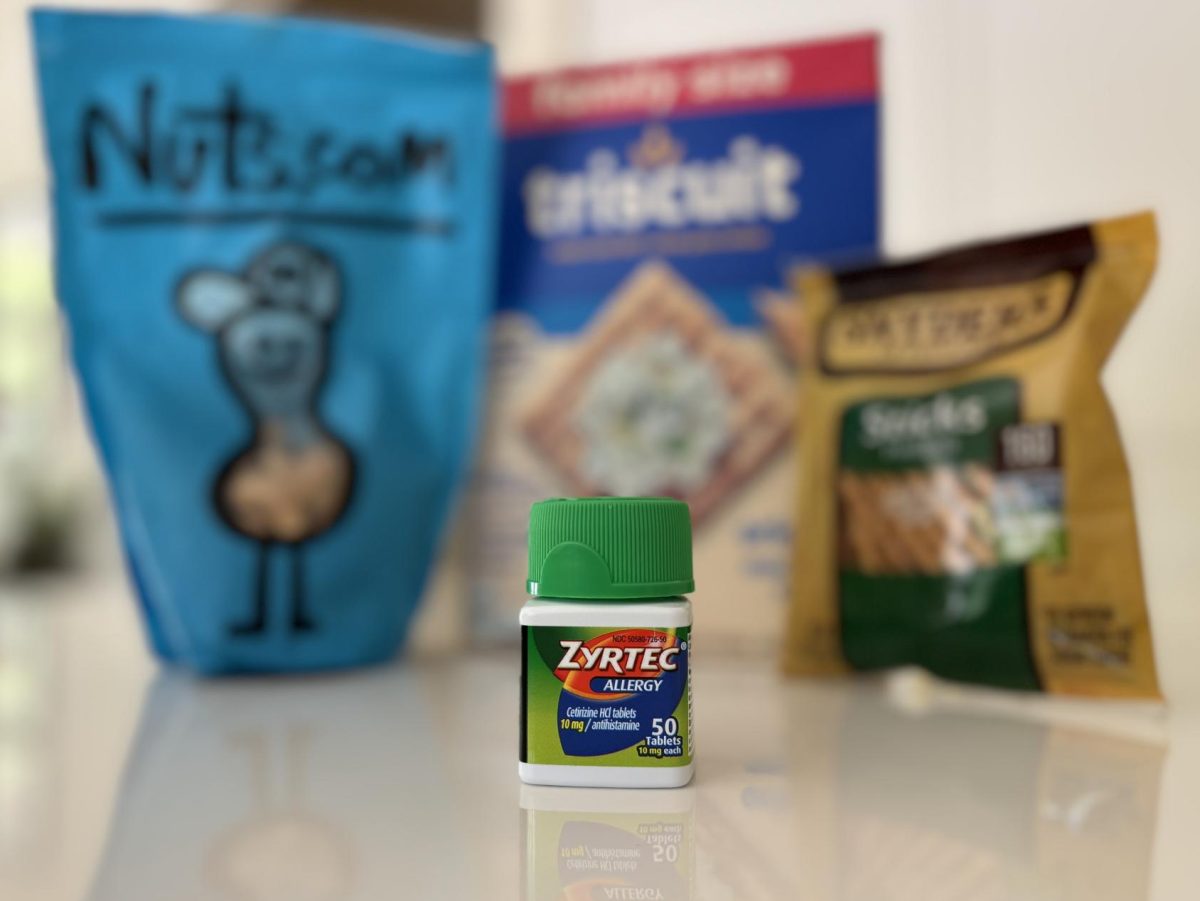
Before dosing, patients are advised to eat a filling meal and take preemptive medications such as Zyrtec and Pepcid. After consuming the dose, they must remain physically inactive for two hours, avoiding exercise, hot showers and, in more severe cases, strong emotions like stress and excitement, all of which can trigger a reaction by elevating a patient’s heart rate. These limitations made the early months of Source A’s treatment particularly challenging.
“It started out horrible,” Source A said. “At the beginning, I had a lot of allergic reactions. My stomach would hurt so bad I couldn’t really walk or talk. Even eating other stuff would make it hurt more. Sometimes even breathing would.”
Source A remembers a specific incident that occurred after he took his dose. He was on a phone call with his cousin when he began pacing around the room, triggering an allergic reaction. As he grew nauseous, Source A took a double dose of Zyrtec, an antihistamine, after which the reaction began to subside. Source B recalls feeling intensely worried for his son.
“We knew we were giving him something that he is allergic to,” Source B said. “He was talking about being dizzy and nauseous at eight o’clock in the evening, so that was really scary.”
Maskatia acknowledges that the counterintuitive nature of oral immunotherapy is a common concern among patients. However, she notes that immunotherapy sites, such as Latitude Food Allergy Care, are well-equipped to support patients if they do experience a reaction.

“This is a food that a lot of people are very apprehensive about, one that a kid has avoided their entire life, knowing that it could potentially even kill them,” Maskatia said. “So there’s a lot of anxiety when patients start the process. We spend a lot of time reassuring them that this is a very different situation than just eating your allergen at a restaurant by mistake in a large amount. We’re doing this in a very methodical fashion to hopefully prevent any kind of allergic reaction from occurring.”
Source A and Source B were not discouraged by Source A’s allergic reactions. Instead, they primarily remember feeling supported. The frequency of Source A’s reactions has since lowered, much to the relief of him and his family.
While certain allergies cannot be fully outgrown during oral immunotherapy, the treatment can reduce the risks of cross-contamination, allowing patients more freedom to try food at restaurants, for example. According to Maskatia, the decision about whether or not the results are worth the effort varies from patient to patient.
“I always try to center this on what the patients are experiencing and what their family wants to achieve,” Maskatia said. “Because the truth is, most people, especially if they start their treatment in their teenage years, are going to have at least some side effects and reactions. If they’re mild, we almost always recommend pushing through, because that’s generally expected. But there are people who get more significant side effects, whether that be severe stomach aches or episodes of anaphylaxis. There, it becomes a conversation about the pros and cons of continuing.”

For patients who decide to opt out of oral immunotherapy, Maskatia highlights Xolair, a monthly injection that suppresses allergies by blocking IgE antibodies, as an alternative. Xolair is generally well-tolerated, but, like oral immunotherapy, it must be administered regularly.
Despite the challenges they faced in their treatment, Source A and Source B never considered stopping. Both believe that oral immunotherapy is ultimately worthwhile for the safety and peace of mind it can provide individuals with allergies.
“There’s a risk, and there is a cost to OIT,” Source B said. “But the benefits, I think, far outweigh both the risk and the cost.”
Ongoing immunotherapy research promises to further improve the practice and better patients’ quality of life. According to Maskatia, oral immunotherapy is expected to continue rising in the field of medicine, especially as the treatment evolves and its availability grows.
“Oral immunotherapy is much, much, much more popular than it used to be,” Maskatia said. “In young kids with food allergies, it’s almost becoming the go-to treatment, the standard of care in very, very young kids. Overall, with the right support in place, this is an extremely effective therapy with very high success rates.”