

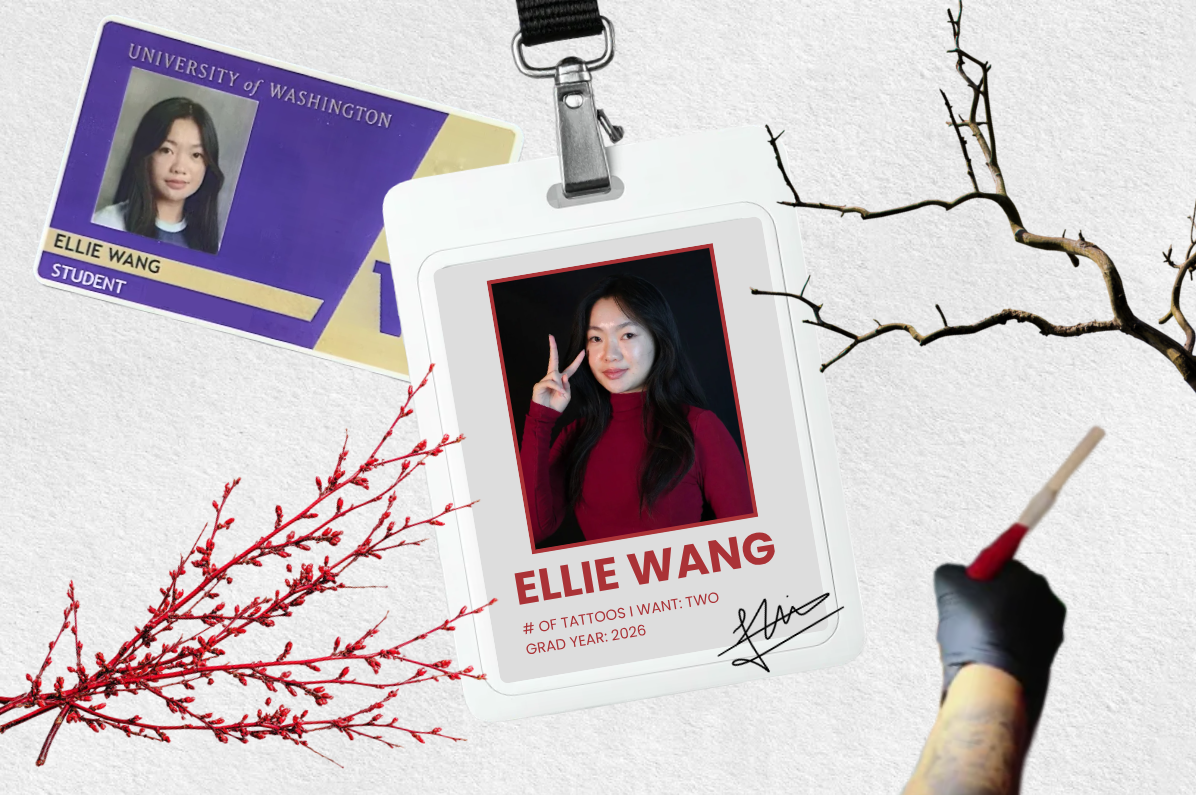
When I grow up, I want a tattoo. The best part? My family will allow me to get it. Not that they can prevent me from getting one once I turn 18, but the point still stands.
Some of my fondest childhood memories are of my step-grandfather at his beloved shop, which specialized in traditional Native American — particularly Anishinaabe — tattoos and piercings. I vividly recall the spiraling tree drawn on his arm in rich black ink, its twisting branches seeming almost alive. I used to think grimly that, beside him, I was plain and incomplete. My branches were nothing like the beautiful patterns coiled around his strong arms.
My mom’s side of my family ran away from my abusive biological grandfather by immigrating to the U.S., so growing up, my parents had no intention of assimilating into the new environment’s culture. When I was born, they intended to raise me just like how they were raised: a quiet, perfectly studious daughter who was good at math and would eventually become a doctor of some sort. A tattoo wasn’t even considered in the equation.
When I was 5 years old, my step-grandfather was introduced to me in the most anti-climactic way. There was no wedding or any grand celebration. The marriage license was simply signed and tucked away, but it was those documents that catalyzed my growth from a stagnant seed to a sapling.
After becoming accustomed to my East Asian-saturated environment, his appearance, voice, demeanor and values rattled my world. He was Ojibwe and had moved to California from Minnesota’s White Earth Nation, so naturally, he was unlike anyone I’d ever known. He lived the word “whimsical” cranked up to the max. Whenever I was with him, my day would be filled with sketching impossible tattoo designs and plastering them on his shop’s walls, skipping along the babbling brook beside his cabin in the woods, playing with his seven dogs and learning about Indigenous folktales.
It wasn’t that my family was against the idea of me forming my own interests, it was that none of us knew how. I explored many different hobbies: soccer, piano, swimming and dance and art, which I’ve decided to keep in my life. However, back then, they were just one-and-done tasks. I never felt a conviction to stick with them. But my step-grandfather’s unconventional lifestyle and ability to appreciate the carefree while staying passionate about the real-world inspired me to view each experience as an opportunity to expand my identity.
I wasn’t the only one who gained new perspectives on life because of him; my entire family reevaluated what it meant to live and not just survive. Having a personal connection with someone who wasn’t an echo chamber encouraged my family to look beyond what they’ve always known. I noticed how, gradually, the tense reservedness my grandmother used like a shield dissipated. My mom, whose interests I couldn’t have guessed before, rediscovered her love for arts and crafts. Lonely nights I spent wondering how to draw horses became nights my mom taught me how to sketch unicorns. I started to view my family, who once felt so distant, as people I could learn from and bond with.
Although my step-grandfather has passed, the ways he has inspired me to build my identity remains. I’m shaped by the people I love and admire — my friends, family and even strangers I’ve only met once. Even though I don’t need physical markings on my body to show the intersection of cultures that has made me who I am today, it is something I want to do in memory of my step-grandfather.
As I enter college, the next big step of my life, I will have more opportunities to meet people who are vastly different from me. I am moving forward knowing that their experiences and values will teach me more about the world and myself. So, despite being a little afraid, I’m looking forward to growing more branches.
And mark my words; one day, I will get that tattoo. Or two.