



Freshman Avviin Chandrasekaran’s younger brother, who has been studying biology since fifth grade, uses the internet to accelerate his learning — putting him far ahead of his peers and leaving a strong impression on his brother. Chandrasekaran’s brother has also made use of the internet’s networking capabilities to connect with and learn about new perspectives, which is far different from his brother’s experience with the internet.
“I wasn’t exposed to the internet at as young of an age as he was, but it definitely sparked his curiosity to learn more, because the materials were there for him to learn,” Chandrasekaran said. “Obviously, there needs to be some sort of mechanism to control that, because you don’t want them glued to their screens.”
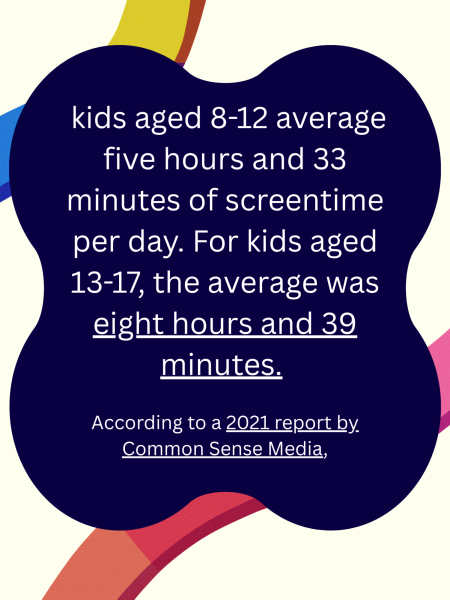
Internet addiction is correlated with obesity and sedentary behavior, according to the National Library of Medicine. Furthermore, the American Academy of Pediatrics says kids shouldn’t spend more than two hours per day on screens. One challenge that keeps kids addicted is social media, with 84% of teens saying they regularly use social media, which poses a challenge for parents like math teacher Alan Wong, who has a 10-year-old at home.
“Overall, I’m not a fan of social media,” Wong said. “For people who are my kids’ age, I think that it is a little bit of an addiction, and I want to make sure that my children are growing up to be healthy individuals — that they have a healthy mind, and aren’t going through depression that I know social media tends to create. I try to make sure that I’m watching over them.”
Additionally, on March 25 a jury found Meta and YouTube guilty of creating addictive platforms that led to the plaintiff’s depression and anxiety, awarding the plantiff $6 million in damages. The companies plan to appeal.
 Similar to social media, gaming has also become a major source of entertainment within recent years, specifically in adolescents aged 10-18 during critical points of human development, according to the National Institute of Health. While gaming has been shown to improve cognitive ability and teamwork, studies show that excessive gaming has led to long-term mental health issues. Consequently, addictive gaming behavior, termed gaming disorder, has come to dominate adolescent populations internationally.
Sophomore Addison Ho has seen the many ways the internet influences her younger brother, who is heavily affected by opinions on social media and spends most of his time on his computer. Ho has also expressed concern over what she sees as her brother’s gaming addiction, which has led to a lack of time management. Ho’s brother would choose to stay inside and play games for most of the day after school rather than get work done, requiring Ho’s mother to personally pressure him to work.
“When I was younger, I would go outside and play,” Ho said. “But for my brother, there’s not a lot of specific stories to share, because he’s always on his computer. My parents sit him down and talk to him about his social media use, but it just doesn’t work.”
Wong finds that the best way to combat internet addiction is by educating his children on the dangers of social media and video game addiction, which provides reasoning to his children behind their limited screentime.
“There is a draw towards new technology, like watching YouTube, and things that I never used to do,” Wong said. “My kids definitely want to watch a lot more videos than I used to watch, so I try to make sure that they’re not watching too much.”
Therefore, during a time when screens are more prevalent than ever, Wong believes it is beneficial to consider what they are teaching children. The internet has provided free access to information like never before, but it can also lead to mental illness and affect children’s psyche due to its lack of restraints. Meaning, according to Wong, it’s important to keep an eye on children’s screen time to prevent excessive use and addiction.
“I welcome tech,” Wong said, “But I think it needs to be handled appropriately. I just want to make sure that my kids are using it appropriately and that everyone else uses it appropriately — it is a very powerful tool that can be both good and bad.”