


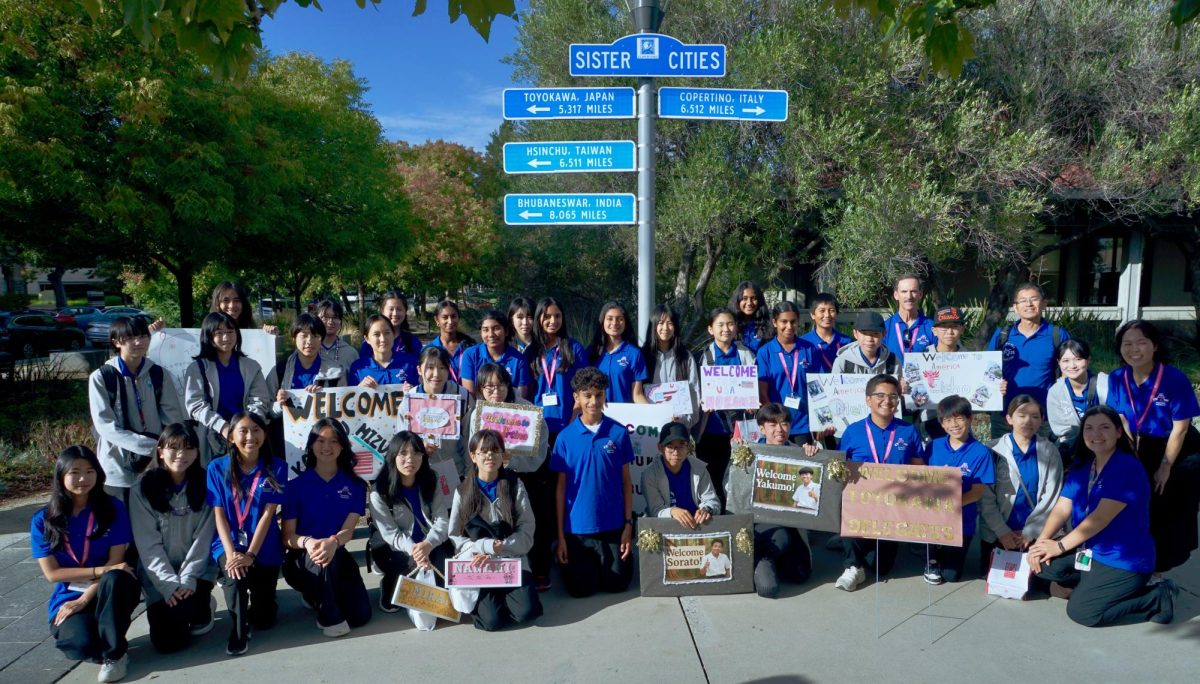
Every year, 16 middle schoolers from the Cupertino Union School District visit Cupertino’s sister city, Toyokawa, Japan. For two weeks, these delegates wake up to the rhythms of Japanese daily life, which include tasting home-cooked meals, hearing conversations flow and absorbing the culture firsthand. Four months later, 16 junior high students from Toyokawa visit the homes of these delegates in Cupertino to do the same.
The Cupertino-Toyokawa Student Delegation Program is a foreign exchange program organized by the Cupertino Toyokawa Sister Cities in partnership with the CUSD and the City of Cupertino. CTSC was founded on Dec. 19, 1978, following decades of efforts by the mayor of Toyokawa, Yoshio Yamamoto, to establish closer connections between Japan and the U.S. after World War II. In 1983, Cupertino’s first-ever delegation, consisting of eight junior high students, visited Toyokawa. The program has now existed for over 40 years.
CTSC Vice President of Student Delegations Beth Wichmann was chosen as a chaperone for the trip in 2007. After a successful experience, Wichmann became more interested in CTSC and joined the committee. After the founders retired, Wichmann took over the student delegation program alongside Vice President Sharon Fong and has been managing the program since then. She feels that this program strongly promotes students’ full engagement in cultural exchange.
“The overall goal of the Sister Cities program is to promote cultural awareness and friendship between Cupertino and Toyokawa,” Wichmann said. “There is real cultural training and cultural learning, and I think that’s one of the things that differentiates us from other cultural exchange programs. The nice thing about us doing this is that because we’ve been a sister city for almost 50 years, our goals are aligned. We want the kids to get certain things out of this, and so they do have to go through cultural training — understanding the why and how to respect the differences.”
Sophomore Sanvie Deshmukh, who was an eighth-grader at Kennedy Middle School when she participated in the program, went through weeks of learning Japanese before the exchange. The group also practiced a song and dance performance to present to their Japanese counterparts as part of the cultural exchange.
“I think the preparation period was a little harder for me,” said Deshmukh. “I am Indian, and a lot of people, like my delegation partner, could already read Chinese, and Chinese and kanji are very close, so they didn’t have as hard a time reading or understanding as compared to me. But sometimes, the host family and I decided to disregard language and just go into games and food and all the other stuff that helps us bond.”
During the program, the delegates stay with families in Toyokawa and attend a local junior high school. Despite language barriers, they were still able to form strong bonds with one another. For example, Deshmukh still keeps up with her host family over email. Sophomore Akshara Daga, who also participated in the program two years ago during her eighth-grade year at KMS, said that one of her favorite memories was being able to spend time with her host delegate.
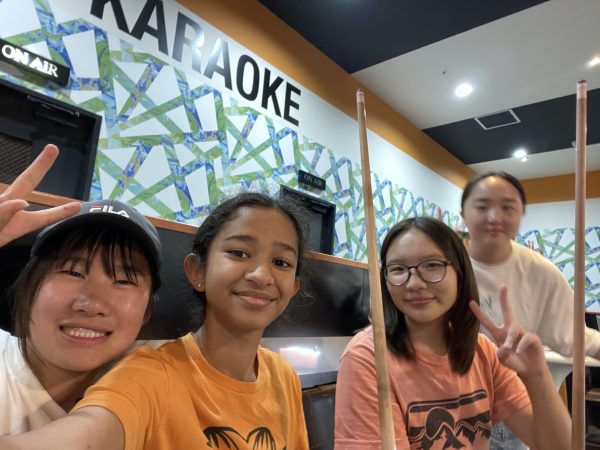
“One of the ways we connected was going places, so we did things together,” Daga said. “One of the girls actually had a cat and video games. So one evening after school, we went to our house, and we just played games. It was a lot of fun. I didn’t want to leave, and it was really nice hanging out with them.”
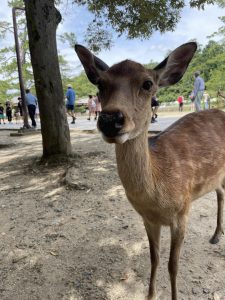
After their stay in Toyokawa, the students embark on a week-long journey with other delegates from CUSD to various locations in Japan, such as Kyoto. Deshmukh especially enjoyed going to Nara, the capital of Nara Prefecture, in south-central Honshu, Japan.
“I loved Nara because we visited the deer, and even though they had headbutted us, they were really cute,” Deshmukh. “You have these deer cookies, and if you give them to them, they’ll bow to you. Some of them are very impatient, and they’ll just headbutt you anywhere they find until you give them a cookie.”
Wichmann emphasizes that the program’s impact extends far beyond the students who travel to Toyokawa. She believes that hosting Japanese students in local homes enables families to engage directly in the cultural exchange, fostering mutual understanding that transcends age groups. For older students, including those at MVHS, the organization also offers an intern program that provides meaningful leadership experience, according to former participants. Wichmann believes this experience is incredible for students, as well as for her, who once taught in CUSD and wants to continue improving the program.
“You see a change in the kids, in who they are after they come back from Japan,” Wichmann said. “It really shows how they have become responsible for themselves with meeting obligations and deadlines, being an advocate for themselves effectively and easily, and speaking in front of groups not of their peers, but in front of all kinds of large groups of people. I think that is really worthwhile for me to see how they have become a better person.”