

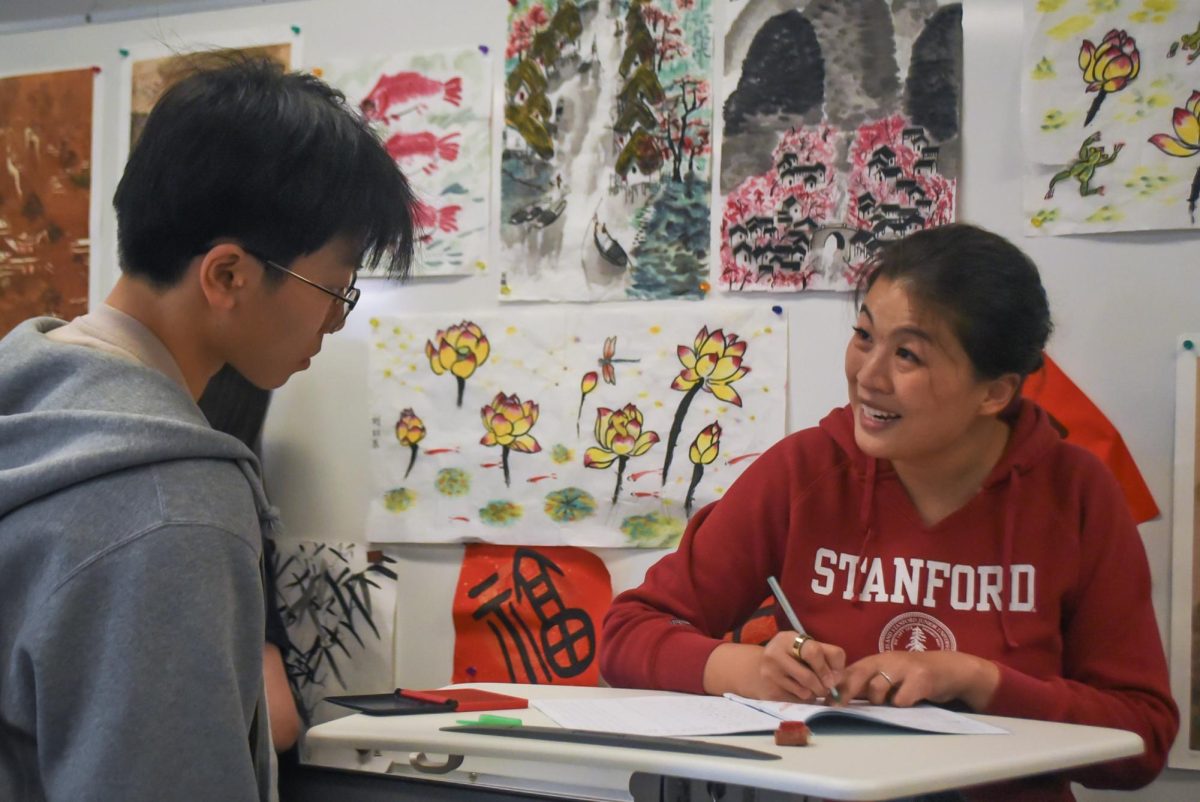
Two knocks interrupted the quiet hum of a prep period, and a lively “congratulations” filled the room as Principal Ben Clausnitzer stepped into room A201, home of Chinese teacher and world language department lead Zoey Liu’s Chinese 2 and 4 classes. Pausing mid-lesson prep, Liu looked up in confusion before quickly checking her email, a rush of excitement rising as she realized she had been named the recipient of the 2026 Teacher Leader Award.
The award was presented by the California Leader Teachers’ Association and the California World Language Project. It recognizes educators who demonstrate outstanding leadership, contribute to professional development and advocate for world language education in California. Liu was nominated by her former teacher education program supervisor, Helen Chen, who also helped prepare her application materials and gather letters of recommendation.
“I was very excited,” Liu said. “We were talking about how teachers and students get tired before the break. I was ready to start feeling that exhaustion towards the end of last week, so when he came in and told me the news, it was like a boost of energy.”

Liu’s journey to become an educator was not a straightforward path. Liu started college as a biology major before transitioning to English, even trying out journalism as a possible career path. Through her experiences volunteering and as an undergrad, she realized that her true passion was teaching. After teaching as a substitute in a private school and solidifying her decision to pursue teaching, she earned her teaching credentials at Stanford Graduate School of Education.
According to Liu, when she began teaching, she found teaching Chinese to be her biggest challenge. After she realized that students struggled with maintaining their interest in language courses because they are elective courses rather than required classes, she had to develop new techniques to keep students engaged.
“With other subjects, I could be creative with the textbook, and set up labs and science fairs,” Liu said. “But with Chinese, I have to grab their interest. I thought it was such a shame the students with Chinese heritage and the ones who chose to be in the class, didn’t actually want to stay in the class.”
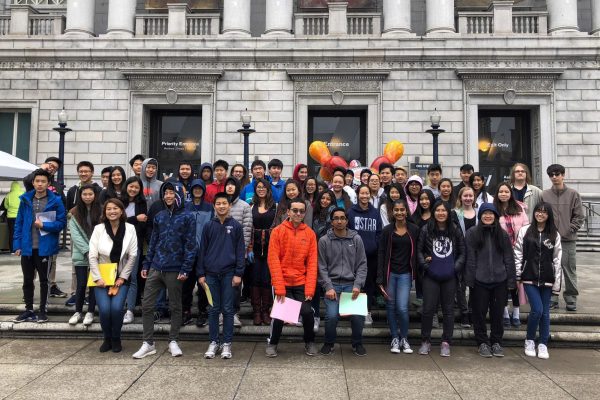
Determined to better engage her students, she sought out professional development opportunities. One of the conferences introduced her to a veteran teacher from Berkeley who taught her a new approach.
“She introduced this idea that was very eye opening for me,” Liu said. “She said that we can’t teach Chinese in the traditional way because the language is already one of the hardest languages in the world, and if we’re forcing students to learn, they will not be interested, so we need to use games and fun activities. When I was taught all of the subjects in school in China, it was pretty much all drilling, and fun was not part of the curriculum.”
The realization that learning could take different forms reshaped her classroom approach, and has also deepened her connection with teaching. Liu cites how as a native speaker, she is able to focus on nuances and details that textbooks don’t fully incorporate into their readings. In addition, teaching Chinese is also personal for Liu.
“It’s a subject where I can share my mother tongue with students of various backgrounds,” Liu said. “It’s a subject where I can share my joy, pride and concerns for the culture that I identify with and grew up in, as well as gives me the confidence and allows me to thrive as a teacher.”
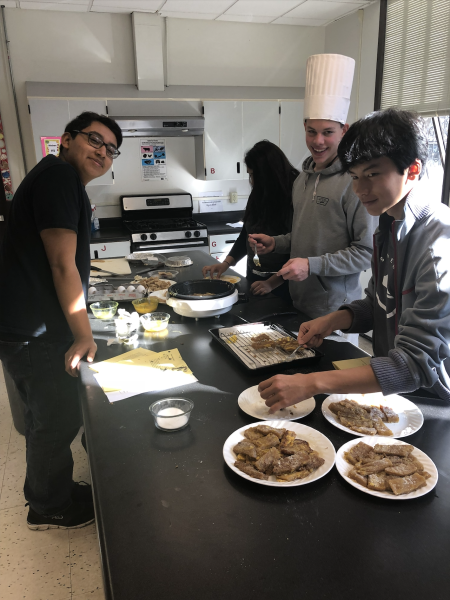
Guided by these early lessons, Liu now focuses on cultivating a space where students feel engaged and connected. Upon seeing the mental health decline at MVHS after the pandemic, Liu reoriented her approach, where rather than prioritizing solely for proficiency from her students, she hopes to reduce stress by continuing with incorporating interactive activities in the classroom. By adding engaging activities like cooking projects, she hopes to bridge learning with cultural significance in a more hands-on and applicable manner. Beyond textbook materials and grammar conventions, Liu also hopes to introduce more real world applications and concepts into her teachings.
“Sometimes we’ll talk about social justice, especially for a higher level like Chinese four,” Liu said. “We’ll talk about housing, dating and education issues. I want to evoke that sense of social justice within my students so they can use the knowledge and skill they have to take action to help our world become a better place.”
According to sophomore Jean Lin, Liu’s philosophies and approaches are also evident in students’ experiences in her classrooms. Lin was not surprised when hearing about the award, saying that having Liu as her Chinese 4 teacher has made her learning experience in high school more memorable. As one of Liu’s current teacher assistants, she says Liu brings her compassion into her student relationships outside of class hours.

“Through being her TA, I’ve seen her actively approach students and ask them if they wanted help during tutorials,” Lin said. “She’s shown that she’s not only a teacher in the classroom, she’s also willing to help students outside of class. It’s very clear that she dedicates a lot of time into helping the students and gaining an understanding of who they are on a personal level.”
Liu’s colleague and Spanish teacher Claudia Zambon agrees with Lin, commending Liu’s ability to establish rapport and close relationships with her students. As Zambon’s mentor, Liu has played a key role in shaping her professional growth, from helping her be more intentional in refining her teaching approach to offering encouragement and steady support throughout Zambon’s first year at MVHS.
“She’s a person that strives for excellence in everything that she does, and she works hard to improve as a professional,” Zambon said. “She not only cares about the profession in itself, she cares about those that are around her. She really focuses on personal relationships with her students that make her very well liked and esteemed.”

Liu’s commitment to improvement extends from beyond MVHS. Liu also teaches at San Jose State University’s teacher education program and leads the Stanford World Language Project, a program dedicated to promoting professional development resources for language teachers. Going forward, she aims to persist with her involvement with teacher education, passing on the lessons she acquired through her teaching journey with her peers.
“Seeing students who originally did not have any knowledge or skill in that subject, day by day or step by step, start gaining the knowledge and skills that I’m teaching them, and seeing them thriving”, Liu said. “That for me was so exciting, affirmed what I was doing, and made me feel like what I was doing was meaningful. It made me want to do better in my job, to see more of my students thriving and achieve higher proficiency or just enjoy learning more.